Self-compassion: Why is it important?

Photo by Giulia Bertelli on Unsplash


Life can be extremely difficult. The possibility of human experience is endless. Regardless of how privileged or disadvantaged we are; human beings all connect in our capacity for psychological suffering.

We all can move to listening to a harsh internal critic. Do you have an inner critic? If so, what is the purpose of this critic? Is this critic chastising you, searching for your flaws, punishing you, and comparing you? Is it maybe even preventing you from doing things you love, or from living by your values and being your authentic self?

Let’s consider a few examples:


Imagine you have broken your leg and fractured your ribs from a bicycle accident and that you have the choice of getting help with daily tasks from companion A or companion B.

Companion A says to you: “Suck it up, it’s not that bad, you’re pathetic! Plenty of people are worse off than you, quit with the baby tears”

Companion B says to you: “This absolutely sucks. You must be in some really awful pain and feel like you’ve lost some independence that I know is so important to you. I’m here for you, let’s just take it slow together”

Strangely we are often the Companion B to our friends but often not to ourselves!


Imagine a close friend of yours just went through a romantic relationship break-up. They tell you their heartfelt story, and you listen intently from start to finish. Your friend isn’t perfect, but they deserve to be happy. You reassure them that they’ll get through this, they’re a wonderful human being, and that it can be painful, but they will be okay.

You don’t judge your friend. You don’t tell them they are not worthy, they are unlovable, will never find anybody, are ugly, stupid or that they need to change.  You show your friend compassion. Strangely we often don’t do the same for ourselves!


Imagine you are at work and your boss calls you in for a meeting to have your annual review. She discusses your strengths and lets you know she is so happy to have you on the team. She then gives you some constructive advice related to organisation/planning skills. Coming from a place of critical judgment, you only hear the negative, and tell yourself, “I’m an incompetent idiot. I’m a shambolic mess and I can’t do anything right”. You head home and feel stressed out, go over all your flaws from memory and can’t sleep.

Coming from a place of fairness and acceptance, you see and hear the whole message, and tell yourself, “I’m doing a really solid job & working well with the team. I’m going to take on her helpful advice and learn from this”. This is a more compassionate response.


What is self-compassion?

There are many different definitions of self-compassion in the literature. I kind of like Neff (2003) that suggests there are 3 components that collaboratively interact to develop a self-compassionate frame of mind:
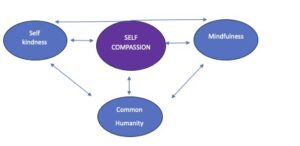
  • Self-kindness versus self-judgement – Self-kindness is simply that! Responding with and developing a tendency to be caring and understanding with oneself, and letting go of the harsh judgmental critic. It is about being honest with ourselves about our pain, our flaws, our mistakes and not ignoring, and also not wallowing in self-pity; but acknowledging and responding with genuine kindness, soothing and comfort to the self.
  • A sense of common humanity versus isolation – The common humanity aspect involves recognizing that all human beings have cracks, and make mistakes. We aren’t alone here! Nobody is perfect! These flaws and cracks make us who we are and connecting one’s own flawed condition to the shared human condition helps with greater perspective and understanding. Individuals who are self-compassionate accept themselves as they are and for who they are, rather than what or who they “should” be.
  • Mindfulness versus overidentification – Mindfulness involves simply being aware of one’s present moment experience and accepting things as they are. It is not ignoring or ruminating, but observing and accepting the pain, and being self-compassionate. Mindfulness will also help in developing self-compassion habits, like recognizing when your body is feeling anxious and your thoughts are being judgmental toward yourself.


What we know from the research is that when you’re critical and judgmental of yourself, you’re more likely to experience feelings of anger, anxiety, sadness, loneliness and insecurity. When you treat yourself fairly you are in a position to manage these uncomfortable feelings with acceptance.

Self-compassionate individuals often take pride in their human characteristics and believe they are good natured, well-meaning, and competent, and happily understand their unique weaknesses or areas they can work on. They know they are a work in progress and embrace it.

It’s kind of hard to break old habits and practice self-compassion.

I encourage you to treat yourself fairly and with kindness, and see what happens.


References

Barnard, L. K., & Curry, J. F. (2011). Self-compassion: Conceptualizations, correlates, & interventions. Review of General Psychology, 15(4), 289-303.

Neff, K. D. (2003). The development and validation of a scale to measure self-compassion. Self and identity2(3), 223-250.


[siteorigin_widget class=”SiteOrigin_Widget_Headline_Widget”][/siteorigin_widget]
[siteorigin_widget class=”WP_Widget_Media_Image”][/siteorigin_widget]

This blog was written by Karen Dreher – Counsellor at YMM.

Karen is a member of The Australian Counselling Association (ACA). She has completed a Masters of Counselling, a Graduate Diploma in Psychology, and additional training in Gottman (couples) Therapy.

Karen is a person-centred counsellor who values the diversity of human narrative and her client’s own personal meanings, experiences and feelings. Karen provides a warm, empathetic, authentic space that supports clients in engaging in their own self-understanding and healthy well-being.

To learn more about Karen, check out the “Our Team” page on our website! https://yourmindmatters.net.au/our-team/


How can a diagnosis be helpful: to assess my child or not?

Image source: Photo by Sebastian Pandelache on Unsplash


Why an assessment may be helpful?

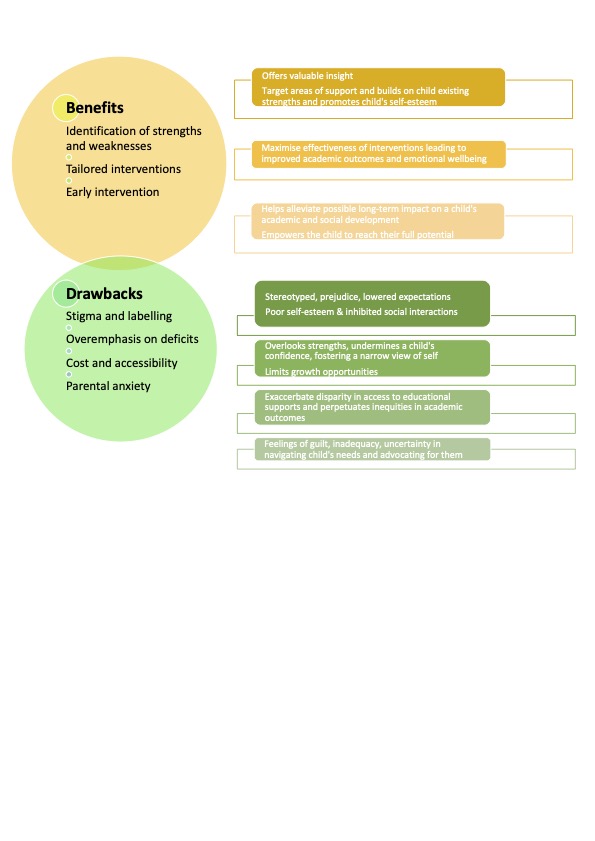
Is your child experiencing difficulties concentrating at school, establishing and maintaining friendships, or unable to meet their academic requirements? There may be more going on for your child than simply misbehaving or not fitting in. More often than not, children are disciplined for behaviours beyond their control leaving them feeling worthless and frustrated. An assessment gathers valuable information from parents, teachers, and your child, focusing on both your child’s strengths and challenges, creating a space to better understand who they are and how they learn best.


What is an assessment?

In the realm of child development and education, psychoeducational assessments serve as valuable tools in understanding your child’s cognitive, academic, social, and emotional functioning. These assessments can provide crucial insights into your child’s strengths, challenges, and learning style, aiding educators, parents, and healthcare professionals in tailoring support and interventions. However, like any tool, psychoeducational assessments come with both benefits and drawbacks that merit consideration.


But, I don’t want to ‘label’ my child!

Whilst it can be overwhelming and upsetting for parents to learn their child may be experiencing social, emotional, behavioural, or intellectual challenges, parents should not shy away from psychoeducational assessments. Understanding their child’s diagnosis is a tool for identification rather than a limitation, is important. Receiving a diagnosis can open doors to appropriate support services and interventions, empowering both the child and parent to navigate challenges effectively.


Are there different kind of assessments and why do I need them?

Cognitive assessments:

Designed to measure a child’s cognitive abilities, including verbal and non-verbal reasoning, memory and processing speed. These tests provide valuable information regarding a child’s intellectual strengths and challenges. For parents, understanding their child’s cognitive profile assists in making informed decisions around educational placement and/or interventions. As for teachers, it helps guide instructional strategies and accommodations tailored to a child’s learning style and abilities, providing further supports and scaffolding within the classroom.


Academic assessments:

Evaluates a child’s proficiency in different academic domains, including reading, writing, mathematics, and language skills. Achievement assessments help identify the presence of a specific learning disorder that may impact a child’s academic progression, such as dyslexia or dyscalculia. Results from an academic assessment allow for goal setting to help promote a child’s academic progress, which may include access to tutoring, educational support services, or guiding teachers to tailor their approach to suit the child’s individual needs.


Social-emotional assessments:

Examining a child’s social capabilities, emotional regulation, behaviour, and interpersonal relationships can help identify whether there are any underlying factors that may help explain and be contributing to a child’s behavioural challenges at home and/or school. For instance, the presence of anxiety, attention deficit hyperactivity disorder or autism spectrum disorder may be the reason a child is experiencing social and emotional difficulties across different contexts. For parents, these assessments provide insights about how to foster a child’s social-emotional development. Additionally, for teachers, it allows them to implement the appropriate classroom management strategies and create a supportive classroom environment for a child to flourish and develop positive social interactions and emotional well-being.


Adaptive functioning assessments:

Examining a child’s daily living skills, independence, and ability to function effectively in different environments (i.e., home and school) is valuable in helping determine the best way to promote independence, autonomy, and inclusion in daily activities. Parents will have the understanding and tools that will help inform decisions about support services and transition planning for adulthood.


Further information

[siteorigin_widget class=”SiteOrigin_Widget_Headline_Widget”][/siteorigin_widget]
[siteorigin_widget class=”WP_Widget_Media_Image”][/siteorigin_widget]

This blog was written by Nicole Gerson – Psychologist at YMM.

Nicole completed her Masters in Educational and Developmental Psychology at Monash University. She has a passion for conducting psychological and educational assessments to better understand an individual’s strengths and difficulties. Nicole works closely with clients to help develop targeted strategies and assist each client to reach their full potential.

To learn more about Nicole, check out the “Our Team” page on our website! https://yourmindmatters.net.au/our-team/


Pathological Demand Avoidance (PDA): What is it? And how can we support individuals with a PDA profile?

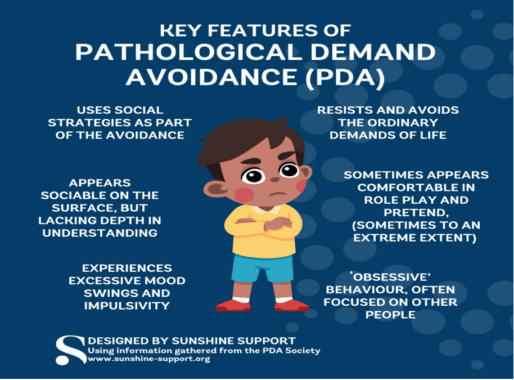
Image source: https://sunshine-support.org/resources/#infographics

What is Pathological Demand Avoidance

Pathological demand avoidance, or Pervasive Drive for Autonomy (PDA)*, is an anxiety-driven need for control and resistance to demands/expectations that threaten a sense of autonomy. Whilst everyone experiences demand avoidance at times (e.g., refusing to complete homework or household chores), for individuals with PDA, everyday demands such as “put on your shoes” or “take a shower” can cause significant anxiety and evoke extreme emotional reactions (panic attacks or meltdowns). In fact, individuals with PDA may resist demands even if it’s something that they enjoy or want to do. It is the expectation, rather than the nature of demands, that leads to a perceived lack of control. Thus, demands that may trigger PDA include:

  • Direct Demands: Instructions e.g., Brush your teeth, put your shoes on, do your homework, corrections, or discipline.
  • Indirect Demands: Praise, discussions/comments about the future, transitions, social expectations.
  • Internal Demands: Hunger, thirst or needing to use the bathroom.
  • Wants/desires: Hobbies/interests, special occasions.

*Pervasive drive for autonomy is the preferred name for many within the autistic community.

So, how do we identify individuals with a PDA profile?

Core Features of a PDA Profile

At present, PDA is not included in the International Classification of Diseases (ICD-11) or the Diagnostic Statistical Manual (DSM-5-TR) as a formal diagnosis. Rather, PDA is currently considered a profile of autism characterised by:

  • Resistance/avoidance to ordinary demands of life and use of “social strategies” to regain autonomy:
    • PDAers may employ various social techniques as a means of avoiding demands, including:
      • Distraction: Giving compliments, changing the subject, feigning injury, mimicking.
      • Excuse Giving: “My legs don’t work”, “I can’t hear you”, “I’m blind.”
      • Refusal: “NO!” “I can’t do that.”
      • Withdrawing into fantasy: “I’m a dinosaur.”
      • Controlling the actions of others around them: “You do it”, suggesting alternatives.
    • These behaviours can often be misinterpreted by others as manipulative. When distraction, control and avoidance strategies fail, anxiety levels are heightened, and distress escalates, which can lead to aggression (hitting, kicking, biting), elopement, or self-harm. It is important to note that these behaviours are not deliberate; rather, PDAers experience panic and a fight/flight/freeze/fawn response.

Image by https://www.thinkpsychologists.com.au/blog/pda-pathological-demand-avoidance/

  • Surface social communication abilities:
    • PDAers may present with less obvious differences in social communication and understanding than other autistic children. They may have strong verbal fluency and exhibit more eye contact. However, they may also struggle with understanding social hierarchy, e.g., wanting to be co-teachers or co-parents, and have a preference for being in control during play.

Other key characteristics include:

  • Intense emotions or mood swings
  • Comfort in role-playing and storytelling
  • Intense focus on interests, often directed at other people

Pathological demand avoidance can present differently depending on the setting and an individual’s capacity for demands at any one time. In school, a PDA child may refuse to start tasks or engage in distracting behaviours to avoid work. At home, they may have frequent meltdowns about routine tasks such as taking a shower or getting dressed.

So, how can we support individuals with PDA?

Strategies to Support PDA Children

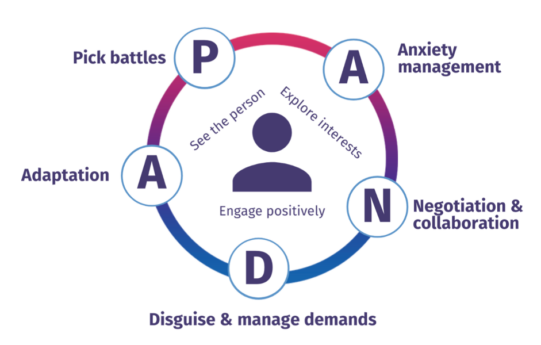
It is important to understand that PDA behaviour is driven by anxiety and that PDAers respond to demands as if they are a direct threat to their safety or well-being. Thus, low arousal approaches that reduce anxiety and provide a sense of control are essential for supporting PDAers. The Pathological Demand Avoidance Society recommends an approach that is flexible, based on trust, and collaborative. This is called the PANDA approach, as outlined below.

Image by PDA Society UK

  • Pick Your Battles:
    • Minimise non-essential rules and agree on non-negotiable boundaries – Ask yourself what rules are important for the child, family or class. Prioritise rules as high, medium or low priority.
    • Allow for some choice/control by providing two options or allowing “no” as a response.
    • Provide explanations.
  • Manage Anxiety:
    • Recognise and respond to the child’s cues that they are becoming overwhelmed or stressed.
    • Reduce uncertainty.
    • Treat distressed behaviours as panic attacks and support throughout
    • Recognise that when in a heightened state, a child is not fully in control of his or her behaviour, as the emotion centre of their brain takes over.
  • Negotiate/Collaborate:
    • Keep calm
    • Proactively negotiate
  • Disguise Demands:
    • Reframe requests – Instead of using words such as “need”, “must” “wont” “can’t” or “it’s time to” try using phrases such as “is it okay with you” “how do you feel about”, “I wonder.”
    • Use declarative language, e.g., “The clothes are on the bed.”
    • Disguise demands as challenges – “I bet I can get my coat on first”.
    • De-personalise the request, e.g., “it’s the school rules.”
  • Adapt:
    • Use humour, novelty, distraction, and roleplay.
    • Be flexible and have a plan B.
  • Be cautious with rewards or praise:
    • Rewards charts can create additional demands if the original demands are not achieved. Instead, try providing spontaneous rewards.
    • Praise or encouragement can be perceived as a demand; instead, try providing praise indirectly or focusing on the process. When offering encouragement, provide choices or exit strategies.

Resources

If you’d like to learn more about PDA and how it presents, please see the following:

Websites

Books

  • Understanding Pathological Demand Avoidance Syndrome in Children: A Guide for Parents, Teachers, and Other Professionals by Phil Christy, Margaret Duncan, Ruth Fiddler, and Zara Healy.
  • Me and My PDA: A Guide to Pathological Demand Avoidance for Young People by Gloria Dura-Vila and Tamar Levi.
  • The Educator’s Experience of Pathological Demand Avoidance by Laura Kerbey

If you’re noticing patterns of demand avoidance in your child or would like some help supporting individuals with a PDA profile, please feel free to contact our admin team on 9802 4654.

[siteorigin_widget class=”SiteOrigin_Widget_Headline_Widget”][/siteorigin_widget]
[siteorigin_widget class=”WP_Widget_Media_Image”][/siteorigin_widget]

This blog was written by Michaela Hughes – Psychologist at YMM.

Michaela has a special interest in working with children and young people with a range of neurodevelopmental disorders including Autism Spectrum Disorders (ASD), ADHD, Intellectual Disability and Language Impairment.

Michaela believes in a warm, empathetic, and collaborative approach to the therapeutic process and that treatment should be tailored to the client’s individual needs. She strives to adopt a client-centred approach, drawing on a range of evidence-based treatments including cognitive behavioural therapy, play-therapy and mindfulness-based therapy.

To learn more about Michaela, check out the “Our Team” page on our website! https://yourmindmatters.net.au/our-team/

Understanding and Managing Children’s Challenging Behaviours – For parents

Photo by Caleb Woods on Unsplash


Have you ever experienced the challenge of navigating a teenager’s sudden outbursts or trying to calm a younger child’s meltdown in a crowded store? It’s a common scenario for many parents.


Understanding why the challenging behaviour occurs

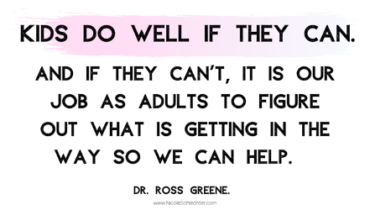
Psychologist Ross Greene’s Collaborative & Proactive Solutions (CPS) approach emphasises that if they could do well, they would do well.


Understanding why children exhibit challenging behaviours is the first step toward effectively managing such behaviours. No child wakes up and decides that they want to do ‘bad’ things or have a meltdown in front of all of their friends! Fundamentally, all children want to do well, and it is up to parents and caregivers to try to understand why they are engaging in behaviour that interferes with their ability to meet expectations at home, school or in the community.


Often, children with behavioural challenges are labelled negatively. Let’s have a look at some of these all-too-common terms…


‘They’re attention seeking!’.

  • This label identifies an unmet need in the child’s life but offers limited solutions. It implies that the child is acting with intention.


‘They’re manipulative!’

  • Children engaging in challenging behaviours do so impulsively, emotionally and without much forethought. Competent manipulators possess many skills, such as planning, impulse control, and organisation.


‘They’re unmotivated!’

  • This label doesn’t capture what is going on with a child and may create low self-worth, leading to further challenges in the future.


‘They’re testing the limits!’

  • This often leads parents to prioritise compliance over understanding and addressing factors contributing to behaviours.


Children may lack the skills to behave appropriately. They may have unsolved problems or even unmet needs contributing to their behaviour. Adults can help by collaboratively finding the cause of their child’s challenging behaviours and helping them implement strategies.

Image by Nichole Schlechter on https://nicoleschlechter.com


Managing challenging emotions and behaviour

When a child is struggling to regulate their emotions, their ability to engage in problem-solving and collaboration is compromised.


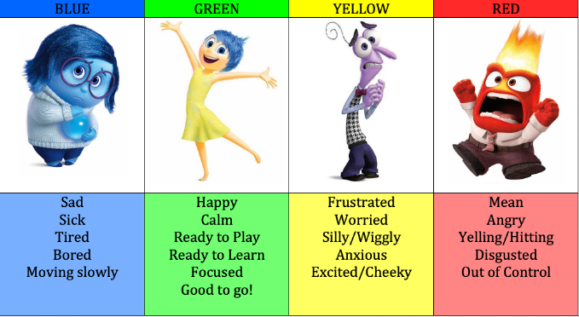
The Zones of Regulation framework provides a systematic approach to help children understand and manage their emotions and behaviours. By categorising emotions and states of alertness into four colour-coded zones – Green, Blue, Yellow, and Red – children learn to recognise and label their feelings, gaining awareness of their current emotional state.

Techniques such as deep breathing or taking a break may help young people calm down in the Red Zone, while activities like visualisation or positive self-talk can help them shift back to the Green Zone.


It is essential for parents to remember that when a child is engaging in unsafe, challenging behaviours, the critical goal is always de-escalation. No learning occurs when a person is dysregulated. The team of child clinicians at Your Mind Matters can support children and their parents in learning to use de-escalation strategies to calm their bodies and minds.

This poster was put together by Elina from Your Mind Matters but is based on information from https://zonesofregulation.com/. Have you seen the movie Inside Out (PG ages 6+) to recognise these characters?


Teaching adaptive behaviour and skills

In addition to emotion regulation, it’s essential to teach children adaptive behaviours and skills that will help prevent future challenges, according to Ross Greene’s Collaborative & Proactive Solutions (CPS). Children who demonstrate challenging behaviours already receive negative natural consequences for their behaviours. Giving them more consequences and punishing them (e.g. detentions, removing favourite toys, yelling) does not give them the skills to succeed and instead may just further harm their self-esteem.


What interventions DO solve problems and teach skills?

Identifying situations where the child’s skills are consistently lacking:

            E.g. Your child yells and cries when they lose


Implement a cool-down routine.

            E.g. A go-to activity to regulate emotions when upset.


Teaching the child practical ways to improve their skills:

            E.g. Teach the child how to recognise physical signs of anger and disappointment.

            E.g. Teach coping strategies like self-talk


Remove barriers that impact the child’s success:

            E.g.  Modify the game to reduce the emphasis on winning/losing.


Practise, practise, practise!

            E.g. Role playing different reactions to losing a game.


Provide accommodations:

            E.g. Allow for mistakes and setbacks and be flexible in your approach as the child learns the new skill.


Managing challenging behaviours in children and teens can be a daunting task, but parents and caregivers do not have to navigate it alone. Every child is unique, and finding the right strategies may take time and patience. If you would like support in parenting a child with challenging behaviour, our team of clinicians can help.


Additionally, if you are interested in learning more about Ross Greene’s CPS model to working collaboratively with children and teens, you may enjoy his lecture below:

https://www.youtube.com/watch?v=VsTvUiSxfls


[siteorigin_widget class=”SiteOrigin_Widget_Headline_Widget”][/siteorigin_widget]
[siteorigin_widget class=”WP_Widget_Media_Image”][/siteorigin_widget]

This blog was written by Elina Makela – Psychologist (Educational and Developmental Psychology Registrar) at YMM.

Elina is passionate about helping young people presenting with behavioural and emotional difficulties. Elina works collaboratively with families to support young people with developmental difficulties related to Autism Spectrum Disorder (ASD) and Attention Deficit Hyperactivity Disorder (ADHD). She also has a strong interest in working with young people who experience eating difficulties, poor body image, sleep issues, and anxiety. Through warmth, compassion and play, Elina creates rapport with her younger and adolescent clients.

To learn more about Elina, check out the “Our Team” page on our website! https://yourmindmatters.net.au/our-team/


Working through trauma from a schema therapy lens

Photo by Aditya Saxena on Unsplash


My previous blog aimed at providing a brief overview of trauma and posttraumatic stress disorder. Click here to read more: https://yourmindmatters.net.au/a-brief-overview-of-trauma-and-posttraumatic-stress-disorder/. This blog focuses on how therapy can aid in processing past traumatic or upsetting experiences.


There is an abundance of research on various modalities for working through trauma in a therapeutic context. Here we unpack the use of imagery rescripting, a schema therapy intervention. Please note, this is not the sole treatment approach available.


What is Schema Therapy?

Schema Therapy focuses on understanding how our past experiences have shaped our schemas (beliefs specific to ourselves and the world around us). During our childhood, our needs may not have been met (e.g., our need for support, nurturance, safety/protection, emotional connection) which contributed to the development of early maladaptive schemas, unhelpful behavioural patterns and coping mechanisms.


A part of schema therapy is aimed at building attunement (‘tuning in’) to our emotional responses when faced with a triggering situation or event. It is about building awareness of how current life stressors can activate our schemas and lead to strong feelings and behavioural responses. Often, it is not the current event that evokes such an intense emotion, but more about how we interpret this event and the meaning we derive from it based on our early experiences. For instance, exposure to trauma or an upsetting event may lead to interpretations such as “This is my fault”, “I am bad/unworthy/not good enough”.


Preparation for Processing Past Trauma

Prior to moving into imagery rescripting, your clinician will complete a thorough intake and assessment. Often, it may be necessary to build emotion regulation skills and learn relaxation strategies, to ensure that you are ready to move to the part of therapy where rescripting occurs. You might be asked to complete questionnaires, which look at the symptoms you experience and the impact on your daily functioning. This can provide valuable information and can be used to measure your progress throughout treatment.


Imagery Rescripting

Imagery rescripting is a therapeutic technique, where through the guidance of a trained clinician, one re-imagines a past painful memory, entering the image from the perspective of their child self. The aim is to change the way one feels and thinks about the event, by inserting new meanings/interpretations and leading to a corrective emotional response. The focus is on imagining a different outcome where the individual’s needs (for example, for safety, protection, nurturance) are met. During an imagery rescripting exercise, one does not need to relive the traumatic or upsetting event. What occurs is that the image is paused when a ‘hot spot’ (the moment feelings of distress begin to appear) is reached, and the therapist enters the image to support the client and meet their needs.


Now at this point, you may be thinking, “but that doesn’t change what actually happened”. And you are right. We can’t go back and change the past, but what we can do is change how you think and feel about the memory. Brain studies have shown that the brain responds in a similar way to imagining and actually experiencing an event.


The process of imagery rescripting takes approximately 12-15 minutes, but can vary from person to person. Once the image has been rescripted, you will have the opportunity to reflect on the experience of the exercise with your clinician. Many clients have provided positive feedback regarding imagery rescripting and reported a shift in their emotional response and beliefs when they think of the rescripted memory. This includes feeling ‘lighter’ when thinking about the memory, feeling less distressed and reduced anxiety.


If you would like some support in working through past upsetting experiences, our team of psychologists are here to help.

[siteorigin_widget class=”SiteOrigin_Widget_Headline_Widget”][/siteorigin_widget]
[siteorigin_widget class=”WP_Widget_Media_Image”][/siteorigin_widget]

This blog was written by Maria Kampantais – Psychologist and Clinical Registrar at YMM.

Maria has been consulting at YMM since 2016 and has an interest in working with clients presenting with anxiety disorders and past trauma. Maria offers a warm and supportive space to assist clients in navigating their presenting concerns and explore past painful experiences. Maria aims to support clients to build awareness into how past experiences may have shaped their belief system and subsequent emotional responses, and move towards healing through developing helpful coping mechanisms. Maria draws on various evidence-based therapies including Cognitive Behavioural Therapy (CBT), Acceptance and Commitment Therapy (ACT), mindfulness techniques, and Schema Therapy.

To learn more about Maria, check out the “Our Team” page on our website! https://yourmindmatters.net.au/our-team/


Breaking the Cycle: Why Avoidance Behaviours Lead to More Avoidance

Photo by Possessed Photography on Unsplash


Anxiety can be an uncomfortable and distressing feeling that we want to get rid of. This can lead to making choices that will alleviate our anxiety in the quickest way. Avoidance behaviours can encompass a wide range of physical and mental actions, from procrastination and refusing to think about certain things, to social withdrawal and distracting oneself. These behaviours can momentarily ease discomfort but ultimately reinforce the problems they are meant to alleviate.


Here’s how the cycle of avoidance typically unfolds:

  1. Temporary Relief

When we avoid a difficult situation, we experience temporary relief from the discomfort, anxiety, or fear associated with it. This relief reinforces the idea that avoidance is helpful.

  1. Escalation of Anxiety

Over time, avoiding the situation increases anxiety because the problem remains unsolved. This makes the problem more overwhelming and challenging when we come to address it at a later date.

  1. Reinforcement of Avoidance

Since avoidance initially provided relief, we’re more likely to use it again in the face of similar challenges. This strengthens the use of avoidance behaviour as a coping strategy.

  1. Negative Consequences

Avoidance behaviours often lead to negative consequences, such as missed opportunities, damaged relationship and compromised performance (i.e., academic grades or work-evaluations). These consequences can amplify the problems we were trying to avoid in the first place.


Breaking the Cycle

Breaking the cycle of avoidance can seem daunting and overwhelming. However, gradually taking steps to confronting feared situations will go a long way in breaking down this cycle and building a sense of confidence. While it may be tempting to jump into the deep-end and tackle your biggest fear first, taking a slow and persistent approach allows for you to learn and practice skills that can assist you.

  1. Seek Support

Reach out to friends, family, or professionals for support when dealing with challenging situations or emotions. Having a support network can make it easier to confront problems.

  1. Mindfulness

Practicing mindfulness helps keeps us in the present and from catastrophising about hypothetical outcomes.

  1. Problem-Solving

Instead of avoiding problems altogether, break it down into more manageable steps. Create an action plan to assist with tackling these steps.

  1. Self-Compassion

Be kind to yourself. Avoid self-criticism, and recognise that there may be set-backs. Self-compassion can reduce the fear associated with confronting difficulties.


Avoidance behaviours may offer temporary relief, but they are ultimately counterproductive, fuelling a cycle of increased avoidance. To break this pattern, it’s vital to confront challenges directly and adopt healthier coping strategies. By doing so, we can not only avoid the negative consequences of avoidance but also experience personal growth and resilience.


[siteorigin_widget class=”SiteOrigin_Widget_Headline_Widget”][/siteorigin_widget]
[siteorigin_widget class=”WP_Widget_Media_Image”][/siteorigin_widget]

This blog was written by Simone Chaochalakorn – Psychologist at YMM.

Simone has experience working in a variety of contexts, including working with young children in primary schools, as well as adolescents in clinics. Alongside this, Simone has also assisted adults and seniors with concerns such as work-related stress, relationship difficulties, anxiety and low mood. Simone uses a client-centered approach, in which she strives to understand each individual and their unique problem, in order to find the most effective strategies to help them.

To learn more about Simone, check out the “Our Team” page on our website! https://yourmindmatters.net.au/our-team/

Assertiveness: What does it look like and why it’s important

Photo by Brett Jordan on Unsplash


Most people have experienced situations where they have not received what they wanted or needed. These might have been at work, with friends, family, or in intimate relationships. Some may have thought “I am just not an assertive person” and let it go or potentially have it fester into ongoing resentment or sense of helplessness. Some, may have reacted in an opposite manner, with anger and frustration, but this too did not result in needs being met but rather fractured relationships.

Assertiveness is important in all spheres of life from domestic to social to vocational. If you have ever found it difficult to get your point across, to even speak up or keep your cool and had a difficult time communicating your needs, you will undoubtedly recognise the importance of assertive communication in balancing relationships and having needs met.

Whilst one might accept these circumstances as the norm of not being assertive, assertiveness is actually a set of skills that can be learned and developed. Personality, culture, life experiences and previous relationships may all make this skill harder to learn for some people, however it is possible to learn to be assertive and doing so is likely to make a positive difference to one’s life.


So what is Assertiveness and what is it not?

Although the meaning of “assertive” may be familiar, it is important to consider what Assertive Communication actually looks like and what it entails.

Assertive communication has been defined as “the ability to speak and interact in a manner that considers and respects the rights and opinions of others while also standing up for your rights, needs, and personal boundaries” (Pipas & Jaradat, 2010, pp. 649). In other words, it’s a communication style which is comprised of direct yet calm, respectful and reasonable expression of your needs whilst also taking the other party’s needs into account. It is standing up for your values without impeding another’s right to do so. Assertiveness is a key skill that can help you to better manage yourself, people and situations. It can help you to influence others in order to gain acceptance, agreement or behaviour change whilst allowing one to feel less guilty for saying ‘no’ to tasks or plans that may not be serving them. It is not coming out as the champion of a heated argument. Assertiveness is knowing when and how to demonstrate your view.

Conceptually, if we look at communication styles on a continuum, assertiveness is the middle balance between being passive (where one is overly focussed on the needs of others’, but struggles to vocalise their own) and being aggressive (where a person may be overly forthright and demanding about their needs, but fail to acknowledge the needs and wants of others). Assertiveness is therefore a positive personality characteristic that enables individuals to be present, actively engaged and aware of their rights, whilst also extending the same to others. They are a benefit to both themselves and society (Parmaksiz, 2019).


Benefits of Assertiveness vs Consequences of when it’s lacking

The importance of feeling considered, heard and valued is well established. Not having our reasonable needs or wants met and feeling that these are not seen as important or valued, leads to feelings of stress and upset. These negative emotions can compound over time and can become a “time bomb” with detrimental impacts on our self-esteem, anxiety and stress (Bulantika and Sari, 2019). A lack of assertiveness may contribute to depression and anxiety, whereas maladaptive approaches to assertiveness may manifest as aggression (American Psychological Association, n.d.a, para. 1).


What are some of the traits of Assertive Communicators?

There are certain traits that are present in effective assertive communication, spanning both verbal and non-verbal characteristics.

  1. Direct eye contact which communicates confidence and that the person is not intimidated
  2. Assertive posture/stance which balances an open confident stance without looking aggressive. Hand gestures and fidgeting also need to be minimised.
  3. Tone of voice should be confident, strong, but not loud and aggressive.
  4. Clarity of communication is vital, so using specific words that clearly communicate ones needs with little room for ambivalence can assist in getting the message across.
  5. Facial expression needs to remain calm and important to not express anger or anxiety.
  6. Timing of any conversations needs to be considered and appropriate as should the audience
  7. Non-threatening: the person should not blame or threaten the others in order to get their way.
  8. Ability to own your mistakes whilst not taking the ownership for the mistakes of others is part of standing up for own beliefs.
  9. Communication needs to be framed in a positive, proactive but precise manner and self criticism should be avoided when trying to be assertive. It’s imperative that when trying to have effective communication, you’re clear on your position and needs.


While assertive communication skills come naturally for some individuals, these skills can be developed through practice. Effective communication can assist career progression and improve relationships. Relationships are complex and individual and sometimes we may need additional support navigating them. Psychological therapy can be helpful to develop skills in assertiveness in a safe supportive space.  If you would like some support with better managing communication and improving the quality of interactions, why not give us a call today? Our team of highly skilled and well-experienced practitioners are here to help.


References

  • American Psychological Association (n.d.a) Assertivness. In APA Discitonary of Psychology. https://dictionary.apa.org/assertiveness
  • Bishop, S. (2013). Develop your assertiveness. London, UK: Kogan Page Limited.
  • Bulantika, S. Z., & Sari, P. (2019). The effectiveness of assertive training techniques and thought-stopping techniques to increase student assertiveness ability. Biblio Couns: Jurnal Kajian Konseling danPendidikan, 2(3), 109–116.
  • Millacci, T (2017). Assertiveness in the Workplace: A Quick Guide. https://positivepsychology.com/assertiveness/
  • Pipaş, M., & Jaradat, M. (2010). Assertive communication skills. Annales Universitatis Apulensis Series Oeconomica, 12, 649–656.
  • Williams, M (2023). What is Assertiveness and why isis important. https://www.lawsonpsychology.com.au/2023/06/30/what-is-assertiveness-and-why-is-it-important/


[siteorigin_widget class=”SiteOrigin_Widget_Headline_Widget”][/siteorigin_widget]
[siteorigin_widget class=”WP_Widget_Media_Image”][/siteorigin_widget]

This blog was written by Lana Lubomirska – Psychologist at YMM.

Lana is a warm, friendly and empathic practitioner with experience in working with children, adolescents and adults from different cultural and socioeconomic backgrounds. She is committed to providing a client-centred safe environment for every individual and assisting clients along their journey.

To learn more about Lana, check out the “Our Team” page on our website! https://yourmindmatters.net.au/our-team/

Coping with the Stress of Year 12’s Final Semester with Strategies for Success

Photo by Windows on Unsplash


The final year of high school, Year 12, is a crucial period in a student’s academic journey. It’s a time filled with academic pressures, applications for further study for some, and the looming sense of transition into adulthood. Coping with the stress of the year 12’s final semester is essential for both academic success and overall well-being. As psychologists and counsellors, we often encounter young people who present with high anxiety in relation to their final semester at high school. As a parent / caregiver, witnessing your young person navigate the stress of Year 12’s final semester can also be a challenging experience. Your support and guidance play a crucial role in helping your young person to succeed during this pivotal time in their academic journey. In this blog entry, we’ll explore ways students can cope at this time, and how parents / caregivers can effectively support and encourage their young person while also managing their own stress.


For Students

Time Management and Organization / Study Techniques

One of the first steps in dealing with Year 12 stress is effective time management. Create a study schedule that allows you to allocate sufficient time for each subject, breaks, and relaxation. Use tools like calendars and task lists to keep yourself organized and on track. Experiment with different study techniques to find what works best for you. This might include creating study guides, flashcards, whilst participating in study groups can also help. Don’t forget to take regular, longer breaks to prevent burnout. The Pomodoro technique (https://www.verywellmind.com/pomodoro-technique-history-steps-benefits-and-drawbacks-6892111) can help to focus time and attention, whilst scheduling breaks to maintain your commitment to the task.


Set Realistic Goals

While high expectations can be motivating, setting overly ambitious goals can lead to unnecessary stress. Establish realistic academic and personal goals that are achievable within your capacity. Using SMART goal setting techniques can help to break overall goals down into smaller, manageable tasks to avoid feeling overwhelmed.


Seek Support

Don’t hesitate to seek help from teachers, tutors, or classmates if you’re struggling with coursework. Communication is key, and educators are usually more than willing to offer guidance and support. Additionally, confiding in friends and family about your stress can provide emotional relief.


Practice Self-Care

Your mental and physical well-being should be a top priority. Make time for self-care activities such as exercise, meditation, hobbies, and spending time with friends and loved ones. Getting enough sleep and eating a balanced diet are essential for maintaining your energy and focus.


Mindfulness and Stress Reduction

Mindfulness techniques, such as deep breathing and meditation, can help manage stress and anxiety. Incorporate these practices into your daily routine to stay grounded and calm, especially during exam periods.


Manage Exam Anxiety

It’s normal to feel anxious before exams, but excessive anxiety can hinder your performance. Practice relaxation techniques, visualize success, and use positive self-talk to boost your confidence. Grounding techniques (https://www.healthline.com/health/grounding-techniques#soothing-techniques) can be helpful to manage your anxiety.


Stay Informed About Uni / TAFE Applications

If further education applications are part of your Year 12 journey, stay informed about deadlines, requirements, and other financial assistance opportunities. Start the application process early to avoid last-minute stress.


Celebrate Achievements

Acknowledge and celebrate your accomplishments, no matter how small they may seem. Positive reinforcement can boost your motivation and reduce stress.


Keep Perspective

Remember that Year 12 is just one phase of your life. While it’s important, it doesn’t define your entire future or who you are as a person. Keep perspective on your long-term goals and aspirations and be kind to yourself along the way.


For Parents / Caregivers / Carers

Introduction

As a parent / caregiver, witnessing your young person navigate the stress of Year 12’s final semester can be a challenging experience. Your support and guidance play a crucial role in helping them to succeed during this pivotal time in their academic journey. Read on for ways you can effectively support and encourage your young person while also managing your own stress.


Open and Non-Judgmental Communication

Create an open and non-judgmental environment where your young person feels comfortable discussing their concerns, fears, and achievements. Listen actively to their thoughts and feelings and avoid imposing undue pressure.


Understand Their Needs

Recognise that each person in your care is unique. Understand your young person’s learning style, strengths, and challenges. This knowledge can help you provide tailored support.


Set Realistic Expectations

While you want the best for your young person, it’s essential to hold realistic expectations. Encourage them to do their best without placing undue pressure to achieve perfection.


Provide a Structured Environment

Help your young person establish a structured daily routine that includes study time, breaks, and relaxation. Ensure they have a quiet and comfortable place to study.


Offer Emotional Support

Year 12’s final semester can be emotionally taxing. Be a source of emotional support, offering encouragement, understanding, and reassurance. Let them know that you believe in their abilities and recognise their efforts.


Encourage Self-Care

Emphasize the importance of self-care. Encourage your young person to maintain a healthy diet, get enough sleep, and engage in physical activities or hobbies they enjoy.


Help with Time Management

Teach your young person time management skills. Assist them in creating a study schedule, setting achievable goals, and prioritising tasks if they are happy to accept your help.


Celebrate Achievements

Celebrate your young person’s achievements, both big and small. Positive reinforcement can boost their confidence and motivation.


Connect with Educators

Maintain open lines of communication with your young person’s teachers and other school supports. Stay informed about their academic progress and address any concerns promptly.


Manage Your Own Stress

Managing your own stress is essential. Take time to relax, practice self-care, and seek support from friends, family, or professionals if needed. Your own well-being is crucial in providing effective support to your young person.


Be Flexible

Understand that there may be setbacks or challenging moments. Be flexible and adapt your approach as needed. Sometimes, a temporary change in study strategies or routines can make a big difference.


Discuss Future Plans

Have open discussions about your young person’s post-Year 12 plans. This can include university / TAFE applications, career aspirations, and any additional support they may need.


Supporting your young person through the stress of Year 12’s final semester requires patience, empathy, and effective communication. By offering encouragement, creating a supportive environment, and ensuring their well-being, you can help them to navigate this challenging phase with greater ease. Remember that your unwavering support can make a significant difference in their academic success and overall well-being.


Here are three popular book references that discuss coping with supporting a young person through high school:


  1. “The Gift of Failure: How the Best Parents Learn to Let Go So Their Children Can Succeed” by Jessica Lahey

This book explores the importance of allowing young people to experience failure and learn from their mistakes. It provides insights into how parents / caregivers can support their young person’s growth and development by not putting excessive pressure on them, which is especially relevant during the stressful Year 12 period.


  1. “Mindset: The New Psychology of Success” by Carol S. Dweck

This book delves into the concept of fixed and growth mindsets and how they influence learning and achievement. It offers valuable guidance on how parents / caregivers can foster a growth mindset in their young person, helping them approach challenges, including Year 12 stress, with resilience and a positive attitude.


  1. Mindfulness for Teen Anxiety: A Workbook for Overcoming Anxiety at Home, at School, and Everywhere Else” by Christopher Willard

This workbook is tailored specifically for adolescents and offers practical mindfulness-based strategies for managing anxiety and stress.


NB: Remember that your young person is so much more than their final ATAR score and support them to understand / believe this too.


[siteorigin_widget class=”SiteOrigin_Widget_Headline_Widget”][/siteorigin_widget]
[siteorigin_widget class=”WP_Widget_Media_Image”][/siteorigin_widget]

This blog was written by Ian Clark – Clinical Psychologist at YMM.

Ian is a Clinical Psychologist with over 10 years experience in private practice. He enjoys working with adolescents and adults presenting with a range of difficulties, including mood disorders, anxiety, and stress related to school or work. Ian believes it is essential to the therapeutic process to provide a welcoming, safe, and non-judgemental environment in which to carefully explore ways to help people to make positive changes in their lives.

To learn more about Ian, check out the “Our Team” page on our website! https://yourmindmatters.net.au/our-team/

Understanding the function of an eating disorder (Infographic)


Please note: the following infographic has been designed to help readers better understand eating disorders and why some are so difficult to manage. Each case is different, and requires tailored intervention. However, if you’ve ever wondered why someone may develop an eating disorder, and struggle to free themselves from it, this may provide some insight.


[siteorigin_widget class=”WP_Widget_Media_Image”][/siteorigin_widget]
[siteorigin_widget class=”SiteOrigin_Widget_Headline_Widget”][/siteorigin_widget]
[siteorigin_widget class=”WP_Widget_Media_Image”][/siteorigin_widget]

This infographic was created by Blair Raatjes,  Psychologist at YMM.

Blair is passionate about supporting clients with eating disorders and difficulties, and is currently accredited through the NEDC to provide care to those struggling with ED’s.

To learn more about Blair, check out the “Our Team” page on our website! https://yourmindmatters.net.au/our-team/

The Craving Cycle: A CBT Concept for Managing Addiction

Photo by Külli Kittus on Unsplash


In psychological therapy, we’re almost always looking to make progress. This often comes back to behaviour change – i.e., how we’ll behave differently in the face of difficult situations and feelings. In therapy targeting addiction, our behavioural goal is basic but difficult – we want to cease the addictive behaviour causing us harm.

If you’re someone who struggles with addiction, Cognitive Behavioural Therapy (CBT) is one of a host of different treatments that can help you recover. CBT aims to a) provide education about the various thoughts, feelings, and behaviours that maintain addiction, b) devise tailored strategies for encountering addiction-related thoughts and feelings, and c) making meaningful changes to behaviour to reduce or cease the cycle of addiction.

This blog will be talking about The Craving Cycle – one of the most fundamental concepts in CBT for addiction. As it applies to a whole range of different addictions – including drugs, alcohol, gambling and food – we’ll refer to all of things generically as the ‘addictive object’.


What is craving?

Craving is the physiological and psychological response to our addiction-related triggers. Triggers can be external (e.g., people, places, things, situations) or internal (e.g., thoughts, memories, images, feelings).

In CBT, we consider a craving any response that increases your motivation to engage in addictive behaviour. It could be an overwhelming sense of stress, intolerable anxiety, or just an irresistible pull towards whatever we’re craving. Understandably, we become motivated to ‘dampen’ these feelings by using the addictive object.

For better or worse, our choice to engage in the addictive object has consequences. The Craving Cycle is called a ‘Cycle’ for a reason – the more we use an addictive object to dampen our cravings, the more frequent and intense our cravings will become in response to our triggers. If we pull into the McDonald’s drive-thru every night after work, we’re only going to become more and more stimulated when we see those golden arches!

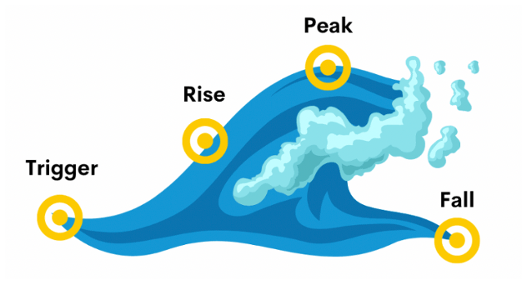
We often think of craving as a ‘wave’ – and on a graph of time vs. intensity, it literally looks like one.

Image source: https://www.greatergeelongpsychologyclinic.com.au/blogs/surfing-your-way-to-new-habits


The fact a craving looks like a wave – i.e., reaches its intensity slowly and then dissipates quickly – leads us to call a key CBT strategy ‘urge surfing’. In urge surfing, we are up-skilling ourselves in the ability to handle difficult craving-related feelings.


What is the Craving Cycle?

The Craving Cycle is understood as having four component parts – 1) the trigger, 2) the addiction-related thought/s (i.e., thoughts that justify using the addictive object), 3) the craving itself, and 4) the choice to use.


           Trigger                    Thought/s                   Craving              Choice to Use


How can I better manage these cravings?

The first and most basic step is to, as much as possible, eliminate both a) triggers, and b) access to the addictive stimulus. Eliminating triggers can be easy in some cases (e.g., not driving past an outlet for the object) but harder for others (e.g., inevitable thoughts, memories, and feelings). This is why eliminating access is so critical – if we have access to the addictive object in our household, we’re vulnerable to lapsing if/when a craving arises.

When most people think about eliminating triggers and/or access, they can become pretty overwhelmed. Sometimes, it’s near-impossible to totally eliminate triggers or access. In those cases, it becomes critical to learn how to ‘urge surf’ and deal with the difficult thoughts and feelings associated with this. Once we have a tried-and-true strategy to manage these, the urge to use becomes less daunting. In CBT, urge surfing is one of the most important strategies you’ll learn.

The good news is that the more we crave without using the addictive object, the less intense and frequent our cravings become. Cravings are a ‘use it or lose it’ response – the less we give in to them, the less likely they are to return. For this progress to be consistent, though, our behaviour also needs to be consistent. Lapses and relapses, no matter how short, can bring our cravings roaring back.

If you’re looking for some individualised and structured support, and want to start beating your cravings, the team at Your Mind Matters can help. Give us a call to book in an initial consult, and make mention if addiction is a particular concern for you.

There are also support groups available in the community (such as SMART Recovery and various Twelve Step programs) that can make recovery a less lonely experience. Lots of self-help resources can be found online, and online/telephone support services are listed below:

Alcohol and Drug Counselling Online: https://www.counsellingonline.org.au/

Positive Choices (Drug and Alcohol Information): https://positivechoices.org.au/

Family Drug Support: 1300 368 186

Gambling Help Line: 1800 858 858

Lived Experience Telephone Support Service (LETSS): 1800 013 755


References

Centre for Addiction and Mental Health. (2020). Cognitive behavioural therapy (CBT) for problem gambling. Centre for Addiction and Mental Health. https://kmb.camh.ca/ggtu/knowledge-translation/cognitive-behavioural-therapy

Fong, T. W. (2006). Understanding and managing compulsive sexual behaviours. Psychiatry (Edgmont), 3(11), 51-58.

Gonzales, M. (2020, February 27). What is Cognitive Behavioral Therapy (CBT)? DrugRehab. https://www.drugrehab.com/treatment/types-of-therapy/cognitive-behavioral-therapy/

McHugh, R. K. (2010). Cognitive-Behavioral Therapy for Substance Use Disorders. Psychiatry Clinics of North America, 33(3), 511-525.

Naqvi, N. H. (2015). Cognitive regulation of craving in alcohol dependent and social drinkers. Alcohol: Clinical and Experimental Research, 39(2), 343-349.

National Institute of Clinical Excellence. (2011, February 23). Alcohol-use disorders: Diagnosis, assessment and management of harmful drinking (high-risk drinking) and alcohol dependence. National Institute of Clinical Excellence. https://www.nice.org.uk/guidance/cg115


[siteorigin_widget class=”SiteOrigin_Widget_Headline_Widget”][/siteorigin_widget]
[siteorigin_widget class=”WP_Widget_Media_Image”][/siteorigin_widget]

This blog was written by Patrick (Paddy) Carey – Clinical Psychologist at YMM.

Paddy works with adults presenting with anxiety disorders, mood disorders, trauma and stressor-related disorders, obsessive-compulsive disorders, substance and gambling issues, psychosis spectrum disorders, and grief and loss. He is trained in Cognitive Behaviour Therapy (CBT), Acceptance and Commitment Therapy (ACT), Cognitive Processing Therapy (CPT), Metacognitive Training (MCT), and mindfulness approaches.

Paddy is focused on developing warm, trusting, and strengths-based relationships with clients. He recognises that his clients are the foremost experts in the room, and unearthing their own expertise is crucial to applying his skills. Most importantly, he’s invested in moving towards a client’s own definition of recovery – i.e., what will be the most meaningful and fulfilling life for them beyond their current struggles.

To learn more about Paddy, check out the “Our Team” page on our website! https://yourmindmatters.net.au/our-team/