📅 Book an Appointment

Psychologist for Neurodivergent Children Melbourne | Bonnie German


If you have ever sat in a school meeting feeling unsure, googled “why does my child struggle to make friends” at 11pm, or wondered whether what you are seeing in your child is something that needs support from a psychologist, this post is for you. As a Melbourne psychologist working with neurodivergent children and their families, I hear versions of this story every week.

Raising a child who sees, thinks, or experiences the world differently can be beautiful and challenging all at once. At our clinic, we work alongside many families navigating exactly this: children who are bright, creative, and deeply feeling, but who sometimes need extra support to thrive.

What Does Neurodivergent Mean? (And Is My Child Neurodivergent?)

Neurodivergent is an umbrella term for people whose brains develop or function differently from what is considered typical. This includes children with autism spectrum disorder (ASD), ADHD, dyslexia, sensory processing differences, and more.

It is not a diagnosis in itself. It is a way of acknowledging that there is real variation in how human brains work, and that difference is not deficit.

Signs Your Child May Benefit from Seeing a Psychologist

Parents are often the first to notice something, long before a formal assessment. Some common things families bring to us include:

  • Difficulty with transitions or unexpected changes to routine
  • Strong emotional reactions that are hard to recover from
  • Challenges making or keeping friendships
  • Sensory sensitivities (to noise, textures, food, light)
  • A child who masks at school but falls apart at home
  • Giftedness alongside significant struggles in specific areas

How a Neurodiversity-Affirming Psychologist in Melbourne Can Help

A neurodiversity-affirming psychologist does not try to make your child “less” of who they are. Instead, we work to:

  • Help children understand and accept themselves
  • Build skills for emotional regulation and flexibility
  • Support parents with strategies that actually work for their child
  • Collaborate with schools to create more inclusive environments
  • Use play, creativity, and connection as core therapeutic tools

What Does Child Psychology and Play Therapy Look Like in Practice?

For younger children, therapy often looks nothing like the talking-on-a-couch image many adults picture. Play therapy, art, movement, and games are all valid, evidence-based ways for children to process their experiences and build new skills.

For older children and adolescents, therapy becomes more collaborative, building on their growing self-awareness. Sessions might involve exploring identity, navigating school stress, or learning practical tools like mindfulness or cognitive strategies.

When Should Melbourne Parents Seek Support from a Child Psychologist?

You do not need to wait for a crisis. Early support is one of the most powerful things you can do for a neurodivergent child. Consider reaching out if:

  • Your child’s difficulties are affecting their wellbeing, learning, or relationships
  • You are exhausted trying to support them alone
  • School is raising concerns
  • Your child is expressing distress about being “different”

If you are based in Melbourne and looking for a psychologist for your neurodivergent child, you do not have to navigate this alone. Bonnie German is a registered Psychologist who works with children, adolescents, and families across the full range of neurodevelopmental presentations. She uses a blend of play therapy, CBT, and family collaboration to create real, lasting change. To enquire about an appointment, contact the clinic via the link below.

About the Author
Bonnie German is a registered Psychologist, holding a Master of Clinical Psychology. She especially enjoys working with neurodivergent individuals, and is interested in perinatal mental health, anxiety, and mood concerns. Bonnie works with clients of all ages and collaborates closely with families, schools, and support systems to create meaningful change.

Understanding EMDR Therapy: A Supportive Guide for Clients with Trauma and PTSD

Many people carrying the weight of trauma feel stuck, as if their past controls every moment. You might have tried different ways to heal but found little relief. EMDR trauma therapy offers a unique path that helps your brain process painful memories differently. In this guide, you’ll learn how EMDR works and what it could mean for your healing process. For more information, visit this link.

Introduction to EMDR Therapy

Untitled

EMDR therapy offers hope for those feeling trapped by their trauma. It provides a structured approach to healing that many find effective. Let’s explore what makes EMDR unique and how it can help you.

What is EMDR?

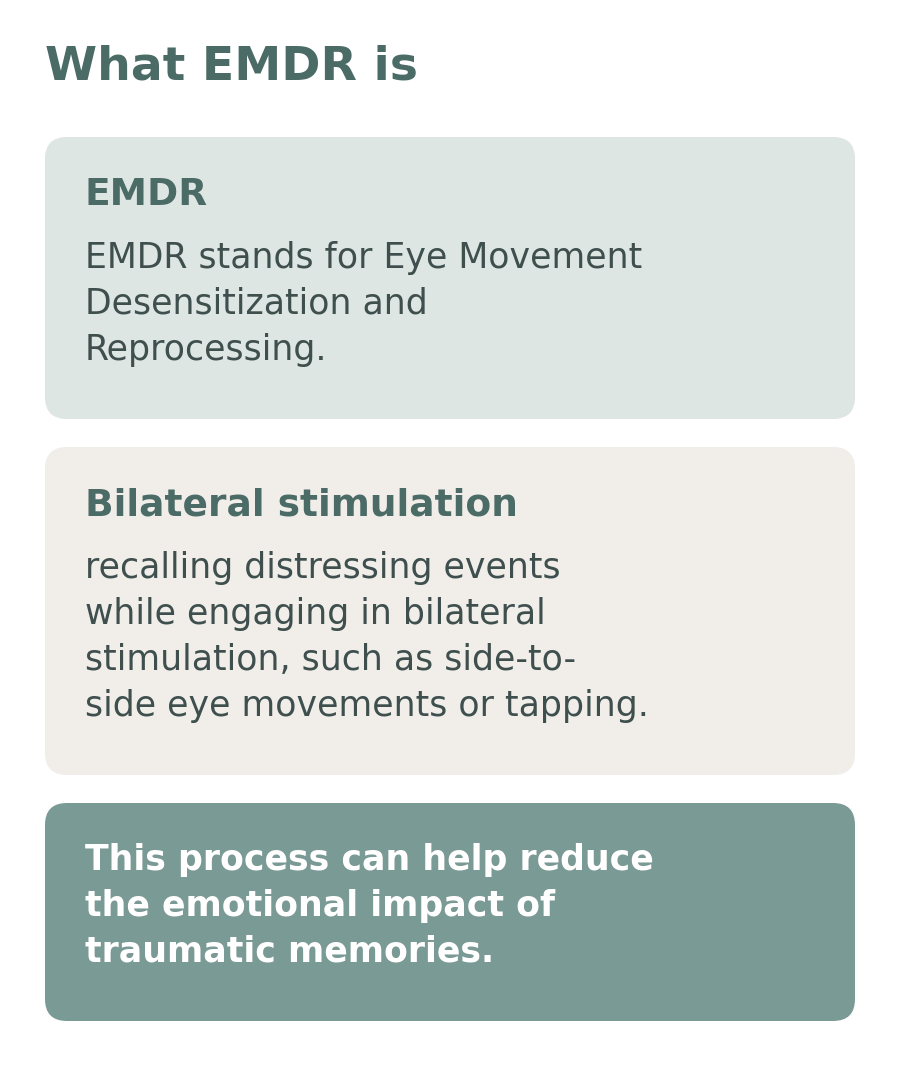
EMDR stands for Eye Movement Desensitization and Reprocessing. It’s a therapy that helps your brain process and store traumatic memories differently. This method involves recalling distressing events while engaging in bilateral stimulation, such as side-to-side eye movements or tapping. This process can help reduce the emotional impact of traumatic memories. It’s like giving your brain a way to work through difficult experiences in a safe environment. You can learn more about this approach in this detailed guide.

How EMDR Helps Trauma and PTSD

EMDR is particularly effective for trauma and PTSD. Many people feel as if they’re reliving their trauma, but EMDR helps change that. By using guided eye movements, the therapy allows your brain to reprocess memories in a way that reduces their emotional charge. This can significantly decrease symptoms like flashbacks and anxiety. Imagine being able to recall painful memories without the overwhelming emotional response. That’s what many people experience after EMDR. Learn more about how it aids PTSD recovery here.

The Origin of EMDR Therapy

EMDR was developed in the late 1980s by Francine Shapiro. She discovered that certain eye movements reduced the intensity of disturbing thoughts. What started as an observation has become a widely respected therapeutic method. Since then, EMDR has been researched extensively and is now endorsed by organizations such as the American Psychiatric Association.

The EMDR Process

Understanding how EMDR works can make the process less daunting and more accessible. Here’s a breakdown of what to expect.

The Eight Phases of EMDR

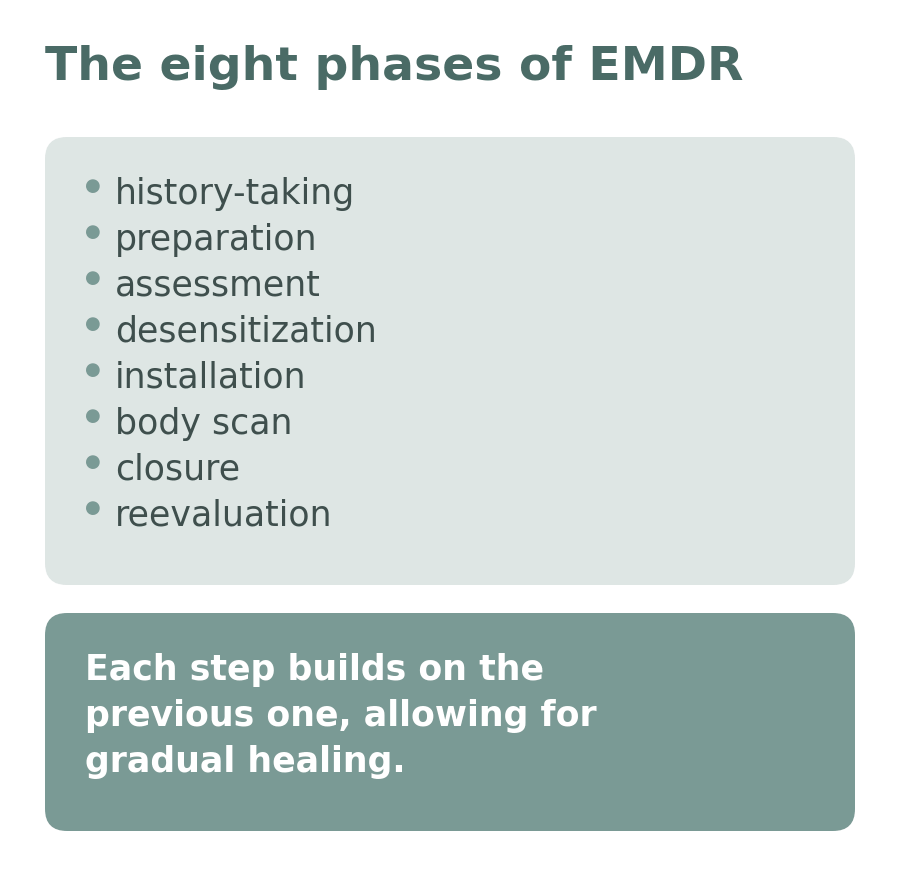
EMDR therapy follows eight distinct phases. Each phase is designed to ensure your safety while effectively addressing your trauma. These phases include history-taking, preparation, assessment, desensitization, installation, body scan, closure, and reevaluation. Each step builds on the previous one, allowing for gradual healing. For a complete breakdown of these phases, you can visit this resource.

What to Expect in a Session

An EMDR session typically involves discussing your trauma in brief doses while focusing on external stimuli. The therapist will guide you through recalling distressing memories while engaging in eye movements or other bilateral stimulation. This process is repeated until the memory becomes less distressing. Sessions are usually structured and follow a predictable pattern, which can be comforting.

Safety and Comfort in Therapy

Feeling safe is crucial when addressing trauma. EMDR therapy prioritises your comfort by creating a supportive environment. Your therapist will ensure that you feel secure throughout the process. Techniques such as grounding and relaxation are often used to maintain this sense of safety. Remember, the goal is to empower you, not to overwhelm you.

Benefits of EMDR for Trauma

Untitled

EMDR’s benefits are numerous, providing both immediate relief and long-lasting change. Let’s delve into why it’s such a powerful tool for healing.

EMDR’s Efficacy in Healing

EMDR is backed by research showing its effectiveness in reducing PTSD symptoms. Many people report feeling more at peace with their past after just a few sessions. The therapy’s structured approach helps you process memories without becoming overwhelmed. The statistics support its success, with many clients experiencing significant improvement in just a few sessions. Check out this detailed explanation of its efficacy.

Long-term Effects of EMDR

The effects of EMDR therapy often extend beyond immediate symptom relief. People who undergo EMDR frequently find that their overall anxiety decreases, and they develop healthier coping mechanisms. The therapy doesn’t just address symptoms; it promotes long-term mental well-being, allowing you to lead a more balanced life.

Finding the Right Therapist

Choosing the right therapist is crucial for successful EMDR therapy. Look for someone experienced in EMDR and with whom you feel comfortable. It’s important that you trust your therapist, as this will make the process smoother and more effective. Don’t hesitate to ask potential therapists about their experience with EMDR to ensure a good fit!

At Your Mind Matters, we have two Psychologists trained in EMDR: Blair and Serenah.

Connect with Our Therapists

At Your Mind Matters, we understand the importance of finding the right fit for your mental health journey. We feel extremely lucky that two of our Psychologists, Blair Raatjes and Serenah Alam, are both trained in EMDR.

Give us a call to book in, or head to our website to book online: www.yourmindmatters.net.au

Accessing Psychology Services via Telehealth at Your Mind Matters

Why Telehealth Matters in Mental Health Care

In today’s busy world, flexibility in accessing mental health support is more important than ever. Telehealth psychology sessions allow you to connect with a qualified psychologist from the comfort of your home, school, or workplace. At Your Mind Matters (YMM), our clinicians offers secure, evidence-based telehealth services to ensure support is available wherever you are in Victoria and across Australia.


What is Telehealth in Psychology?

Telehealth refers to psychological consultations delivered via a secure online platform. You’ll speak with your psychologist in real time, just as you would in a clinic, but without the need to travel. Research shows that telehealth can be just as effective as face-to-face sessions for many mental health concerns, including:

  • Anxiety and depression
  • ADHD and executive functioning challenges
  • Autism assessments and therapy supports
  • Trauma-informed care
  • NDIS-related psychological assessments and reports

Benefits of Choosing Telehealth at YMM

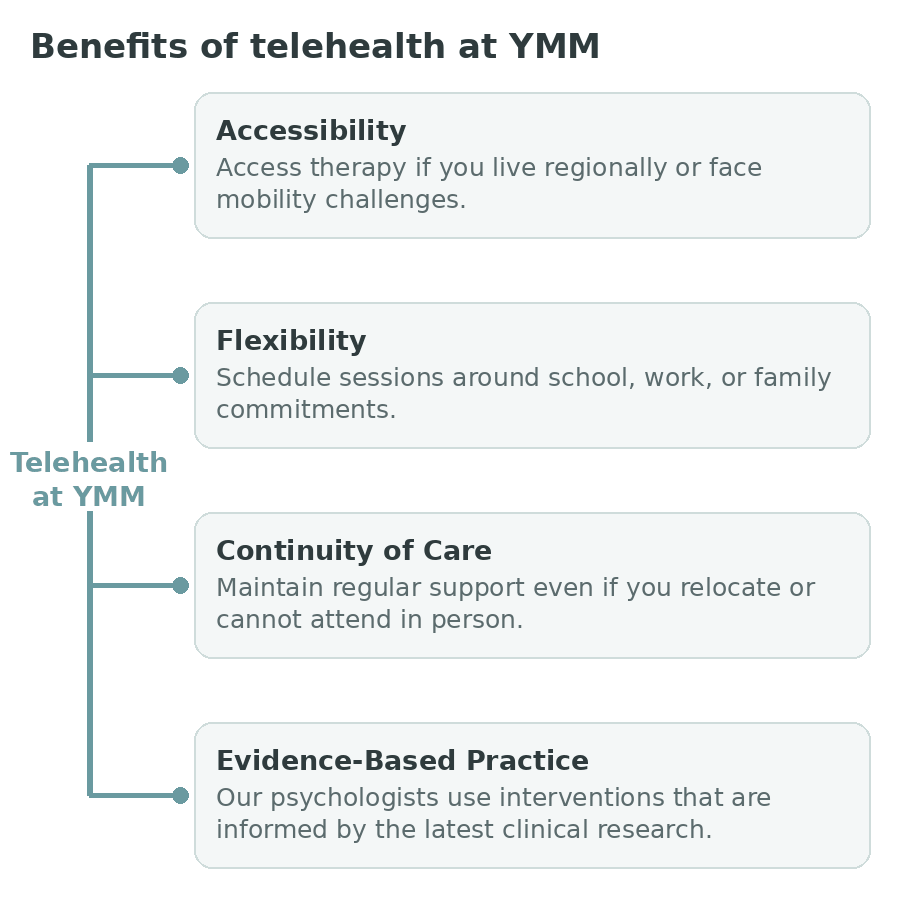
  • Accessibility: Access therapy if you live regionally or face mobility challenges.
  • Flexibility: Schedule sessions around school, work, or family commitments.
  • Continuity of Care: Maintain regular support even if you relocate or cannot attend in person.
  • Evidence-Based Practice: Our psychologists use interventions that are informed by the latest clinical research.

Is Telehealth Right for You?

Telehealth may be suitable if you prefer the comfort of your own space, live outside Melbourne, or find it difficult to attend in person. For children and young people, telehealth can work best when a parent, carer, or support worker is nearby to assist with technology and engagement.

If you’re unsure, our team can help you decide whether telehealth or in-clinic appointments are the best fit for your needs.


How YMM Delivers Safe and Effective Telehealth

At Your Mind Matters, our psychologists follow strict professional and ethical standards to ensure that online sessions are safe, private, and effective. This includes:

  • Using secure, encrypted video platforms
  • Maintaining confidentiality and privacy at all times
  • Providing clear information so you can make informed decisions about your care
  • Following AHPRA and Psychology Board of Australia guidelines for safe practice

Booking a Telehealth Appointment

Accessing telehealth psychology at YMM is simple:

  1. Get in touch with our team to discuss your needs or view our clinician profiles here: https://yourmindmatters.net.au/our-team
  2. Book an appointment at a time that suits you through our online portal: https://clientportal.zandahealth.com/clientportal/yourmindmatters
  3. Connect online with your psychologist using a secure link sent before your session.

Whether you are seeking an ADHD or autism assessment, or ongoing therapy, our telehealth psychologists are here to support you.

👉 Book a telehealth appointment with a psychologist today! Head to our website and learn about our clinicians. Once you know who you’d like to work with, call us or book online: https://yourmindmatters.net.au/contact-us/

Applications of AI in Psychology

Transforming Treatment Approaches – or Are We?

In recent years, Artificial Intelligence (AI) has entered the field of psychology with great promise, offering to revolutionise the way mental health care is delivered. From faster diagnostic tools to personalised treatment plans and predictive modelling, the applications of AI seem vast — and growing. But while the excitement is justified, it’s also important to approach this technological wave with a critical eye.

Sharper Diagnosis or Data Dependence?

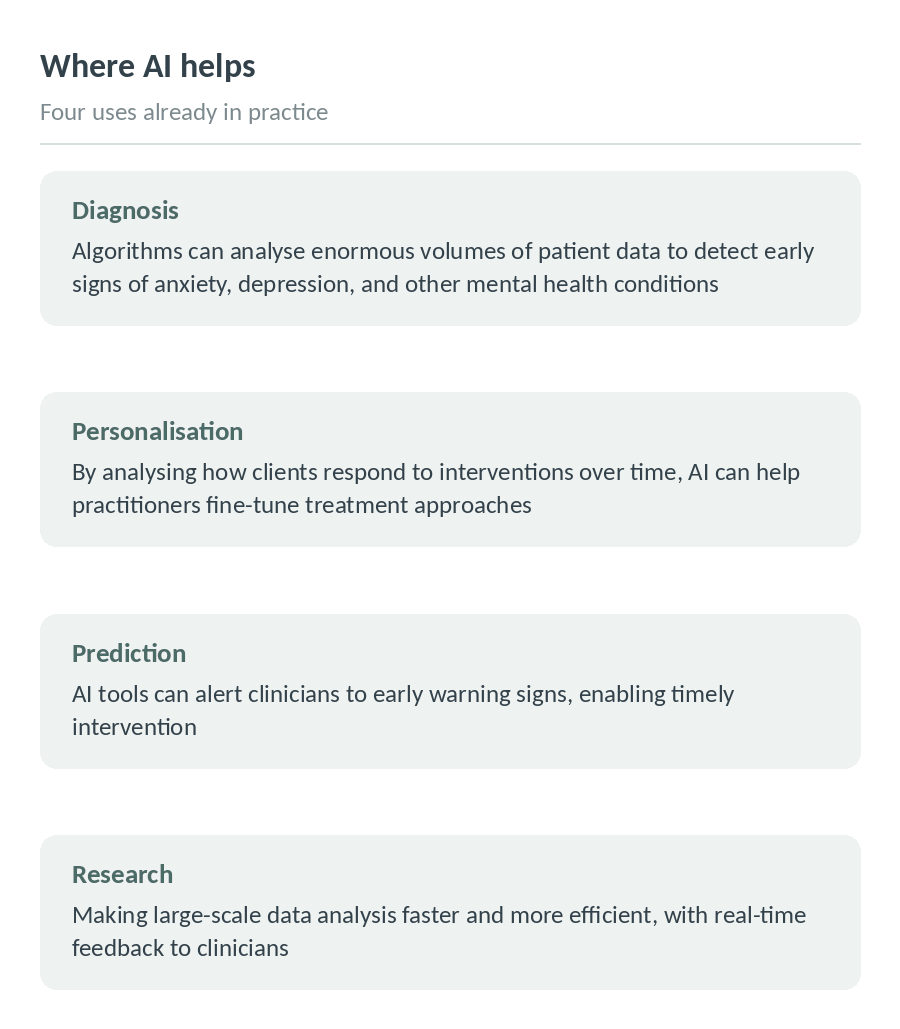
AI has shown significant capability in enhancing diagnostic accuracy. Algorithms can now analyse enormous volumes of patient data — including voice patterns, facial expressions, and even social media activity — to detect early signs of anxiety, depression, and other mental health conditions. These tools can help flag concerns earlier and more efficiently than ever before.

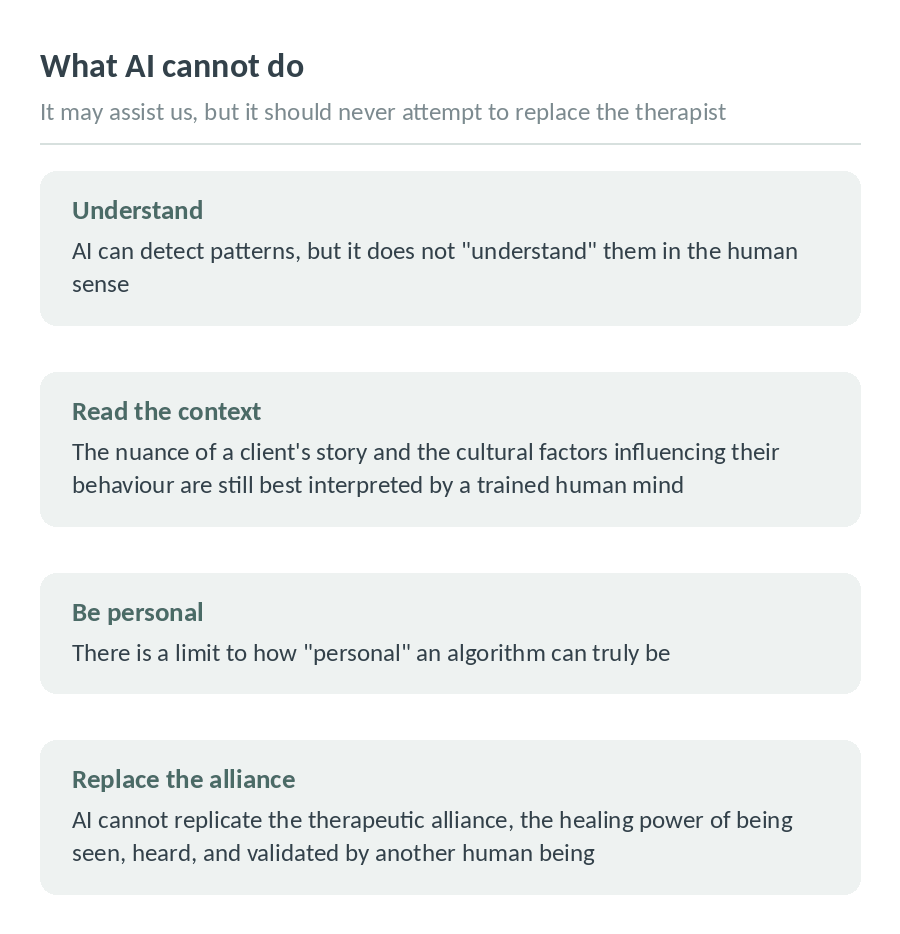
However, while AI can detect patterns, it doesn’t “understand” them in the human sense. We must ask: Are we relying too heavily on data-driven cues at the expense of lived experience? The nuance of a client’s story, the context behind their tone or expression, and cultural factors influencing their behaviour are still best interpreted by a trained human mind.

Personalised Therapy or Algorithmic Assumptions?

Another exciting avenue is AI-assisted personalisation of therapy. By analysing how clients respond to interventions over time, AI can help practitioners fine-tune treatment approaches. It can even suggest strategies that align with a client’s unique emotional and behavioural patterns. Therapeutic chatbots, such as Woebot or Wysa, are being used as supplementary tools for between-session support. These tools are especially useful in increasing accessibility for those who may not seek traditional therapy due to stigma or logistical barriers. Yet there’s a limit to how “personal” an algorithm can truly be.

Can an AI model genuinely understand a client’s shifting emotional world, or their resistance to therapy, in the same way a clinician can? Personalisation must go beyond pattern recognition — it must include deep listening, attunement, and emotional resonance.

Predicting Crises: Progress or Pre-emption?

One of the most intriguing frontiers is AI’s potential to predict mental health crises before they escalate. By analysing trends in behaviour and mood data, AI tools can alert clinicians to early warning signs, enabling timely intervention. While this has undeniable value — especially in high-risk populations — it raises ethical and clinical questions: What happens when AI flags a “risk” that the client doesn’t perceive? Do we risk medicalising normal emotional fluctuations? And how do we avoid reinforcing surveillance-style care under the guise of support?

Revolutionising Research — ResponsiblyAI is already transforming mental health research, making large-scale data analysis faster and more efficient. It also allows for real-time feedback to clinicians based on evolving research findings — a huge asset in a field where evidence-based practice is essential.

However, we must guard against the “solutionism” trap — the idea that every complex mental health issue has a data-driven fix. Psychological healing is not always linear or measurable, and our research tools must reflect the complexity of human experience.

Ethics and Empathy: A Necessary Tandem

Perhaps the biggest challenge in integrating AI into mental health care is preserving the ethical and human foundations of therapy. Data privacy, informed consent, and transparency must remain at the forefront. Clinicians also need to feel confident in questioning AI recommendations — especially when they conflict with clinical judgment or the client’s narrative.

Importantly, AI can’t replicate the therapeutic alliance — the healing power of being seen, heard, and validated by another human being. AI may assist us, but it should never attempt to replace the therapist’s role in providing a safe, relational space.


Final Thoughts

AI is undoubtedly reshaping the landscape of psychological practice. It offers powerful tools that can enhance assessment, personalise treatment, and support prevention efforts. But like any tool, its value depends on how we use it.

At Your Mind Matters, your clinician may use AI to help take notes, create guided imagery scripts, or – my favourite – challenge my diagnostic impressions against the DSM-5 (our diagnostic manual). 

We won’t be replaced by AI, but if there is a way to enhance client care, it is certainly something we will integrate!

PS- any AI we use is compliant with Australian privacy standards of course!

This blog was written by Laura Forlani, Clinical Psychologist and Director at YMM

Fact checked by ChatGPT 🙂

📅 Book an Appointment