Moving on from Parentification

Do you identify with any of the following?

  • Feel overly responsible for the emotional needs of others
  • Insecure about depending on others
  • Guilty in the face of attempting to prioritise your own needs
  • Struggle with drawing boundaries
  • Often feel like you are not doing enough for others

If you endorsed any of the above, could you have been a parentified child?

“Parentification” is the outcome of a role reversal, wherein a child finds themselves obliged to act as a parent to their own parent or siblings. Rather than the parent responding to the child’s emotional needs, the child feels compelled to take on the role of meeting the parent’s emotional needs. Consequently, the child becomes highly attuned to any changes in the parent’s mood. This can occur due to a variety of different situations, for example, in the face of divorce, where a parent turns to the child for ‘emotional unloading’, the child quickly becomes an ear for the parent’s distress, perhaps acting as an advisor or mediator. Basically, the parent inappropriately turns to their child to meet his or her own needs for affection, approval, reassurance, stability or control….


What a hefty burden for a child to bear, at any age! Often this results in the child maturing quickly and taking on the role of an adult way too early! Most of the time, in parentification there is no malicious intent, the parents love their child but with limited capacity and are driven by personal vulnerabilities.


As adults, these children would likely endorse the above questions. Whether aware of this process or not, they may refer to their parent as their “best friend”, “lifeline”, or “confidant”, however, often report feeling empty, smothered, and struggle with their sense of self-identity. While the personal impacts of parentification can be distressing, the role of caretaker can also provide a sense of control, certainty, and safety. It is often not until these adults reach a point of utter burn-out that the impacts of this role are considered.


So perhaps you have identified some of these themes in yourself and your relationship with a parent. If you have, a sense of anger and loss is completely understandable. If you are interested in starting your journey toward healing from parentification the below tips may be a good starting point:


  • Own/tell your story: As part of reclaiming elements of your lost childhood, that inner child needs to tell their story. Acknowledging your truth is the first step that will likely allow room for justified feelings of grief and anger. Therapy provides a non-judgemental safe space for your truth to be heard.
  • Prioritise your own needs: Often a deprivation of joy and play can accompany a parentified history. The good news is that you can become your own parent to your inner child and allow them to play, make a mess, and soak up the things that make their heart glad. It may take some time for you to connect with your needs so take it slow, it might be that you start off with prioritising some time for a hobby or activity that you don’t often get around to.
  • Self-compassion: Guilt is an emotion that is frequently felt by the parentified child and often this guilt does not fit the facts. Typically, the automatic default is to assume that things are their fault with the inner critic pushing them to do more for others. It’s time to extend yourself a kind hand and cultivate self-compassion.
  • Thank the inner critic: The inner critic that berates you with the “do more” and the “fix it” story formed as a coping mechanism in times of distress. Instead of leaning into the critic with contempt, it may be helpful to recognise the critic for their help but remind them that you have got it from here!


As with healing from any form of trauma, this will take time. Tread softly with yourself, nurture your needs, you deserve to! Psychotherapy can also provide a space for you to practice these skills and help you process your feelings along the way. Our team of psychologists are here to help.


References:

Interpersonal Process in Therapy: An Integrative Model- Book by Edward Teyber

https://doctorlib.info/psychiatry/breaking-negative-thinking-patterns/3.html

https://eggshelltherapy.com/parentification/

https://www.psychologytoday.com/au/blog/living-emotional-intensity/201912/did-you-have-grow-too-soon


[siteorigin_widget class=”SiteOrigin_Widget_Headline_Widget”][/siteorigin_widget]
[siteorigin_widget class=”WP_Widget_Media_Image”][/siteorigin_widget]

This blog was written by Blair Raatjes, Psychologist at Your Mind Matters Psychology Services. She works with us 2 days per week.

Blair understands that seeking psychological help for the first time can be a nerve wracking experience for clients, therefore, she is committed to providing a warm, accepting and compassionate environment. She believes that collaboration, empathetic understanding, and respect are essential components to therapy and is interested in evidence-based approaches that emphasise the importance of catering to each client’s needs and strengths. Blair has experience using key therapeutic techniques, including Cognitive Behaviour Therapy and Motivational Interviewing and has a keen interest in Mindfulness based techniques such as Acceptance and Commitment Therapy.

To learn more about Maria, check out the “Our Team” page on our website! https://yourmindmatters.net.au/our-team/


Understanding Your Thoughts

[siteorigin_widget class=”SiteOrigin_Widget_Headline_Widget”][/siteorigin_widget]

Simply put, thoughts are our opinions and beliefs about ourselves, others and the world around us. Thoughts can be experienced in different ways. Some of us think in the form of ‘words’, images/pictures, or even both. We all have that ‘voice’ in our head that helps us process events that are unfolding around us. Sometimes our inner self-talk can be very positive, supportive and encouraging, almost like a cheerleader. However, at times it can be very critical. You may have heard of the term ‘the inner critic’; this is the part of you that scrutinises/judges you. It may, for example, tell you that you ‘should’ do better or that you’re failing in life.


A big part of therapy is to shift our thinking. Now we have all heard the term ‘positive thinking’. We might be going through a tough situation and in an attempt to help, a friend or loved one may tell us “STOP thinking so negatively and think more positively!!”. Easier said then done, right?! We first need to understand our thoughts, before we can start to shift them. Most importantly, we need to understand what has led us to form that interpretation of the situation/event at hand, ourselves, others or the world.


Let’s start at the beginning… First and foremost, you CAN NOT stop yourself from thinking! The more you tell yourself to ‘stop thinking’ the more you think that thought! Have you ever had a song stuck in your head? I bet the answer is YES! And your mind sings it over, and over, and over! It becomes annoying, right? And the more you try to ‘get rid of’ that song, the more your mind keeps replaying it. Eventually, you may decide to stop fighting it and allow your mind to ‘sing’, you allow the song to be there, and go on with your day, focusing on what is important to you. And alas… IT GOES AWAY!!


Above, I mentioned that thoughts are words/pictures/images. I want you to keep this in mind. Thoughts in and of themselves do not have any meaning; they are words/pictures/images formed in our mind about our interpretation of a situation. We are the ones who give our thoughts meaning…we think them and automatically believe them to be true. Just because you think something, it DOES NOT make it true. For example, if you had the thought “I’m not a good friend”, that does not make it a fact.


We can often get caught in ‘thinking traps’. These are also referred to as cognitive distortions. Thinking traps are inaccuracies in thinking which are often very unhelpful and get in the way of us viewing a situation more objectively. Here are some common thinking traps:

  • Mindreading – We believe we know what others are thinking, and they have a negative opinion of us. The truth is, we can’t possibly know what someone else is thinking as we are not mind readers.
  • Fortune telling – When you tell yourself that something won’t work out; almost like you are predicting the future.
  • Black and white thinking – Viewing situations/events in terms of extremes and not seeing the in-between. For example, seeing things as either good or bad, a success or a failure.
  • Catastrophising – Telling yourself that the worst thing imaginable will happen and you won’t be able to cope.
  • ‘Should’ statements – Placing standards on how you ‘should’ or ‘must’ behave/think/feel.
  • Overgeneralisation – Thinking in terms of ‘always’ or ‘never’. For example, “I can never get anything right”.


Rather than refer to our thoughts as ‘positive’ or ‘negative’, I personally prefer to use the terms ‘helpful’ or ‘unhelpful’. Ask yourself, is it useful for me to think this way? Does this help me to live by my values and purse my goals? In the same way that we stop trying to ‘get rid of’ the songs stuck in our mind, we want to start making choices towards not engaging in our thoughts or getting stuck in the trap of ‘believing them’. Instead, we want to start noticing them more mindfully.

Our thoughts can be quite powerful and influence us in many ways. If you would like some support to shift your thinking to be more helpful and aligned with your values, our team of psychologists are here to help.

[siteorigin_widget class=”SiteOrigin_Widget_Headline_Widget”][/siteorigin_widget]
[siteorigin_widget class=”WP_Widget_Media_Image”][/siteorigin_widget]

This blog was written by Maria Kampantais – Psychologist and Clinical Registrar at YMM.

Maria has been consulting at YMM for many years and enjoys working with clients through the use of evidence-based therapies such as Cognitive Behavioural Therapy (CBT), Acceptance and Commitment Therapy (ACT), mindfulness techniques, Motivational Interviewing (MI), and Solution Focused Therapy (SFT).

To learn more about Maria, check out the “Our Team” page on our website! https://yourmindmatters.net.au/our-team/


Accessing Support over our Christmas Closure

Christmas can be a challenging time of year for some of our clients, so we thought it may be helpful to share some resources.


For 24 hour telephone support, you can contact Lifeline on 13 11 14

Mensline: 24/7 support for men:  1300 78 99 78

Suicide Call Back Service: 1300 659 457

Headspace- 1800 650 890 (for young people aged between 12 and 25)

SANE offer support via phone and website from 10am-10pm, head to SANE.org

If you prefer to talk face-to-face, try to speak with a trust friend or family member, or book an appointment with your GP, who will also be able to link you in with services. 

We have quite a number of blogs dedicated to self-care on our website, which you may also enjoy reading, and there are many apps (free!) aimed to help with stress management (Calm, Happify, and Headspace are amongst the most popular). 


Coping and Managing with Workplace Stress

The workplace environment is rapidly and constantly changing. With online platforms, digital tools and smart devices make work more portable and professional lives more accessible than ever. Whilst these devices are intended to simplify things, they also make professional and personal lives more stressful. It has become all too easy for work to be a 24/7 pursuit. The number of Australian workers stressed because of technology has increased by 27 per cent since 2016, according to the latest workplace survey from Reventure, 2017. 

With organisations increasingly putting a strong emphasis on employee productivity, many workers are faced with long hours, unrealistic workloads and looming deadlines. The pressure to be ever-available and ultra-responsive could be having an adverse effect on the health and productivity of employees. 

According to statistics provided by health insurance provider Medibank, 3.2 days are lost every year per worker due to stress-related absenteeism. The total cost on the economy weighs in at a staggering $14.81 billion per year, with more than $10 billion being a direct cost to employers. These statistics highlight the importance of maintaining mental wellbeing in the workplace. 

Stress affects everyone differently, but there are common symptoms: 

  • Firstly, there are the immediate physical symptoms, like sweaty palms, racing heart, tense muscles, clenched teeth, high blood pressure, and low energy.
  • Then there are the mental symptoms like constant worrying, racing thoughts, forgetfulness, an inability to focus, and being overly pessimistic.
  • Lastly, and probably most disruptive to the ability to work, is the emotional impact of workplace stress. Stress causes people to feel overwhelmed and out of control. It is easier to become agitated and frustrated, thus making workplace relationships more difficult. Decision making, focussing and quieting down racing thoughts, becoming a struggle. All of these can lead to a loss of self-esteem and confidence, which in turn leads to procrastination and a loss of motivation.

So here are some tips that can assist in the reduction of work stress:

  • Getting enough sleep- A healthy mind requires enough sleep. Most would agree that adequate sleep is the most important element in reducing stress and living a balanced lifestyle. 

Keeping to a healthy sleep routine, reducing use of electronics before bed and simply an earlier bedtime are all recommended as a means of ensuring adequate sleep.

  • Reduce the number of interruptions at work- Emails, phone calls, co-workers and clients, many of us can relate to being bombarded from a multitude of sources vying for our attention throughout the day. The high number of distractions encountered in the modern workplace, is a factor in workplace stress. 

Allocating structured time periods to deal with tasks requiring communication and collaboration, would enable one to better manage and control interruptions, while setting aside the rest of the day to concentrate on the task at hand.

  • Setting boundaries on a workday- Continually increasing workload, changes to work environment and unrealistic work expectations increase the chances of burnout, which is characterised by constant fatigue, cynicism, feelings of disenchantment and loss of motivation. 

Without clear boundaries, the temptation to continue working is more difficult to contain. Reducing the temptation to overwork requires the identification of factors contributing to the need to put in long hours. These can include: 

  • Unrealistic deadlines; 
  • Scheduling interruptions and work across timelines; 
  • Readily available access to communication (email, phone, chat). 

Once identified, these factors can be changed. This may include scheduling work and rest times, having a discussion with management about reasonable workloads and expectations and controlling technology access.

  • Ensuring that regular breaks are taken- Research shows workplace performance improves after a period of rest and recovery, even among people who enjoy their work. 

Whilst taking breaks is important, taking the right types of breaks is also significant. Some suggestion include: Going outside where practical since fresh air has been found to increase energy levels; Resting eyes from all of the screens; Doing some brief stretching exercises; Eating the right food and drinking plenty of water. 

There’s no escaping the fact that work is a stressful place. Yet it’s when that stress becomes a constant presence in our lives that we need to start worrying about it. Too much exposure to stress makes us worse at our jobs. It puts us at risk and can have serious consequences to our physical health. 

If you would like some support with better managing work stresses, why not give us a call today? Our team of highly skilled and well-experienced psychologists are here to help. 


Lana professional photo

This blog was written by Lana Lubomirska, Psychologist at Your Mind Matters. 

Lana is a warm, friendly and empathic practitioner with experience in working with children, adolescents and adults from different cultural and socioeconomic backgrounds. 

Lana uses a variety of evidence-based therapies to support clients in addressing difficulties with anxiety, depression, relationship issues, friendship problems and educational stresses. These include Acceptance and Commitment Therapy, Cognitive Behaviour Therapy, Motivational Interviewing, Solution Focused Therapy and Mindfulness Techniques as well as elements of psychodynamic and play therapies.

Lana works with us 2 evenings per week. 


References

Author Unknown (2019). Burnout: A Growing Mental Health Crisis Employers Are Regrettably Dismissing. Corporate Wellness Magazine. July 17, 2019

McMillen, Lindsay (2017). Industry Insights. Reventure. https://www.convergeinternational.com.au/docs/default-source/research/a-future-that-works—industry-insights.pdf?sfvrsn=fc34b56e_2

Medibank (2019). Are our jobs making us more stressed than ever? 21/1/2019

Smallwood, J. and Schooler, J (2015). The Science of Mind Wandering: Empirically Navigating the Stream of Consciousness. Annual Review of Psychology, Vol. 66:487-518.


Incorporating relaxation into everyday life

Many of us struggle to unwind and relax. We can often get caught up in the busy nature of life, that we forget to take time for ourselves and allow our body and mind to recover. Relaxation is a vital part of maintaining a good level of emotional wellbeing, reduction in blood pressure, increased energy levels and can reduce absenteeism from work, study, and susceptibility to the common cold.


When you think about ‘relaxation’ you may envision sitting or meditating for long periods of time. This can be a deterrent for some and lead to dread and avoidance. Spending as little as 10 minutes a day can be beneficial and is likely to be achievable for most individuals.


There are many forms of relaxation. Below are a few you may wish to try:

Breathing techniques

  • Diaphragmatic/deep breathing: sitting up straight, place one hand on your chest and the other hand on your abdomen. Take a slow deep breath, inhaling through the nose for approximately 4 seconds, hold that breath momentarily, then exhale slowly through your mouth for 6 seconds. Repeat for a count of 3. As you feel more comfortable with this technique, try to stay engaged in this breathing relaxation for longer periods of time.
  • Square/Box breathing: sitting up straight, inhale slowly and deeply through your nose for 4 seconds feeling the air completely fill your lungs and moving into the abdomen, hold that breath for four seconds, exhale slowly through your mouth for 4 seconds, pause for 4 seconds, and repeat.


Progressive muscle relaxation

This technique involves tensing and relaxing various muscles in the body. Starting with your feet, tense your toes for 5 seconds and then allow the muscles to relax for 10 seconds. Next tense your calves (being careful not to tense too much as this part of the body is susceptible to cramping!) for 5 seconds and then relax the muscles for 10 seconds. Continue to follow this process whilst you work through your body, from your thighs, hips, chest and stomach, shoulders, upper back, neck, arms and face. Follow the below link for a guided outline. https://www.cci.health.wa.gov.au/~/media/CCI/Mental%20Health%20Professionals/Panic/Panic%20-%20Information%20Sheets/Panic%20Information%20Sheet%20-%2005%20-%20Progressive%20Muscle%20Relaxation.pdf 


Mindfulness

Mindfulness is noticing and being aware of the present moment. It’s about paying attention to our thoughts, feelings, and sensations in our body. 

      Sensory exercise

  • Take 30 seconds to focus on your breathing. You may wish to utilise one of the breathing techniques listed above.
  • Sight: look around and name 5 objects
  • Touch: look at and touch 4 different objects. Notice their texture, weight and temperature
  • Sound: notice 3 sounds
  • Smell: identify 2 smells, paying attention to the aroma
  • Taste: notice 1 thing you can taste.

      Body scan

  • Close your eyes and gently bring your awareness to your breathing. Spend 30 seconds focusing on your breathing, not changing it in anyway, just noticing your natural breath and how your chest rises and falls with each breath you take.
  • If you notice your mind begins to wander and you start thinking of other things, remember that this is completely natural and okay. Just gently notice your thoughts, without getting caught up in them, and bring your awareness back to your breathing.
  • Begin the body scan by noticing your feet. Notice how your feet feel in your shoes and against the floor. Pay attention to all sensations such as temperature, pressure, tingling or weight.
  • Continue the body scan by noticing each part of your body; legs, hips, chest and stomach, shoulders, upper back, neck, arms and face.
  • Return your awareness to your breathing. Noticing your chest rising and falling, as you breathe in and out. Open your eyes.

*You may wish to do a variation of this exercise. Follow steps 1 and 2 as above, and when you reach step 3, as you begin to notice sensations in your body, imagine a warm glow of light. Starting at your toes, work your way up your body, imagining that this warm light radiates warmth and comfort.


  • Guided mindfulness meditation

Mindfulness apps are a great tool to utilise as they provide guided meditations you can engage in throughout the day. I recommend Smiling Mind. Why? Well it’s a free app, no ads, no junk emails/spam sent to your inbox, and offers ample meditation clips, starting from 1 minute! So, for those of you who are time poor, there is sure to be a guided meditation here for you.  There are plenty of great apps out there, which require you to purchase the app or to subscribe, and it is totally up to you if you choose to look into these.


  • Mindful colouring

Mindful colouring is a great way to relax and unwind. Mindful colouring is not just about colouring in a picture or pattern, rather it is about paying attention and noticing the process of the colouring. Notice the feel of the marker or pencil in your hand. Pay attention to each stroke, the pressure you apply, the movement of your hand as you colour in the image, and the sound made as your marker/pencil touches the paper. Adult colouring books are available from local bookstores, department stores and your local supermarket may stock some. When searching for a mindful colouring book, go with the one whose patterns or images are most appealing to you.  


Relaxation doesn’t always have to entail a process. It can also be seen as engaging in enjoyable activities such as having a bath, reading a book, or going for a walk. Try to do these activities mindfully, with openness and curiosity, paying attention to the present moment.

Remember, practice and consistency is key to establishing relaxation in your daily schedule!

About the Author:

mariaThis blog was written by Maria Kampantais, psychologist at Your Mind Matters Psychology Services. She works with us 4 days per week (day and evening sessions) and is passionate about working with clients suffering from various anxiety disorders.

Helping Children & Adolescents with Autism Spectrum Disorder & Anxiety

Anxiety is a normal part of children’s development, but children and teenagers with a diagnosis of autism spectrum disorder (ASD) can experience anxiety more intensely and more often than other children.


Anxiety or autism spectrum disorder?

Children with autism spectrum disorder (ASD) feel many of the same worries and fears as other children. But when children and teenagers with ASD get worried or anxious, the way they show their anxiety can look a lot like common characteristics of ASD – stimming, obsessive or ritualistic behaviour, and resistance to changes in routine.

How anxiety affects children and teenagers with autism spectrum disorder:

The world can be a confusing place for children and teenagers with ASD. They might find social or unfamiliar situations overwhelming and hard to understand. They often have difficulty working out what another person might be thinking or feeling, or how that person might react. As a result, people and situations can seem unpredictable, which can make children feel stressed and anxious.

On top of that, children and teenagers with ASD, especially younger children, might have trouble telling you that they’re feeling anxious. Instead, you might notice an increase in challenging behaviour.

For example, your anxious child might:

  • insist even more on routine and sameness
  • have more trouble sleeping
  • have meltdowns or temper tantrums
  • avoid or withdraw from social situations
  • rely more on obsessions and rituals, like lining up or spinning objects
  • stim by rocking, spinning or flapping hands
  • do things to hurt themselves, like head-banging, scratching skin or hand-biting.


REDUCING ANXIETY AND MANAGING ANXIETY FOR YOUR CHILD WITH AUTISM SPECTRUM DISORDER:

Anxiety is a natural part of life and something that everyone experiences at some stage.

You’ll never be able to get rid of everything that causes anxiety or stress for your child, though you will try! But there are some things you can do to help ease your child’s worries, and encourage them to manage his own anxiety levels.

 Find out what makes your child anxious

Because children and teenagers with ASD can have trouble with understanding and communicating emotions, you might need to read your child’s signals and work out what makes them feel anxious or stressed.

Some of the common triggers for anxiety in children with ASD include:

  • changes in routine – for example, a weekly piano lesson gets cancelled because the teacher is sick
  • changes in environment – for example, furniture in your home gets moved, there’s new play equipment at the local park, or you move house
  • unfamiliar social situations – for example, a birthday party at an unfamiliar house
  • sensory sensitivities – for example, sensitivities to particular noises, bright lights, specific flavours or food textures
  • fear of a particular situation, activity or object – for example, sleeping in their own bed, going to the toilet, balloons or vacuum cleaners.

Once you’ve worked out some of the things that make your child feel anxious, it can help to make a list of them, so that you can find ways to help your child manage these situations.


Give your child lots of opportunities to practice dealing with these things and situations in safe environments.

It helps if other people who look after your child – for example, child care workers, teachers and family members – also know what makes your child feel anxious and what they can do to help him with managing anxiety in these situations.


Sensory needs

Children with ASD may have a range of sensory needs. They might experience sensory input in one or more of the seven senses differently.

Think about situations where there is a lot of sensory information, which can exacerbate their anxiety levels. Consider the food court in a shopping mall, where there are:

  • crowds of people
  • different food smells
  • lots of noise such as chatting, laughing, chairs scraping and cutlery clanging
  • foods with different tastes and textures
  • tables, chairs and groups of pupils that make it difficult for you to move through the hall.

This can be an overwhelming place for a child or young person on the autism.

If you think you can change the environment to reduce overstimulation, do!


Help your child recognise anxious feelings

Your child might need to be taught what anxiety is and what it feels like in her body. For example, when they feels anxious their palms get sweaty, their heart beats faster, and they engage in a stimming behaviour.

You could try drawing an outline of a person’s body. Inside the outline, help your child draw or write what happens in each part of his body when he feels scared or worried.


Quick tips to help children with ASD manage anxiety

Here are some ways you can help:

  • make sure you prepare them for any change to their routine
  • think about how you can adapt the environment
  • use visual supports and timetables
  • try social stories or comic strip conversations to develop social understanding
  • use a stress scale to help them identify changes in emotions offer a safe and quiet place where they can go to get away from social pressures
  • have lunch time clubs where they can spend time with others who have similar interests.


Use relaxation and calming strategies

Your child might also need to learn what she can do to calm down. You can help your child come up with a toolbox of ways to help herself calm down when she starts feeling anxious or stressed. These might be:

  • counting slowly to 10
  • taking five deep breaths
  • running around the yard five times
  • doing 50 jumps on the trampoline
  • looking at a collection of favourite or special things
  • reading a favourite book
  • closing eyes for a few moments
  • going to a quiet part of the house.

Get your child to practice these strategies when they’re calm. Once they knows the strategies well, you can gently guide them to try them when he feels anxious.

Getting help with managing your child’s anxiety

A psychologist might be able to help if your child with autism spectrum disorder (ASD) is very anxious. Psychologists have specialised training in mental health conditions, and can work directly with your child and family to develop strategies for reducing anxiety.

Psychologists use a range of approaches, including:

  • cognitive behaviour therapy – this helps children develop skills to change their thinking in situations that make them anxious
  • interventions using gradual exposure to help children face their fears – for example, the stepladder approach
  • Social Stories– these can help prepare children for unfamiliar or stressful situations that generally make them anxious
  • relaxation training to help your child learn to relax.

You can ask your GP or Paediatrician to recommend a psychologist.

Medication can also help reduce anxiety symptoms in children with ASD. It’s usually recommended only when anxiety is affecting a child’s everyday life and behaviour strategies haven’t reduced the anxiety enough. You can speak to your GP or Paediatrician about this option.

The above information were obtained from the following sources. The full articles may be found on:

http://raisingchildren.net.au/articles/autism_spectrum_disorder_anxiety.html

http://www.autism.org.uk/professionals/teachers/classroom/understanding-anxiety.aspx

Parents of children with ASD may find the following resource beneficial:

https://ed-psych.utah.edu/school-psych/_documents/grants/autism-training-grant/Anxiety-PP.pdf

ShannonThis blog was written by Dr Aiyuen (Shannon) Choong, Psychologist at Your Mind Matters. Aiyuen is fluent in English and Mandarin, and is passionate about working with children from preschool years through to adolescence.

To learn more about Aiyuen, click here.

Understanding Obsessive Compulsive Disorder (OCD)

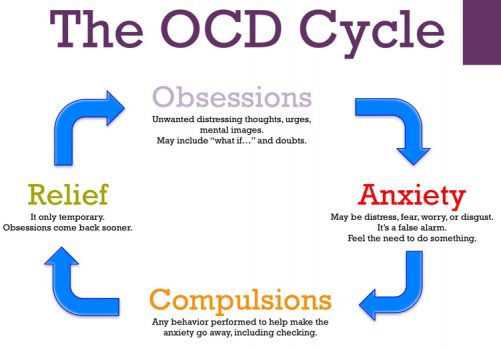
Obsessive compulsive disorder (OCD) is an anxiety condition involving intrusive negative thoughts and the repetition of certain behaviours.

What is the difference between obsessions and compulsions?

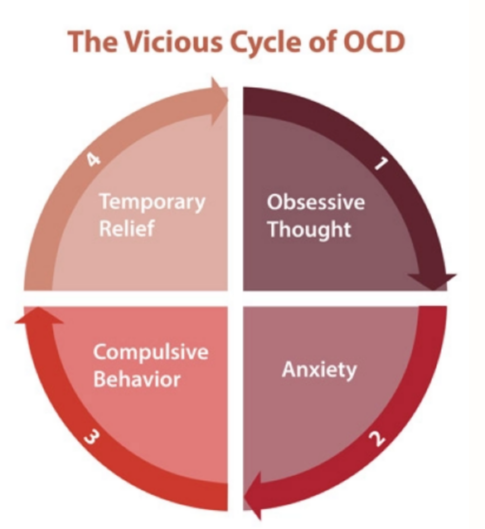
Obsessions are thoughts or images which can be quite intrusive and distressing. Although these thoughts can often be irrational, they can be extremely difficult to ignore and result in overwhelming anxiety and fear. Common obsessive thoughts include consistent worry about forgetting to lock doors, something bad occurring, or fear of contracting germs. Obsessive thoughts can be infrequent, only occurring occasionally, and at other times they can occur frequently. Obsessive thoughts become problematic when they interfere in an individual’s daily functioning, personal relationships and/or employment.

Compulsions are the repetition of certain behaviours or actions with the aim of alleviating the fear or anxiety resulting from the obsessive thought. In other words, the compulsive behaviour neutralises the distressing obsession. This wouldn’t be problematic if the compulsion was simple however, many compulsive rituals can take up hours of each day. For example, an individual with the fear of forgetting to lock the front door of their home may check to see if their door is locked several times and may even return home whilst on their way to work, to double check that they did indeed lock the door. This can lead to being late for work and impede on reliability. Other examples of compulsive behaviours can include repetitive hand washing, counting/repeating, arranging, and checking behaviours.

Does an individual experience both obsessions and compulsions?

Most individuals who have OCD will experience both obsessions and compulsions however the two are not always present. 20 percent of individuals will experience obsessions only, and 10 percent will experience only compulsions.

Prevalence rates

About three in every hundred people will develop OCD at some time in their lives – that is more than 450,000 Australians. Depending on the severity of the symptoms, the person suffering from OCD may or may not seek or require support.

What causes OCD?

There is no one specific cause for OCD however it appears to be a contribution of several interacting factors, including genetic vulnerability, stressful life events, hormonal changes, and personality traits. This does not mean that if anxiety runs in the family, an individual will definitely develop the condition, they are just more susceptible to experiencing the condition. Environmental factors can also contribute to the development of OCD. An individual who is exposed to a highly stressful environment whilst growing up may be more prone to developing an anxiety condition.

What treatment options are available?

Treatment for OCD often includes medical and psychological intervention. Speak to your local General Practitioner for further information regarding medication options. Psychological counselling for OCD involves the use of evidence-based therapy such as Cognitive Behaviour Therapy (CBT) to assist in the management of obsession thoughts and compulsive behaviours.

If you have noticed any of the above happening in your life, why not give us a call today? Our team of highly skilled and well-experienced Psychologists are here to help.

For additional information on OCD, the following links may be helpful:

http://www.healthcentral.com/slideshow/10-frequently-asked-questions-about-obsessive-compulsive-disorder-ocd


About the Author:

mariaMaria Kampantais is a psychologist at Your Mind Matters Psychology Services. She works with us 4 days per week (day and evening sessions) and is passionate about working with clients suffering from various anxiety disorders.

What is Anxiety?

Anxiety is a feeling of unease, worry or fear. Everyone feels anxious at some point in their life, but for some people it can be an ongoing problem.  Although we used the words “anxiety” and “stress” interchangeably, they are slightly different.

Stress is a response to a specific threat or challenge, and subsides when the stressor is removed.

Anxiety is often anticipatory, does not always have a trigger, and even after stressors are dealt with, a person may still feel anxious. 

A little bit of anxiety and stress can be helpful; for example, feeling anxious or stressed before an exam might make you more alert and improve your performance. But too much of either could make you tired and unable to concentrate.

Symptoms of anxiety

Anxiety can have both psychological and physical symptoms. Psychological symptoms can include:

  • feeling worried or uneasy a lot of the time

  • having difficulty sleeping, which makes you feel tired

  • not being able to concentrate

  • being irritable

  • being extra alert and hyper-vigilant

  • feeling on edge or not being able to relax

  • needing frequent reassurance from other people


Depending on the type of anxiety, symptoms vary.  For example, if someone suffers from social anxiety, their symptoms will be markedly different from someone who suffers from claustrophobia (fear of being enclosed in small spaces, such as elevators).

When you’re feeling anxious or stressed, your body releases stress hormones, such as adrenaline and cortisol. These cause the physical symptoms of anxiety, such as an increased heart rate and increased sweating.


Physical symptoms can include:

  • a pounding heartbeat and heart palpitations
  • breathing faster
  • dry mouth
  • feeling sick or nauseous
  • headaches
  • feeling faint or sweating
  • loss of appetite
  • needing the toilet more frequently


Is anxiety bad for you?

A little anxiety is fine, but long-term anxiety may lead to more serious health, social, and occupational difficulties. If you’re feeling anxious much of the time, or it’s affecting your day-to-day life, it’s best to seek support.


Help for anxiety 

There are effective treatments available for anxiety, so do talk to your GP if you think you may benefit. If your GP thinks counselling with a psychologist may be helpful, they may create a Mental Health Care Plan for you, which (if eligible) will heavily subsidize your counselling sessions.

If you’d like more information on how to access a Mental Health Care Plan and pricing for counselling at Your Mind Matters Psychology Services, please call us on (03)9809 5947, or email us, as we can walk you through the process.

World Suicide Prevention Day

World Suicide Prevention Day

10th September 2016

The World Health Organization estimates that over 800,000 people in the world die by suicide each year – that’s one person every 40 seconds. 

Facts about suicide in Australia

  • Suicide is the leading cause of death for men and women between the ages of 15-44
  • The population death rates are around 10/100,000 people every year
  • Annual number of deaths by suicide in Australia is around 2,500 each year
  • 65,000 plan or attempt to take their life each year
  • 400,000 people think about taking their life each year
  • The Global Burden of Disease Report cited 36 million years of healthy life were lost as a result of suicide in 2010

The tragic ripple effect means that there are many, many more people who have been bereaved by suicide or have been close to someone who have tried to take his or her own life, as well as those struggling to manage suicidal ideation.

World Suicide Prevention Day events occurred in local communities across Australia. Check out the Events page to see what’s happened near you. To find out about events planned across the globe, go to the International Association for Suicide Prevention (IASP) page: http://wspd.org.au/events/


IF YOU NEED HELP

Getting through difficulties on your own can be difficult. Talk to friends, family, your doctor, other health professionals or a telephone helpline about your substance use. The following will provide help and assistants and point you in the right direction if you need further help.

  • Suicide Call BACK 1300 659 467, support if you, or someone you know, is feeling suicidal.
  • Kids Help Line (age 2-5) 1800 551 800, to talk to someone about anything that’s going on in life.
  • Life Line 13 11 14, support and advise in as personal crisis.


Dealing with Catastrophic Thinking

Us humans are great at worrying and churning things over and over (AND OVER!) in our minds. It’s a terrible, unhelpful habit that we have developed. And I know sometimes you may think that worrying helps you prepare for the worst, but this is not true…what DOES help, is problem solving.

So, want to know what to do about over thinking? Mel Selig suggests telling yourself the following statements:

1 – “It’s not happening now.” Yes, it’s certainly possible that a catastrophe could occur, but it’s not happening now. This phrase may help you see that, at least at this moment, you are safe.
2 – “Whatever happens, I can cope.” This statement reminds you of your own inner resources and gives you the determination to meet the challenges of life. (The concept comes from the Cognitive Behavioral Therapy tradition.)
3 – “I am causing my own suffering. Could I stop?” The first part of this statement has its origins in Buddhism’s Four Noble Truths. The question, “Could I stop?” comes from motivational studies suggesting that asking yourself a question tends to be more motivating than simply saying, “I will stop,” or the judgmental, “Stop causing your own suffering!”—which only creates more suffering.

Asking, “Could I stop?” helps you see that you have a choice. Of course, if there truly is a catastrophe headed your way—divorce, a death in the family, or natural disaster—the best thing to ask yourself is, “How could I best prepare for this event?” Planning your action steps relieves your anxiety (problem solving).

If your catastrophic thoughts are impairing your ability to sleep, concentrate, work or socialise, you may need a little more support. Psychologists are extremely familiar with the ol’ “what if” thinking (yes, we also have these thoughts!) and can provide you with more assistance and support.  Give us a call and let us give you a helping hand. 


See original post here: https://www.psychologytoday.com/blog/changepower/201310/3-ways-stop-imagining-the-worst