What is Schema Therapy? A Practical Guide to Rewriting Unhelpful Patterns


What is Schema Therapy? A Practical Guide to Rewriting Unhelpful Patterns
Schema therapy offers a way to understand and change patterns that keep you feeling stuck or overwhelmed. It focuses on the deep beliefs and emotional habits that shape your reactions, especially around anxiety, trauma, and emotional regulation. At Your Mind Matters Psychology in Melbourne, we tailor schema-informed care to suit both neurodivergent and neurotypical clients. This guide will explain what schema therapy involves and how it can help you build practical skills for lasting change. Learn more about schema therapy.
Understanding Schema Therapy
Schema therapy is about seeing the patterns in your life that cause emotional struggles. These patterns often start in childhood but affect how you react today. Knowing this helps you make changes and live a more balanced life.
What is Schema Therapy?
Schema therapy combines elements from different types of therapy to address deep-rooted patterns. It focuses on schemas, or life themes, formed early in life that influence how you think and feel. Often, these schemas come from unmet emotional needs. By understanding these patterns, you can break free from them. This type of therapy is particularly helpful for those dealing with anxiety, trauma, and emotional regulation challenges. It provides tools that help you manage these emotions and improve your overall mental health.
Schemas and Modes Explained
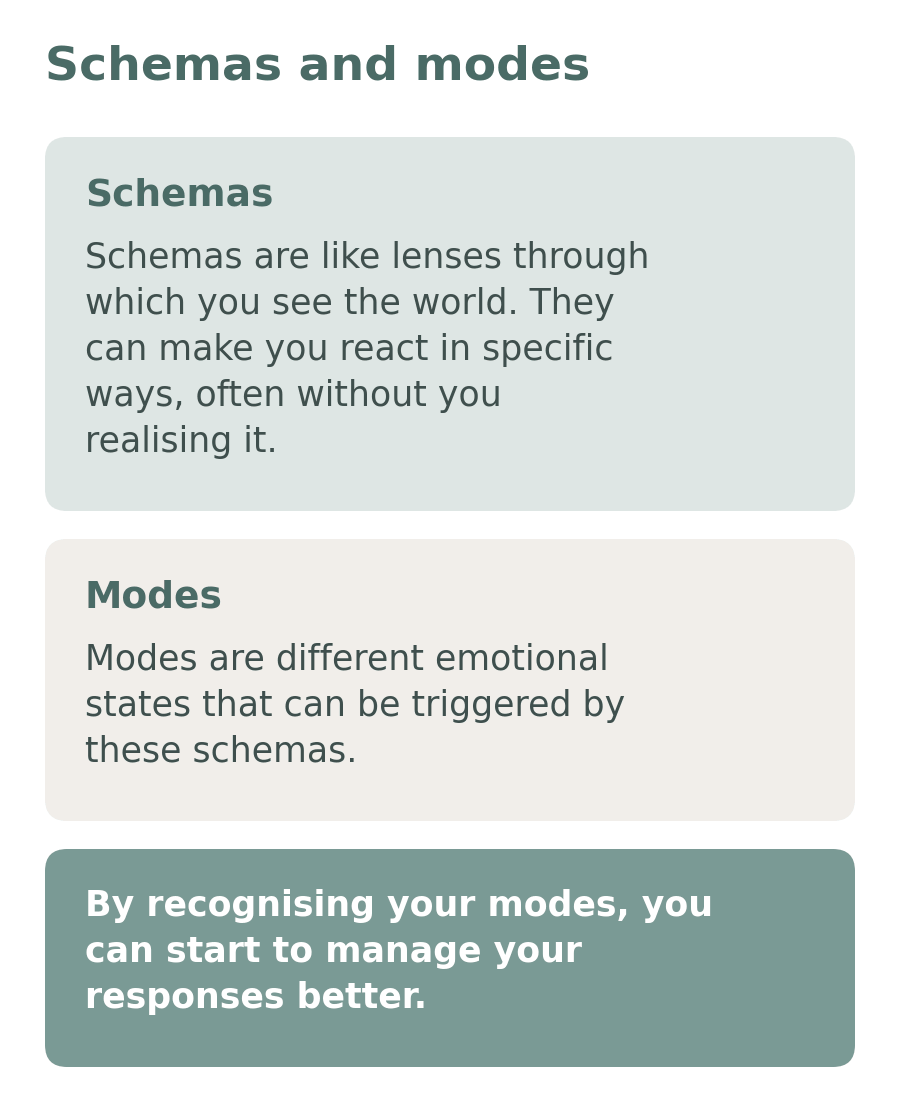
Schemas are like lenses through which you see the world. They can make you react in specific ways, often without you realising it. In schema therapy, you’ll learn about these lenses and how they affect your life. Modes are different emotional states that can be triggered by these schemas. By recognising your modes, you can start to manage your responses better. This understanding can be empowering, especially if you feel controlled by your emotions. At Your Mind Matters, we help you identify and work through these schemas and modes to enhance your daily life.
Emotional Regulation Skills
You can learn to manage your emotions more effectively through schema therapy. This involves recognising your emotional triggers and developing skills to handle them differently. For instance, if you often feel anxious, schema therapy can teach you ways to calm this anxiety before it becomes overwhelming. These skills are practical and can be applied in everyday situations. Over time, improving your emotional regulation can lead to better mental health and a more fulfilling life.
Techniques in Schema Therapy
Techniques in schema therapy are designed to help you change unhelpful patterns. They offer ways to address old wounds and improve your current emotional responses.
Limited Reparenting and Imagery Rescripting
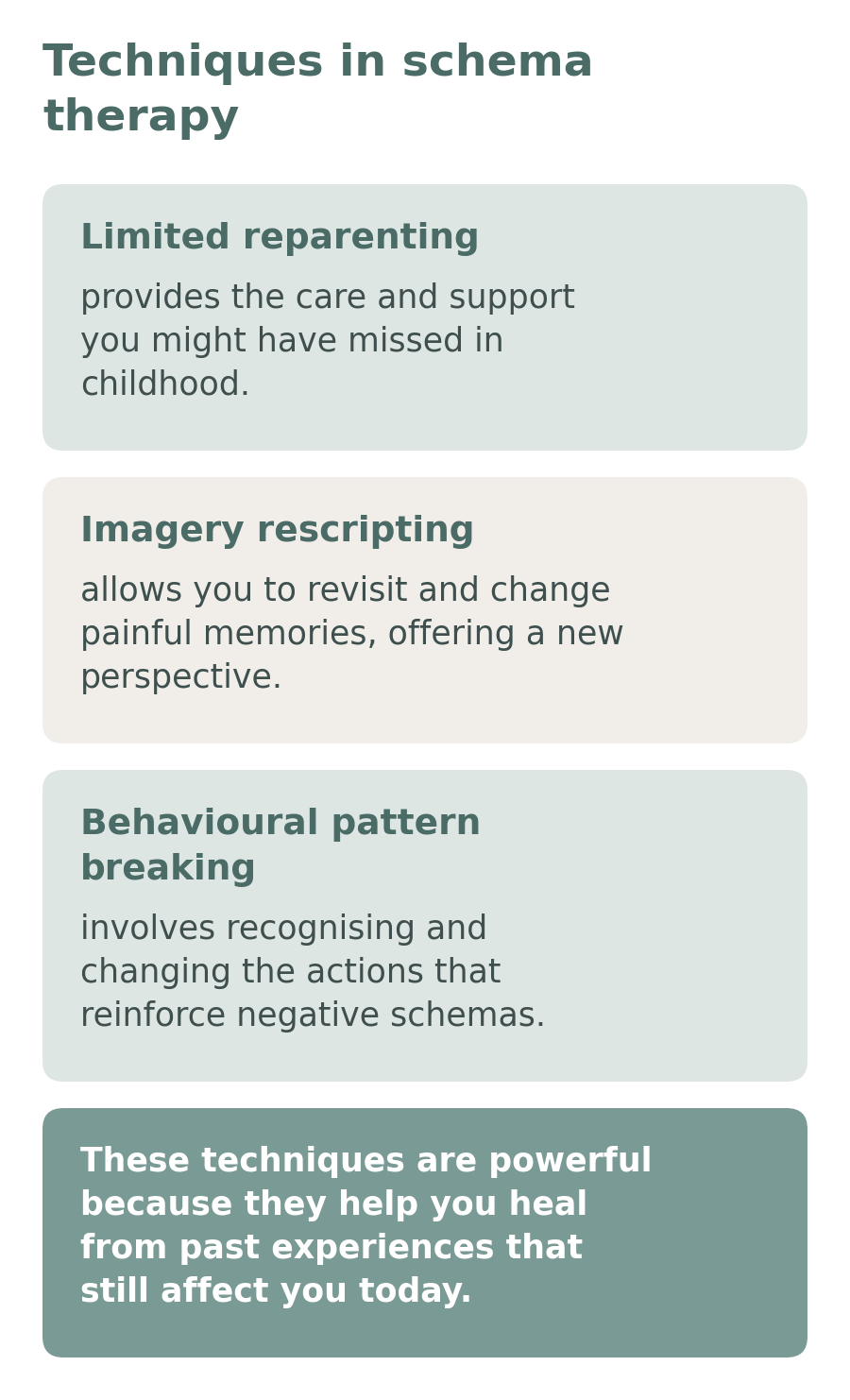
Limited reparenting provides the care and support you might have missed in childhood. Imagery rescripting allows you to revisit and change painful memories, offering a new perspective. These techniques are powerful because they help you heal from past experiences that still affect you today. Imagery rescripting, for instance, can involve visualising a difficult situation and changing the outcome in your mind. This can reduce the emotional impact of past traumas. At Your Mind Matters, we use these methods to support your healing journey, offering a safe space for growth.
Behavioural Pattern Breaking
Behavioural pattern breaking involves recognising and changing the actions that reinforce negative schemas. This might include avoiding situations that trigger negative responses or practising new behaviours that promote positive change. By identifying these patterns, you gain control over your reactions. This process might involve small, manageable changes at first, gradually building towards significant improvements in your daily life. Changing these patterns can lead to greater emotional freedom and improved relationships.
Trauma-Informed Therapy in Melbourne
Your Mind Matters offers trauma-informed therapy that acknowledges the impact of trauma on mental health. This approach ensures that therapy is safe and supportive, avoiding re-traumatisation. We work with you to understand how past traumas affect your present life and to develop strategies for healing. Our therapists are trained in providing care that respects your experiences and fosters a sense of safety. This is crucial for effective healing and personal growth.
Benefits and Applications
Schema therapy offers numerous benefits and can be tailored to address various challenges.
ADHD and Schema Therapy
For individuals with ADHD, schema therapy can be particularly valuable. It helps in understanding how ADHD affects daily life and provides strategies for managing its impact. By recognising the schemas that influence behaviour, you can develop better coping mechanisms. This therapy offers tools to improve focus, manage impulsivity, and reduce frustration. At Your Mind Matters, we integrate schema therapy in our approach to support those with ADHD, helping them lead more balanced lives.

Neuroaffirming Psychology in Melbourne
At Your Mind Matters, we always engage in neuroaffirming practices, using schema therapy to support neurodivergent individuals. This approach respects and values individual differences, offering tailored strategies that align with each person’s needs. Schema therapy can help autistic individuals understand their emotional responses and develop skills to navigate social interactions more comfortably. Our aim is to create a supportive environment where neurodivergent clients feel validated and empowered.
Anxiety and OCD Therapy in Melbourne
Schema therapy is effective for managing anxiety and OCD in Melbourne. It helps you identify and challenge the underlying schemas that contribute to these conditions. By understanding these patterns, you can develop strategies to reduce anxiety and manage OCD behaviours. This therapy offers practical tools that can be integrated into daily life, providing relief from persistent worries and compulsions. At Your Mind Matters, we are committed to helping you achieve greater peace of mind and improved quality of life.
Frequently Asked Questions
What is schema therapy used for?
Schema therapy is used to address deep-rooted patterns and beliefs that affect emotional responses. It is effective for anxiety, depression, trauma, and other mental health challenges.
How long does schema therapy take?
The duration of schema therapy varies depending on individual needs. It can be a short-term or long-term process, tailored to address specific schemas and modes.
How does schema therapy help with trauma?
Schema therapy helps with trauma by providing techniques like imagery rescripting to change the emotional impact of past events. It fosters healing by addressing underlying beliefs and patterns.
Can schema therapy be used for children?
Yes, schema therapy can be adapted for children. It helps them understand their emotional patterns and develop healthier coping strategies, contributing to better emotional regulation.
Is schema therapy effective for OCD?
Schema therapy is effective for OCD as it helps identify and address the schemas contributing to compulsive behaviours, offering strategies for managing these patterns.
Our Blog Author
This post was written by the team at Your Mind Matters. Schema therapy continues to be part of our services. Meet our team.