
A Neurodiversity-Affirming Approach: What Is It and How Can It Support Your Child(ren)?

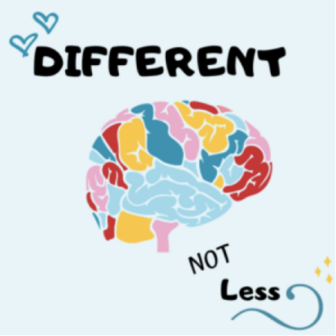
Image source: Onwards and Upwards Psychology: Understanding Neurodiversity
What Is Neurodiversity?
In recent years, the neurodiversity movement has become increasingly prominent. Coined in the 1990s by Australian sociologist Judy Singer, the concept of neurodiversity acknowledges and embraces neurological differences i.e., variations in the way in which individuals interpret, process, and learn information. Neurodiversity can be broken down into two subgroups of individuals: those who are neurotypical and those who are neurodivergent.
Neurotypical describes individuals who think and process information in ways “typical” for their culture.
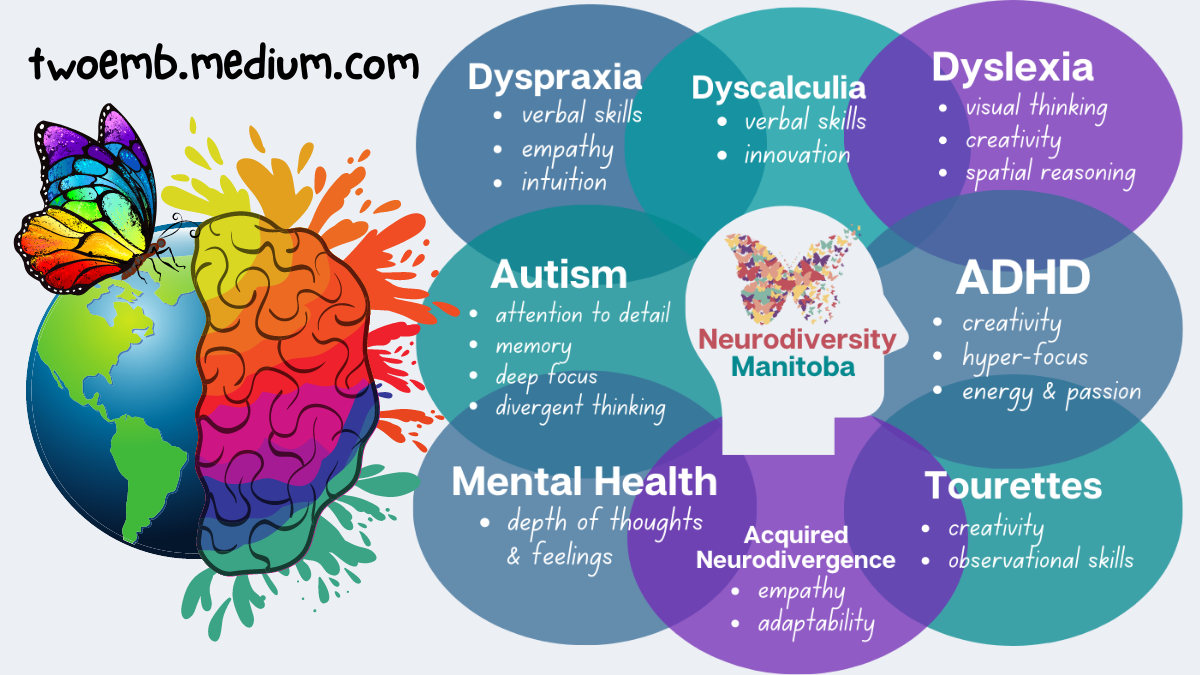
Neurodivergent refers to individuals whose brain functioning differs from what is considered “typical.” This encompasses people with a range of conditions including:
- Autism Spectrum Disorder
- Attention-Deficit/Hyperactivity Disorder
- Dyslexia
- Tourette’s
- Dyspraxia
- Other neurological conditions
So, what does it mean to be neurodiversity affirming?
A Neurodiversity Affirming Approach
In contrast to a deficits-based approach which focuses on “fixing” the impairments associated with neurodevelopmental conditions, a neurodiversity-affirming approach acknowledges that all neurotypes have unique strengths, interests, and support needs. Moreover, this approach highlights the role of the environment and societal barriers in further exacerbating challenges faced by neurodivergent individuals.
Traditional therapeutic approaches to working with neurodivergent individuals have focused on encouraging individuals to mask neurodivergent traits such as reducing stimming behaviours or forcing eye contact and mimicking neurotypical styles of communication. However, emerging evidence suggests that these practices can lead to shame, anxiety, depression, and reduced self-worth (Sedgewick et al., 2021). Rather than perpetuating the idea that neurodivergent individuals need to mask certain characteristics, neurodiversity-affirming practice seeks to understand and inform individuals about differences and provide adaptations and supports that affirm neurodivergent identities. Subsequently, this can lead to self-advocacy regarding accommodations within the classroom or workplace and help cultivate a sense of self-esteem.
So, what does this look like in therapeutic practice?
Neurodiversity-Affirming Therapy
The goal of neuro-affirming therapy is to embrace the uniqueness and strengths of neurodivergent children and provide them and their families with the skills, tools, and strategies to allow for improved participation within the home, school, and play environments. This may involve:
- Seeking to understand the needs of neurodivergent children from their perspective and adapting the environment to meet these needs.
- Understanding and respecting neurodivergent communication styles.
- Understanding and accommodating individual sensory needs.
- Encouraging neurodivergent rather than neurotypical listening skills.
- Assisting in developing self-advocacy and problem-solving skills.
- Teaching children to better understand the emotions, behaviours, and communication of other people around them, so they can better choose how they want to respond.
- Validating children’s feelings, helping them recognise their triggers, and assisting in identifying calming strategies.
- Recognising the need for processing time and safe spaces.
- Encouraging safe self-regulation skills, including stimming.
- Adopting neurodiversity affirming language
Neurodiversity affirming therapy does not involve:
- Promoting masking, loss of autonomy, or loss of personal agency.
- Eliminating stimming behaviours.
- Developing goals that seek to “cure” neurodivergent behaviours.
Neurodiversity Affirming Resources
If you’d like to learn more about neurodiversity or the neurodiversity-affirming approach, please see the following:
Resources for Children/Adolescents:
Books
- The Brain Forest by Sandhya Menon
- The Awesome Autistic Go-To Guide: A Practical Handbook for Autistic Teens and Tweens by Yenn Purkis and Tanya Masterman
- Just Right for You by Melanie Heyworth
- Wiggles, Stomps and Squeezes Calm My Jitters Down by Lindsay Rowe Parker
- The Superhero Brain by Christel Land
- Some Brains by Nelly Thomas
- Different, Not Less by Chloé Hayden
Resources for Adults:
Books
- Unmasking Autism: Discovering the New Faces of Neurodiversity by Devon Price
- Divergent Mind: Thriving in a World That Wasn’t Designed By You by Jenna Nerenberg
- Unconditional Parenting: Moving from Rewards and Punishments to Love and Reason by Alfie Kohn
- Start Here: A Guide for Parents of Autistic Kids by Autistic Self-Advocacy Network
Podcasts/Videos:
- Connor De Wolfe‘s Tik Tok
- The Yellow Ladybugs Podcast
- The Neurodivergent Woman by Monique Mitchelson and Michelle Livock
- Amazing Kids: Autism Spectrum Condition by Amazing Things Project
If you’re interested in seeking out neurodiversity-affirming support for yourself or your child or you’d like to know more information, please feel free to contact our admin team on (03) 9802 4654.
References
Sedgewick, F., Hull, L., & Ellis, H. (2021). Autism and masking: How and why people do it, and the impact it can have. Jessica Kingsley Publishers.

Our Blog Author
This post was written by Michaela Hughes, Psychologist and Educational and Developmental Registrar at Your Mind Matters. Michaela works with children and young people with a range of neurodevelopmental conditions, drawing on cognitive behavioural therapy, play therapy and mindfulness-based approaches. Meet our team.