📅 Book an Appointment

Understanding EMDR Therapy: A Supportive Guide for Clients with Trauma and PTSD


Many people carrying the weight of trauma feel stuck, as if their past controls every moment. You might have tried different ways to heal but found little relief. EMDR trauma therapy offers a unique path that helps your brain process painful memories differently. In this guide, you’ll learn how EMDR works and what it could mean for your healing process. For more information, visit this link.

Introduction to EMDR Therapy

Untitled

EMDR therapy offers hope for those feeling trapped by their trauma. It provides a structured approach to healing that many find effective. Let’s explore what makes EMDR unique and how it can help you.

What is EMDR?

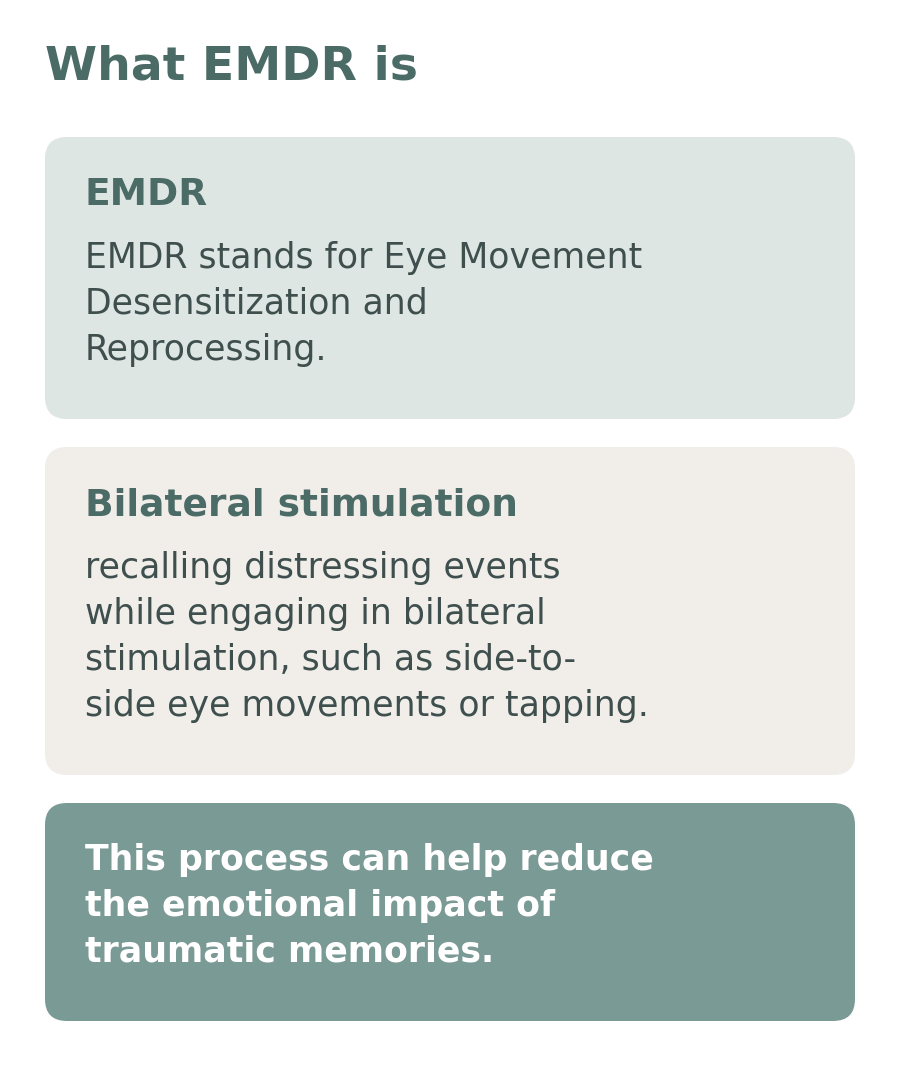
EMDR stands for Eye Movement Desensitization and Reprocessing. It’s a therapy that helps your brain process and store traumatic memories differently. This method involves recalling distressing events while engaging in bilateral stimulation, such as side-to-side eye movements or tapping. This process can help reduce the emotional impact of traumatic memories. It’s like giving your brain a way to work through difficult experiences in a safe environment. You can learn more about this approach in this detailed guide.

How EMDR Helps Trauma and PTSD

EMDR is particularly effective for trauma and PTSD. Many people feel as if they’re reliving their trauma, but EMDR helps change that. By using guided eye movements, the therapy allows your brain to reprocess memories in a way that reduces their emotional charge. This can significantly decrease symptoms like flashbacks and anxiety. Imagine being able to recall painful memories without the overwhelming emotional response. That’s what many people experience after EMDR. Learn more about how it aids PTSD recovery here.
The Origin of EMDR Therapy

EMDR was developed in the late 1980s by Francine Shapiro. She discovered that certain eye movements reduced the intensity of disturbing thoughts. What started as an observation has become a widely respected therapeutic method. Since then, EMDR has been researched extensively and is now endorsed by organizations such as the American Psychiatric Association.
The EMDR Process

Understanding how EMDR works can make the process less daunting and more accessible. Here’s a breakdown of what to expect.

The Eight Phases of EMDR

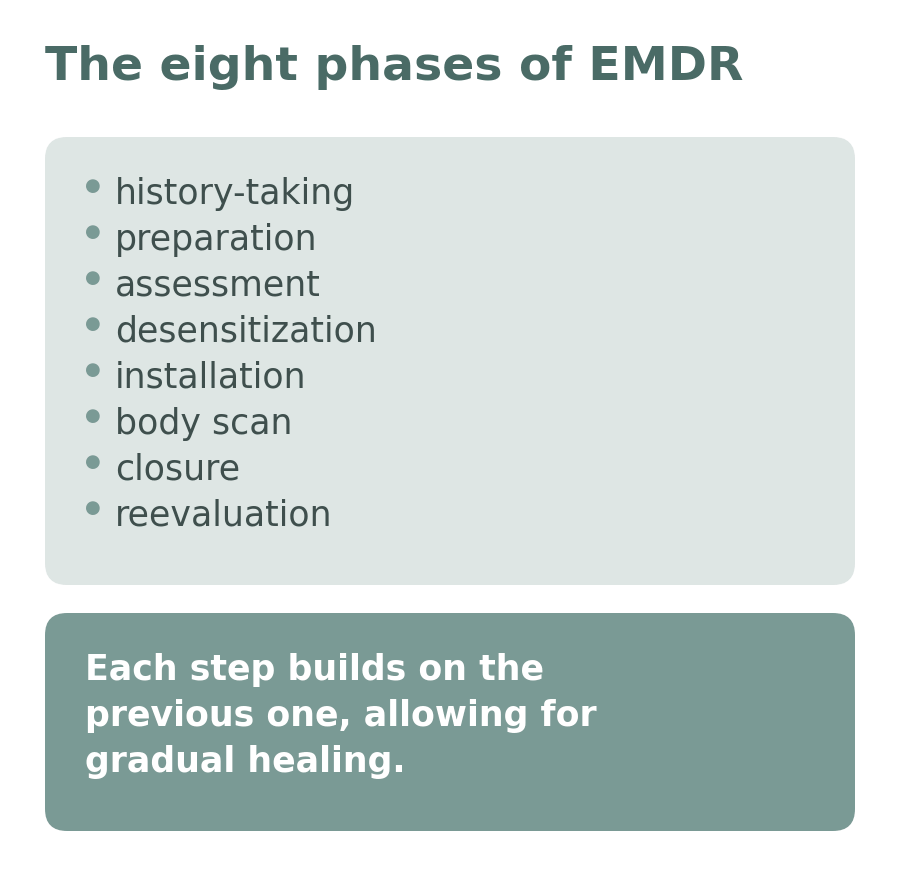
EMDR therapy follows eight distinct phases. Each phase is designed to ensure your safety while effectively addressing your trauma. These phases include history-taking, preparation, assessment, desensitization, installation, body scan, closure, and reevaluation. Each step builds on the previous one, allowing for gradual healing. For a complete breakdown of these phases, you can visit this resource.

What to Expect in a Session

An EMDR session typically involves discussing your trauma in brief doses while focusing on external stimuli. The therapist will guide you through recalling distressing memories while engaging in eye movements or other bilateral stimulation. This process is repeated until the memory becomes less distressing. Sessions are usually structured and follow a predictable pattern, which can be comforting.

Safety and Comfort in Therapy

Feeling safe is crucial when addressing trauma. EMDR therapy prioritises your comfort by creating a supportive environment. Your therapist will ensure that you feel secure throughout the process. Techniques such as grounding and relaxation are often used to maintain this sense of safety. Remember, the goal is to empower you, not to overwhelm you.

Benefits of EMDR for Trauma

Untitled

EMDR’s benefits are numerous, providing both immediate relief and long-lasting change. Let’s delve into why it’s such a powerful tool for healing.

EMDR’s Efficacy in Healing

EMDR is backed by research showing its effectiveness in reducing PTSD symptoms. Many people report feeling more at peace with their past after just a few sessions. The therapy’s structured approach helps you process memories without becoming overwhelmed. The statistics support its success, with many clients experiencing significant improvement in just a few sessions. Check out this detailed explanation of its efficacy.

Long-term Effects of EMDR

The effects of EMDR therapy often extend beyond immediate symptom relief. People who undergo EMDR frequently find that their overall anxiety decreases, and they develop healthier coping mechanisms. The therapy doesn’t just address symptoms; it promotes long-term mental well-being, allowing you to lead a more balanced life.

Finding the Right Therapist

Choosing the right therapist is crucial for successful EMDR therapy. Look for someone experienced in EMDR and with whom you feel comfortable. It’s important that you trust your therapist, as this will make the process smoother and more effective. Don’t hesitate to ask potential therapists about their experience with EMDR to ensure a good fit!

At Your Mind Matters, we have two Psychologists trained in EMDR: Blair and Serenah.

Connect with Our Therapists

At Your Mind Matters, we understand the importance of finding the right fit for your mental health journey. We feel extremely lucky that two of our Psychologists, Blair Raatjes and Serenah Alam, are both trained in EMDR.

Give us a call to book in, or head to our website to book online: www.yourmindmatters.net.au

Working through trauma from a schema therapy lens

Photo by Aditya Saxena on Unsplash


My previous blog aimed at providing a brief overview of trauma and posttraumatic stress disorder. Click here to read more: https://yourmindmatters.net.au/a-brief-overview-of-trauma-and-posttraumatic-stress-disorder/. This blog focuses on how therapy can aid in processing past traumatic or upsetting experiences.


There is an abundance of research on various modalities for working through trauma in a therapeutic context. Here we unpack the use of imagery rescripting, a schema therapy intervention. Please note, this is not the sole treatment approach available.


What is Schema Therapy?

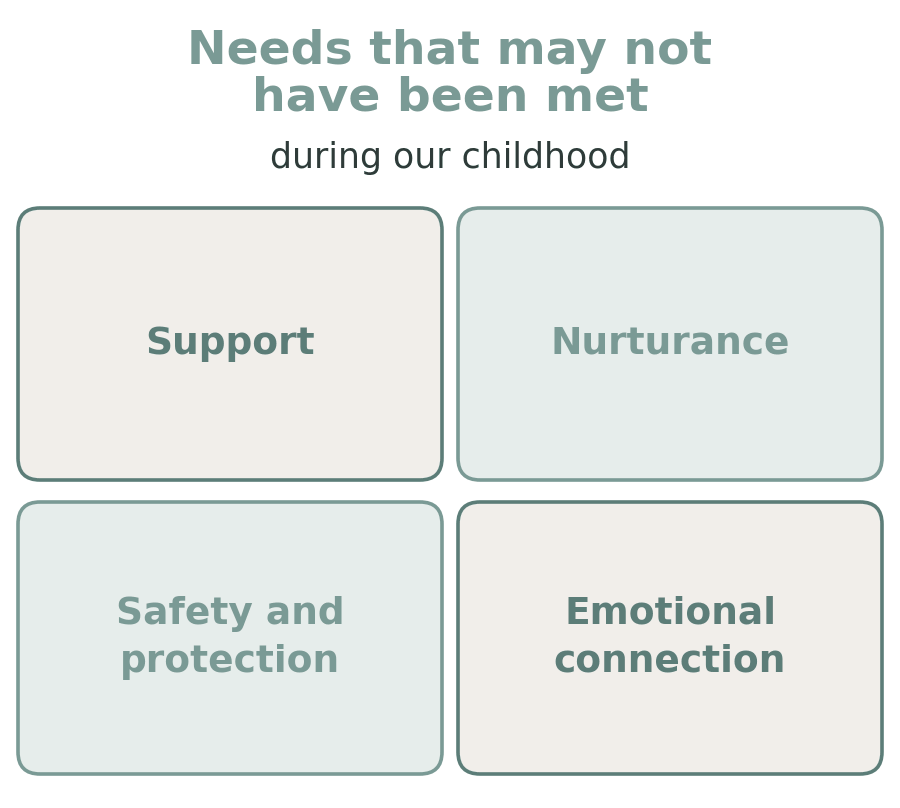
Schema Therapy focuses on understanding how our past experiences have shaped our schemas (beliefs specific to ourselves and the world around us). During our childhood, our needs may not have been met (e.g., our need for support, nurturance, safety/protection, emotional connection) which contributed to the development of early maladaptive schemas, unhelpful behavioural patterns and coping mechanisms.


A part of schema therapy is aimed at building attunement (‘tuning in’) to our emotional responses when faced with a triggering situation or event. It is about building awareness of how current life stressors can activate our schemas and lead to strong feelings and behavioural responses. Often, it is not the current event that evokes such an intense emotion, but more about how we interpret this event and the meaning we derive from it based on our early experiences. For instance, exposure to trauma or an upsetting event may lead to interpretations such as “This is my fault”, “I am bad/unworthy/not good enough”.


Preparation for Processing Past Trauma

Prior to moving into imagery rescripting, your clinician will complete a thorough intake and assessment. Often, it may be necessary to build emotion regulation skills and learn relaxation strategies, to ensure that you are ready to move to the part of therapy where rescripting occurs. You might be asked to complete questionnaires, which look at the symptoms you experience and the impact on your daily functioning. This can provide valuable information and can be used to measure your progress throughout treatment.


Imagery Rescripting

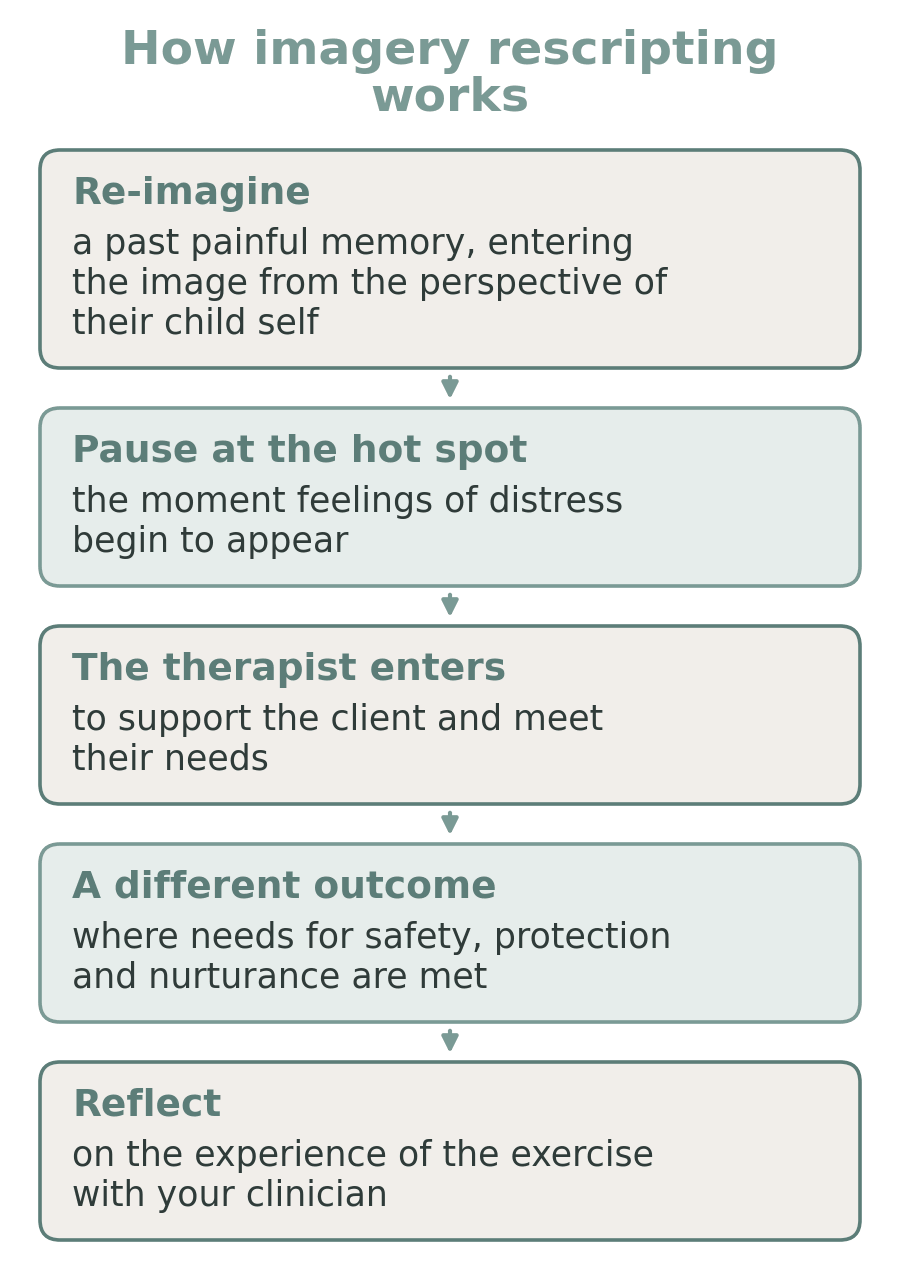
Imagery rescripting is a therapeutic technique, where through the guidance of a trained clinician, one re-imagines a past painful memory, entering the image from the perspective of their child self. The aim is to change the way one feels and thinks about the event, by inserting new meanings/interpretations and leading to a corrective emotional response. The focus is on imagining a different outcome where the individual’s needs (for example, for safety, protection, nurturance) are met. During an imagery rescripting exercise, one does not need to relive the traumatic or upsetting event. What occurs is that the image is paused when a ‘hot spot’ (the moment feelings of distress begin to appear) is reached, and the therapist enters the image to support the client and meet their needs.


Now at this point, you may be thinking, “but that doesn’t change what actually happened”. And you are right. We can’t go back and change the past, but what we can do is change how you think and feel about the memory. Brain studies have shown that the brain responds in a similar way to imagining and actually experiencing an event.


The process of imagery rescripting takes approximately 12-15 minutes, but can vary from person to person. Once the image has been rescripted, you will have the opportunity to reflect on the experience of the exercise with your clinician. Many clients have provided positive feedback regarding imagery rescripting and reported a shift in their emotional response and beliefs when they think of the rescripted memory. This includes feeling ‘lighter’ when thinking about the memory, feeling less distressed and reduced anxiety.


If you would like some support in working through past upsetting experiences, our team of psychologists are here to help.

[siteorigin_widget class=”SiteOrigin_Widget_Headline_Widget”][/siteorigin_widget]
[siteorigin_widget class=”WP_Widget_Media_Image”][/siteorigin_widget]

This blog was written by Maria Kampantais – Psychologist and Clinical Registrar at YMM.

Maria has been consulting at YMM since 2016 and has an interest in working with clients presenting with anxiety disorders and past trauma. Maria offers a warm and supportive space to assist clients in navigating their presenting concerns and explore past painful experiences. Maria aims to support clients to build awareness into how past experiences may have shaped their belief system and subsequent emotional responses, and move towards healing through developing helpful coping mechanisms. Maria draws on various evidence-based therapies including Cognitive Behavioural Therapy (CBT), Acceptance and Commitment Therapy (ACT), mindfulness techniques, and Schema Therapy.

To learn more about Maria, check out the “Our Team” page on our website! https://yourmindmatters.net.au/our-team/


A brief overview of trauma and Posttraumatic Stress Disorder

Photo by Susan Wilkinson on Unsplash


What is trauma?

Trauma refers to the emotional response experienced following exposure to a distressing life event or situation. It can result from direct or indirect exposure, i.e., we have experienced the situation first hand, witnessed it, or heard that the event occurred to someone we know. Traumatic experiences may include a serious accident, physical or sexual assault (actual or threatened), sudden violent death, natural disaster, and war.


Common responses to trauma

When we are exposed to a threatening situation, it infringes on our sense of safety and security, leading to a level of psychological distress and belief that our environment is no longer safe. Emotional responses can vary from person to person, but typically include feelings of fear, anxiety, helplessness, hopelessness and impacts to self-esteem.


Posttraumatic stress disorder

Psychological distress is a common experience following exposure to a traumatic event however for some individuals the impact of trauma can be long lasting and lead to the development of a trauma-related disorder, such as posttraumatic stress disorder (PTSD). Symptoms of PTSD include:

  • Recurring distressing memories and dreams of the event
  • Feeling as though the distressing event was happening again (flashbacks)
  • Avoidance of situations that remind you of the event
  • Difficulty remembering important aspects of the event
  • Negative beliefs about self and others
  • Persistent fear, anxiety, guilt or anger
  • Feeling detached from others
  • Loss of interest in enjoyable activities
  • Feeling hypervigilant and easily startled
  • Reduced concentration
  • Impacts to sleep patterns


Please note, this is not an exhaustive list of symptoms, but provides a snapshot of some of the impacts of PTSD. Diagnosis is based on many factors and not solely on experiencing the above symptoms.


Does exposure to trauma result in PTSD?

The experience of trauma may lead to the development of PTSD however, this is not always the case. Development of a trauma-related disorder, such as PTSD, is influenced by more than just exposure to a traumatic event. As individuals, we all have different ways of coping, which is related to our personality and past personal experiences. Often, exposure to trauma can severely rattle our perception of self and can impact on our sense of self-worth and self-esteem. Other factors to consider include the nature and severity of the event. In addition, the way in which the incident is interpreted and understood immediately following the trauma, and the way in which we store the incident in our memory, can play an integral role.


How trauma memories are stored

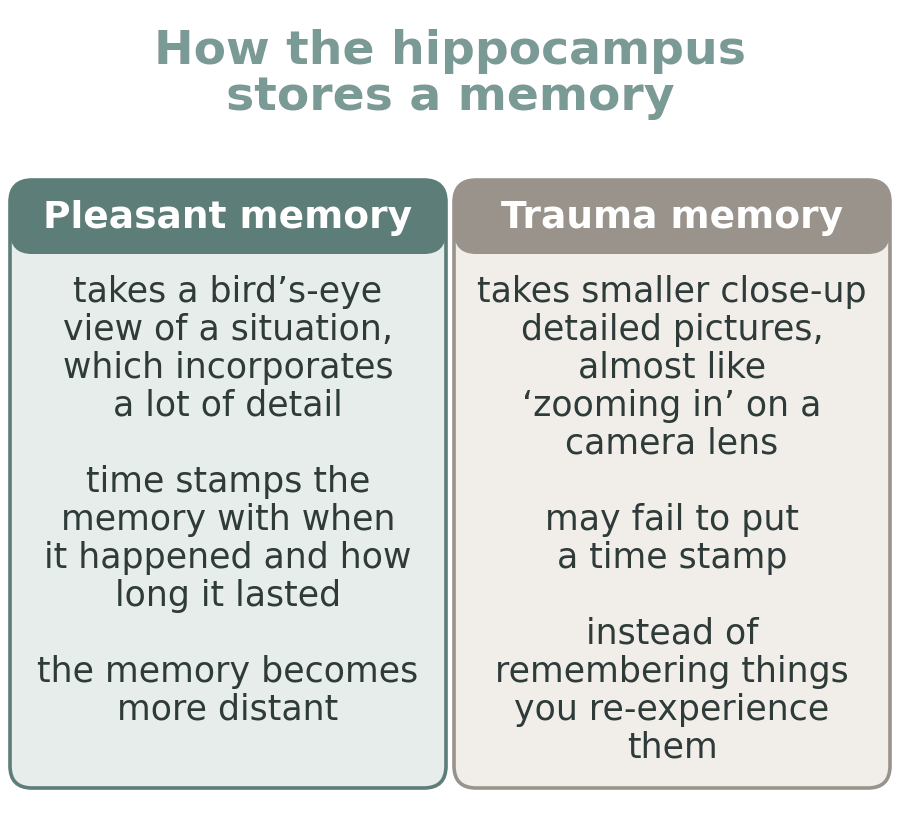
The hippocampus is the part of the brain that stores memories. It encodes memories and takes a bird’s-eye view of a situation, which incorporates a lot of detail. When you remember something, you don’t recall it exactly the way it was encoded. Every time you remember something, you are re-creating it every single time. Your hippocampus time stamps the memory with when it happened and how long it lasted. And as you move further into the future, the memory becomes more distant. This relates to a good/pleasant memory.


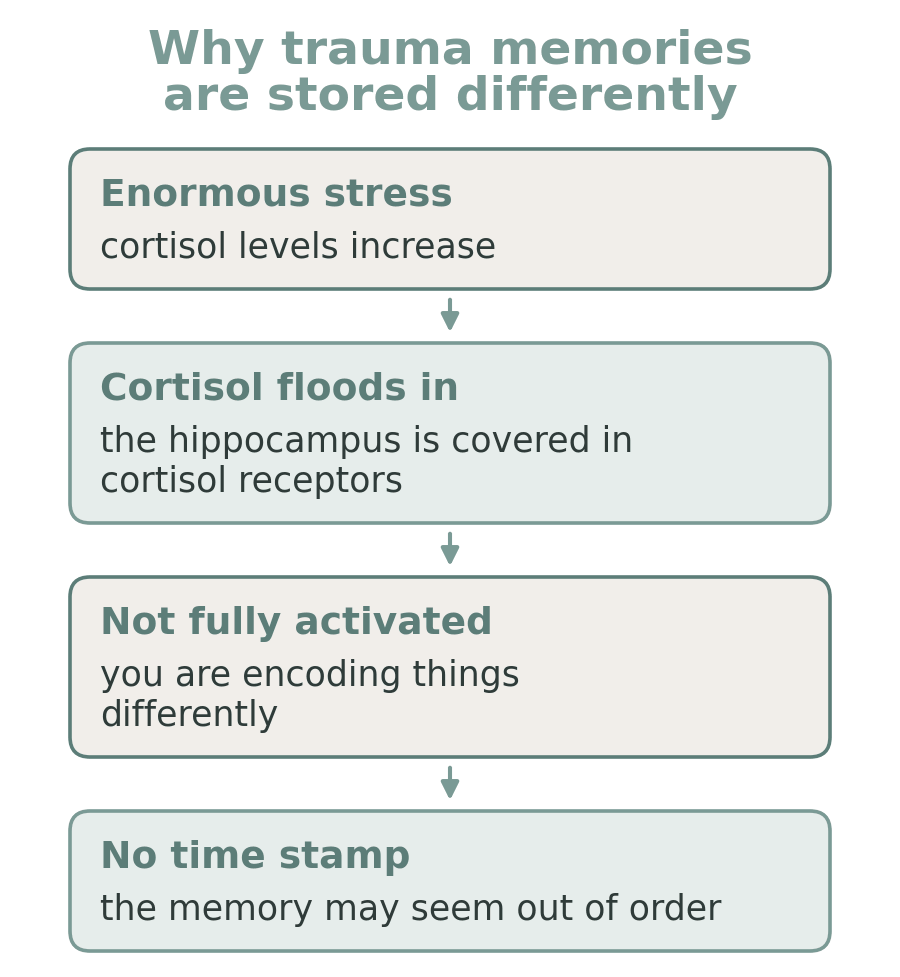
When you are in a threatening situation, the way in which memories are encoded and stored becomes impacted. When faced with a traumatic event, you are under enormous stress and your cortisol levels increase, which means that the hippocampus cannot function in the same way it does when you are not stressed. The hippocampus is covered in cortisol receptors and when you are stressed, the cortisol floods into the hippocampus. This means that the hippocampus is not fully activated when you are encoding this memory. You are therefore encoding things differently to what you would otherwise. It changes how you remember things and how you recall them later. In stressful situations, the hippocampus does not take a bird’s-eye view of the situation, rather, it takes smaller close-up detailed pictures, almost like ‘zooming in’ on a camera lens. This happens because the brain starts to focus on pieces of information it perceives as important, in that situation. Therefore, the information that gets encoded is the close-up pieces. Another thing to note is that when faced with a traumatic situation, the hippocampus may fail to put a time stamp which tells you how long something lasted. The memory may seem out of order and all over the place because of the way it was encoded. If your hippocampus didn’t time stamp, then instead of remembering things you re-experience them, and therefore every time you think of that situation, you feel as though it is happening again. Thus, trauma memories do not age appropriately.


Treatment

Psychological therapy can help to manage symptoms following exposure to trauma. This includes, but is not limited to, building emotion regulation skills, relaxation strategies, shifting negative beliefs, increasing self-esteem, and reprocessing trauma memories.


If you are seeking support following exposure to a traumatic incident, our team of psychologists are here to help. Feel free to give our clinic a call on 9802 4654 and our friendly admin team can assist by recommending the best practitioner for your care.


References

Kessler, R. C. (1995). Posttraumatic Stress Disorder in the National Comorbidity Survey. Archives of General Psychiatry, 52(12), 1048.

Nijdam, M. J., & Wittmann, L. (2015). Psychological and Social Theories of PTSD. Evidence Based Treatments for Trauma-Related Psychological Disorders, 41–  61. doi:10.1007/978-3-319-07109-1_3

Sweeton, J. EMDR skills for trauma. Training workshop (completed Nov 2021).

Yehuda, R. (2004). Risk and resilience in posttraumatic stress disorder. Journal of Clinical Psychiatry, 65, 29-36.

[siteorigin_widget class=”SiteOrigin_Widget_Headline_Widget”][/siteorigin_widget]
[siteorigin_widget class=”WP_Widget_Media_Image”][/siteorigin_widget]

This blog was written by Maria Kampantais – Psychologist and Clinical Registrar at YMM.

Maria has been consulting at YMM for many years and enjoys working with clients through the use of evidence-based therapies such as Cognitive Behavioural Therapy (CBT), Acceptance and Commitment Therapy (ACT), mindfulness techniques, Motivational Interviewing (MI), and Solution Focused Therapy (SFT).

To learn more about Maria, check out the “Our Team” page on our website! https://yourmindmatters.net.au/our-team/


📅 Book an Appointment