
The Vital Role of Evidence-Based Therapy in Treating Depression and Trauma


The Vital Role of Evidence-Based Therapy in Treating Depression and Trauma
Struggling with depression or trauma can leave you feeling stuck and unsure where to turn. Evidence-based therapy offers proven paths to recovery, backed by research rather than guesswork. In this post you’ll see what these approaches involve, how Melbourne psychologists apply them, and what support is available to you. Read the research on evidence-based therapy.
Understanding Evidence-Based Therapy
Evidence-based therapy means the treatment you receive has been tested and shown to work. Let’s look at what that involves in practice.
Proven Methods for Depression
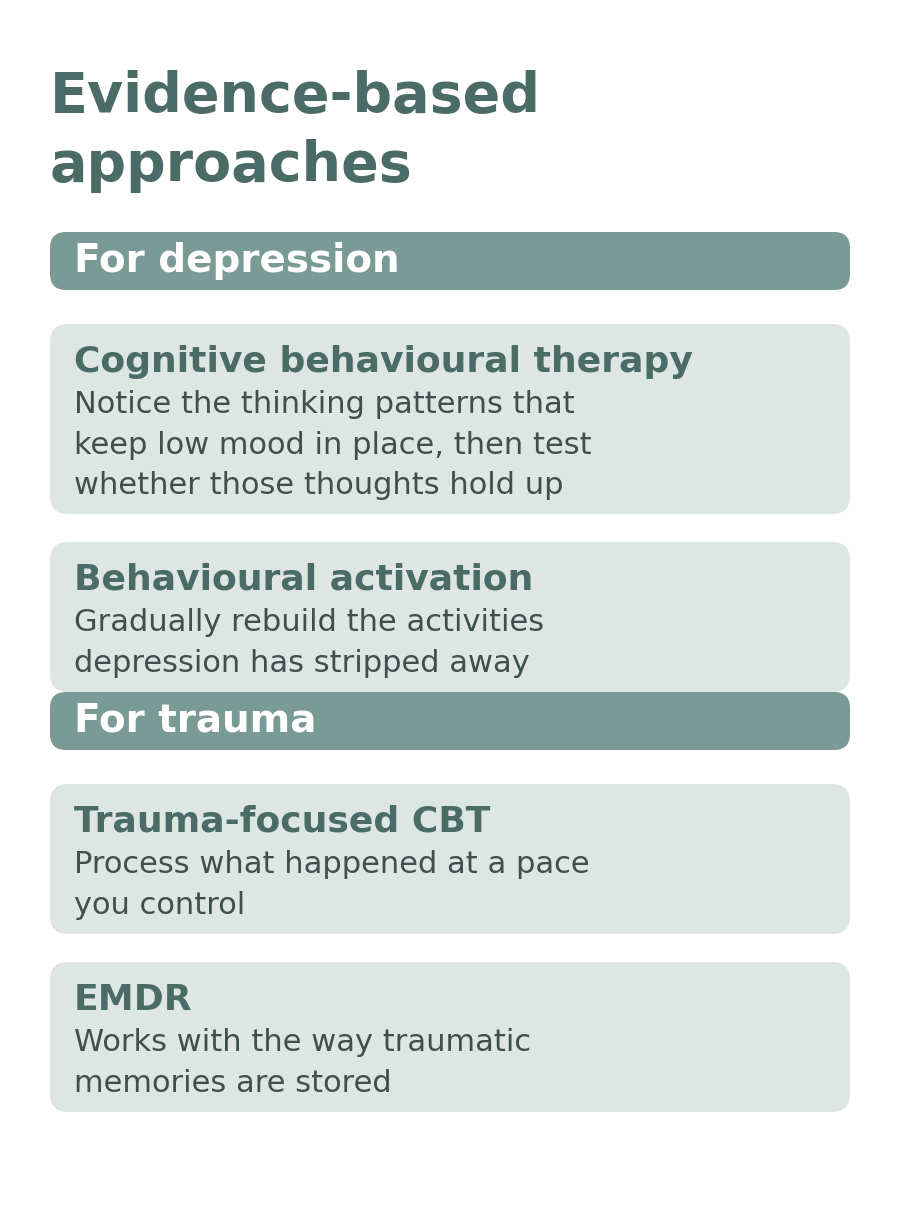
Cognitive behavioural therapy is among the most researched approaches for depression. It works by helping you notice the thinking patterns that keep low mood in place, then testing whether those thoughts hold up. Behavioural activation, another proven method, focuses on gradually rebuilding the activities that depression has stripped away. Both approaches give you skills you keep long after therapy ends. See the APA’s clinical guideline for treating depression in adults.
Trauma Therapy Techniques
Trauma responds to different approaches than depression. Trauma-focused cognitive behavioural therapy helps you process what happened at a pace you control. Eye movement desensitisation and reprocessing, known as EMDR, works with the way traumatic memories are stored. What these share is a structured framework and a strong evidence base, so you know the direction of the work from the start. Read more on evidence-based treatments for trauma.
Role of Melbourne Psychologists
A psychologist’s role is to match the approach to the person, not the other way round. At Your Mind Matters, clinicians draw on several evidence-based models and adjust as they get to know you. That means the plan you start with may change, and that’s intended. Your psychologist explains why a particular approach fits your situation, so you understand the reasoning rather than simply following instructions.
Benefits of Professional Mental Health Services
Knowing what professional support offers can make the decision to reach out easier.
Tailored Depression Treatment
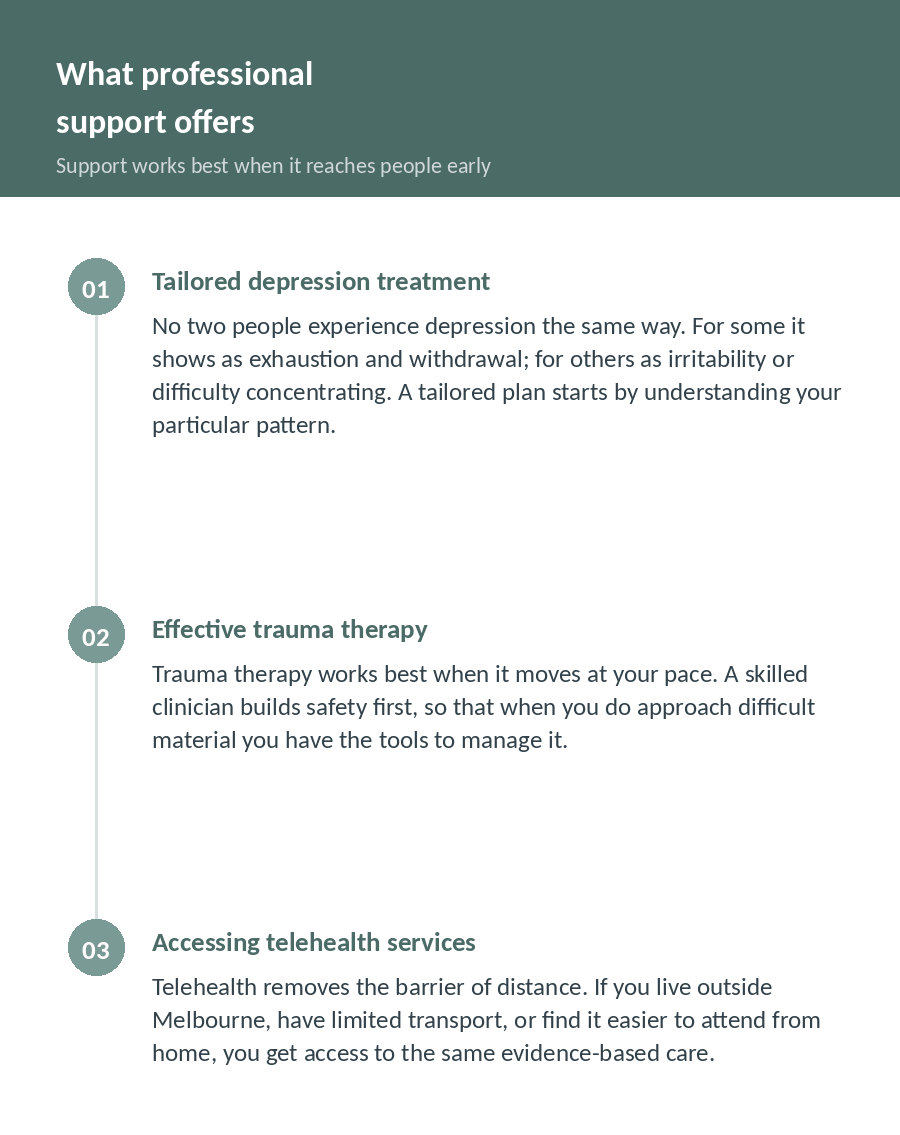
No two people experience depression the same way. For some it shows as exhaustion and withdrawal; for others as irritability or difficulty concentrating. A tailored plan starts by understanding your particular pattern, then selecting the approach that fits. This is why an initial assessment matters: it shapes everything that follows.
Effective Trauma Therapy
Trauma therapy works best when it moves at your pace. A skilled clinician builds safety first, so that when you do approach difficult material you have the tools to manage it. Progress is often gradual, and that’s expected. What matters is that each session has a purpose you understand and agree with.
Accessing Telehealth Services
Telehealth removes the barrier of distance. If you live outside Melbourne, have limited transport, or simply find it easier to attend from home, telehealth gives you access to the same evidence-based care. Sessions are conducted over a secure platform, and many people find the familiarity of their own space helps them speak more openly.
Promoting Mental Health Support
Support works best when it reaches people early and reaches them where they are.
Encouraging Individuals to Seek Help
Reaching out is often the hardest step. Many people wait until things feel unmanageable, when earlier support would have been easier. If you’re weighing it up, an initial conversation costs little and clarifies a lot. You’re not committing to a long course of therapy by making one call. See how evidence-based treatments are applied in practice.
Supporting Children Through Assessments
For children, an assessment often brings relief rather than worry. Understanding why school or friendships feel harder than they should gives a family something concrete to work with. Assessments at Your Mind Matters are designed to be clear and unhurried, with findings explained in plain language so parents leave knowing what to do next.
Enhancing Employee Well-being
Workplaces have a role too. Employee Assistance Programs give staff confidential access to counselling without going through their employer. For organisations, this is a practical way to support a workforce; for employees, it removes the cost and the wait that often stand in the way of getting help.
Our Blog Author
This post was written by the team at Your Mind Matters. Evidence-based therapy for depression and trauma continues to be part of our services. Meet our team.