Helping Children & Adolescents with Autism Spectrum Disorder & Anxiety

Anxiety is a normal part of children’s development, but children and teenagers with a diagnosis of autism spectrum disorder (ASD) can experience anxiety more intensely and more often than other children.


Anxiety or autism spectrum disorder?

Children with autism spectrum disorder (ASD) feel many of the same worries and fears as other children. But when children and teenagers with ASD get worried or anxious, the way they show their anxiety can look a lot like common characteristics of ASD – stimming, obsessive or ritualistic behaviour, and resistance to changes in routine.

How anxiety affects children and teenagers with autism spectrum disorder:

The world can be a confusing place for children and teenagers with ASD. They might find social or unfamiliar situations overwhelming and hard to understand. They often have difficulty working out what another person might be thinking or feeling, or how that person might react. As a result, people and situations can seem unpredictable, which can make children feel stressed and anxious.

On top of that, children and teenagers with ASD, especially younger children, might have trouble telling you that they’re feeling anxious. Instead, you might notice an increase in challenging behaviour.

For example, your anxious child might:

  • insist even more on routine and sameness
  • have more trouble sleeping
  • have meltdowns or temper tantrums
  • avoid or withdraw from social situations
  • rely more on obsessions and rituals, like lining up or spinning objects
  • stim by rocking, spinning or flapping hands
  • do things to hurt themselves, like head-banging, scratching skin or hand-biting.


REDUCING ANXIETY AND MANAGING ANXIETY FOR YOUR CHILD WITH AUTISM SPECTRUM DISORDER:

Anxiety is a natural part of life and something that everyone experiences at some stage.

You’ll never be able to get rid of everything that causes anxiety or stress for your child, though you will try! But there are some things you can do to help ease your child’s worries, and encourage them to manage his own anxiety levels.

 Find out what makes your child anxious

Because children and teenagers with ASD can have trouble with understanding and communicating emotions, you might need to read your child’s signals and work out what makes them feel anxious or stressed.

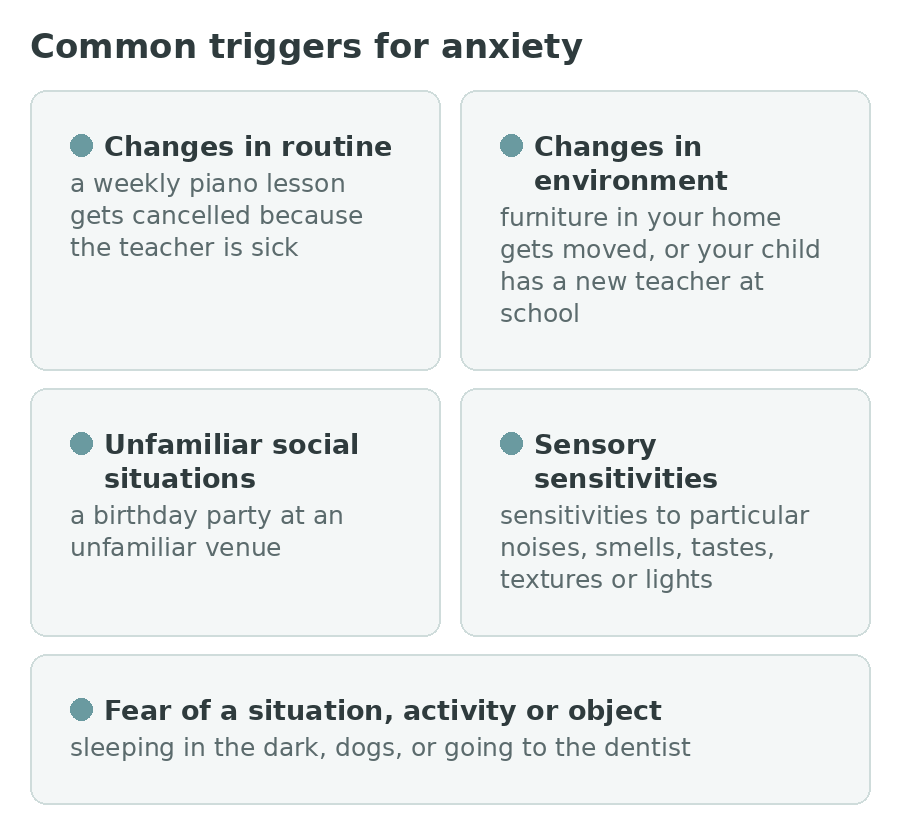
Some of the common triggers for anxiety in children with ASD include:

  • changes in routine – for example, a weekly piano lesson gets cancelled because the teacher is sick
  • changes in environment – for example, furniture in your home gets moved, there’s new play equipment at the local park, or you move house
  • unfamiliar social situations – for example, a birthday party at an unfamiliar house
  • sensory sensitivities – for example, sensitivities to particular noises, bright lights, specific flavours or food textures
  • fear of a particular situation, activity or object – for example, sleeping in their own bed, going to the toilet, balloons or vacuum cleaners.

Once you’ve worked out some of the things that make your child feel anxious, it can help to make a list of them, so that you can find ways to help your child manage these situations.


Give your child lots of opportunities to practice dealing with these things and situations in safe environments.

It helps if other people who look after your child – for example, child care workers, teachers and family members – also know what makes your child feel anxious and what they can do to help him with managing anxiety in these situations.


Sensory needs

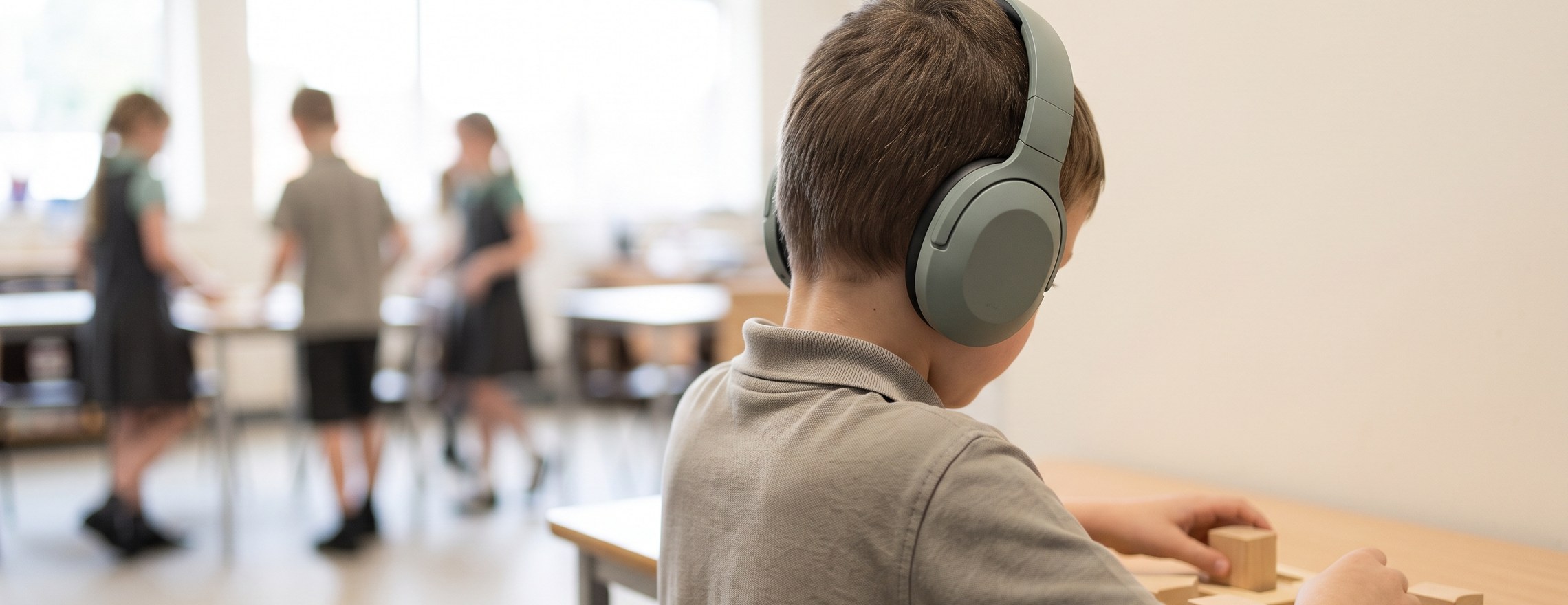
Children with ASD may have a range of sensory needs. They might experience sensory input in one or more of the seven senses differently.

Think about situations where there is a lot of sensory information, which can exacerbate their anxiety levels. Consider the food court in a shopping mall, where there are:

  • crowds of people
  • different food smells
  • lots of noise such as chatting, laughing, chairs scraping and cutlery clanging
  • foods with different tastes and textures
  • tables, chairs and groups of pupils that make it difficult for you to move through the hall.

This can be an overwhelming place for a child or young person on the autism.

If you think you can change the environment to reduce overstimulation, do!


Help your child recognise anxious feelings

Your child might need to be taught what anxiety is and what it feels like in her body. For example, when they feels anxious their palms get sweaty, their heart beats faster, and they engage in a stimming behaviour.

You could try drawing an outline of a person’s body. Inside the outline, help your child draw or write what happens in each part of his body when he feels scared or worried.


Quick tips to help children with ASD manage anxiety

Here are some ways you can help:

  • make sure you prepare them for any change to their routine
  • think about how you can adapt the environment
  • use visual supports and timetables
  • try social stories or comic strip conversations to develop social understanding
  • use a stress scale to help them identify changes in emotions offer a safe and quiet place where they can go to get away from social pressures
  • have lunch time clubs where they can spend time with others who have similar interests.


Use relaxation and calming strategies

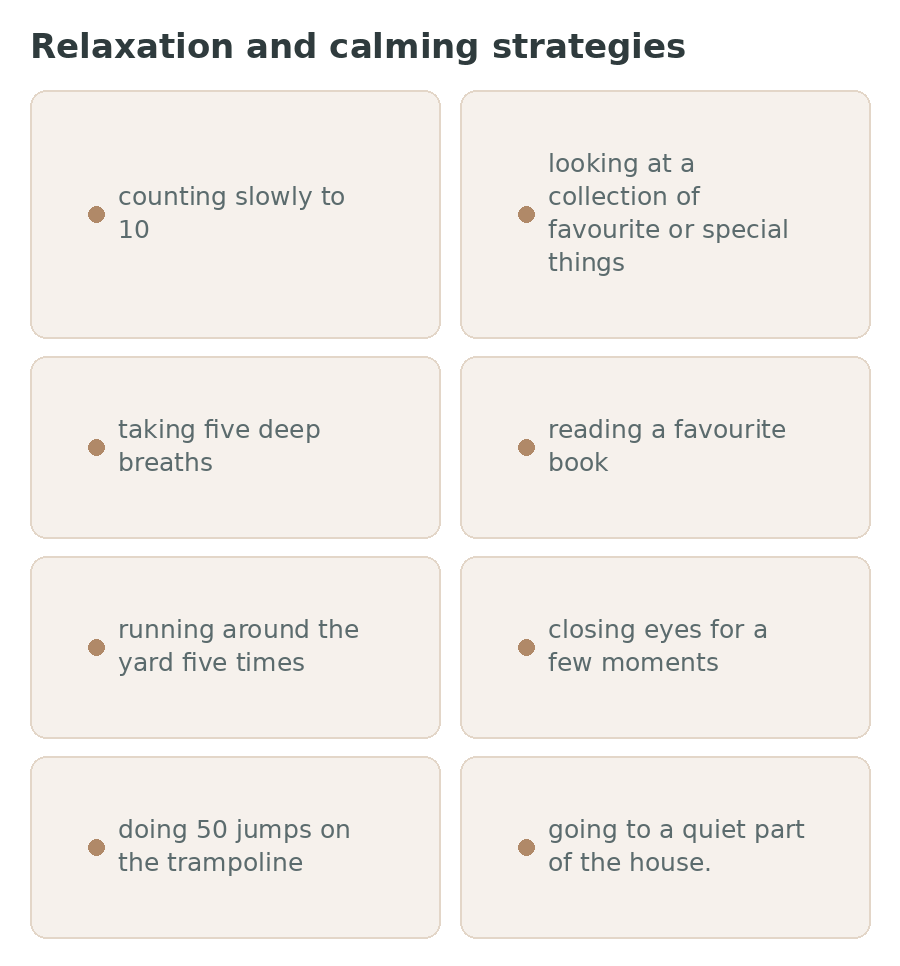
Your child might also need to learn what she can do to calm down. You can help your child come up with a toolbox of ways to help herself calm down when she starts feeling anxious or stressed. These might be:

  • counting slowly to 10
  • taking five deep breaths
  • running around the yard five times
  • doing 50 jumps on the trampoline
  • looking at a collection of favourite or special things
  • reading a favourite book
  • closing eyes for a few moments
  • going to a quiet part of the house.

Get your child to practice these strategies when they’re calm. Once they knows the strategies well, you can gently guide them to try them when he feels anxious.

Getting help with managing your child’s anxiety

A psychologist might be able to help if your child with autism spectrum disorder (ASD) is very anxious. Psychologists have specialised training in mental health conditions, and can work directly with your child and family to develop strategies for reducing anxiety.

Psychologists use a range of approaches, including:

  • cognitive behaviour therapy – this helps children develop skills to change their thinking in situations that make them anxious
  • interventions using gradual exposure to help children face their fears – for example, the stepladder approach
  • Social Stories– these can help prepare children for unfamiliar or stressful situations that generally make them anxious
  • relaxation training to help your child learn to relax.

You can ask your GP or Paediatrician to recommend a psychologist.

Medication can also help reduce anxiety symptoms in children with ASD. It’s usually recommended only when anxiety is affecting a child’s everyday life and behaviour strategies haven’t reduced the anxiety enough. You can speak to your GP or Paediatrician about this option.

The above information were obtained from the following sources. The full articles may be found on:

http://raisingchildren.net.au/articles/autism_spectrum_disorder_anxiety.html

http://www.autism.org.uk/professionals/teachers/classroom/understanding-anxiety.aspx

Parents of children with ASD may find the following resource beneficial:

https://ed-psych.utah.edu/school-psych/_documents/grants/autism-training-grant/Anxiety-PP.pdf

ShannonThis blog was written by Dr Aiyuen (Shannon) Choong, Psychologist at Your Mind Matters. Aiyuen is fluent in English and Mandarin, and is passionate about working with children from preschool years through to adolescence.

To learn more about Aiyuen, click here.

What is self-esteem and how do I improve it?

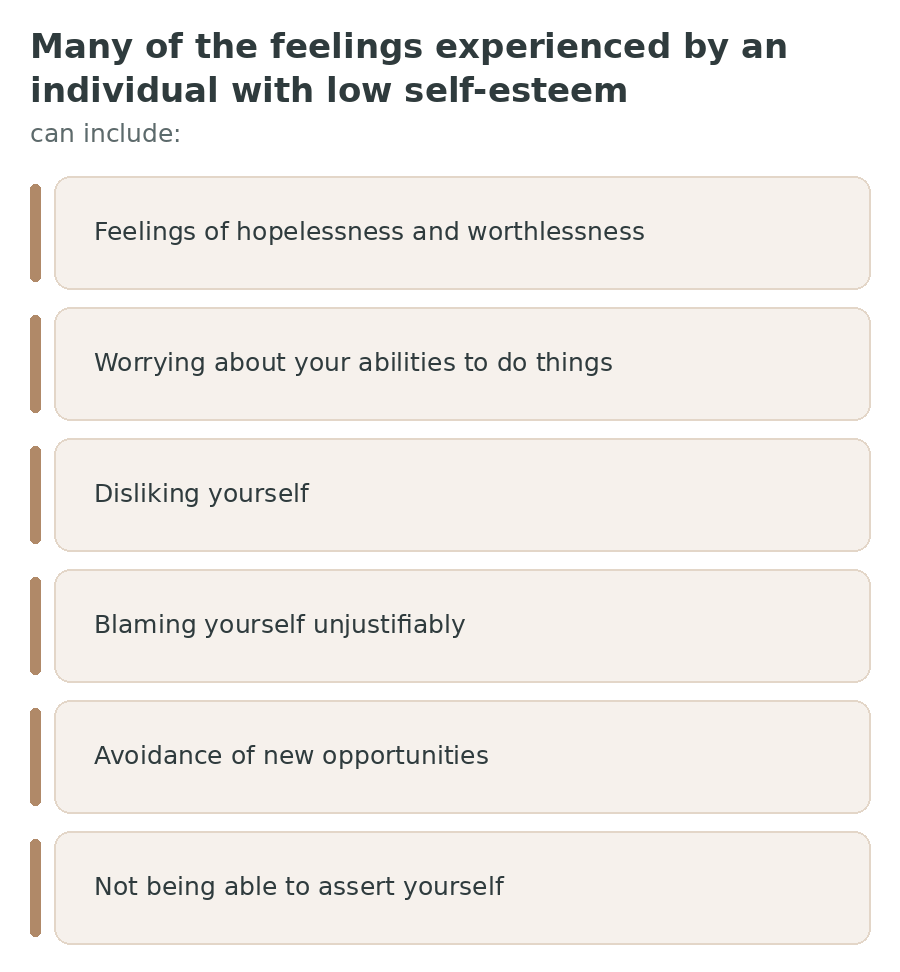
Self-esteem plays a key role towards our emotional well-being. Although low self-esteem is not in itself a mental health issue, the two are closely related. Many of the feelings experienced by an individual with low self-esteem can be similar to those of depression and anxiety and can include:

  • Feelings of hopelessness and worthlessness
  • Worrying about your abilities to do things
  • Disliking yourself
  • Blaming yourself unjustifiably
  • Avoidance of new opportunities
  • Not being able to assert yourself

For many of us, self-esteem is something which we want more of, however we often lack the knowledge of how to improve self-esteem. Below are some common questions about self-esteem and how to start to build it.


The difference between self-esteem and confidence…

Self-esteem refers to your overall sense of value and personal worth. Simply put, it is about how much you may like, respect and be satisfied with yourself. Self-esteem is often confused with confidence and the two terms are used interchangeably. Confidence refers to the belief you have in your abilities and is likely to vary based on the situation. For instance, an individual may have a healthy level of self-esteem, however lack confidence in their cooking abilities.  


Where does self-esteem come from?

Self-esteem is developed throughout your life and your experiences shape how you view yourselves. When you try new things and the results are beneficial to you, this leads to an increase in your self-esteem. For example, being offered a promotion at work to supervise a team for the first time, and having successful results is likely to increase self-esteem. However, if the role as a supervisor does not go as planned, this may impact on your self-esteem. It is important to note, that what affects self-esteem varies from person-to-person. Some common experiences that may impact on self-esteem include:

  • Being involved in a challenging romantic relationship, separation, or divorce
  • Experience of domestic violence
  • Workplace bullying
  • Loss of employment (being terminated or made redundant) and/or difficulty in securing work
  • Medical condition (physical or mental health issues)


Early childhood experiences play a particularly crucial role in development of your self-esteem. How you were treated from those around you including your caregivers, family, teachers and peers helps to mould your view of yourself, your worth, and contributes to your overall self-esteem.

            Childhood experiences that may contribute to healthy self-esteem:

  • Being listened to and acknowledged
  • Recognition for your successes and acknowledgement of mistakes
  • Being treated with respect and spoken to appropriately
  • Sound level of love, nurture and affection

Childhood experiences that may contribute to low self-esteem:

  • Verbal, physical, sexual or emotional abuse
  • Being told that you are not good enough
  • Lack of acknowledgment for your achievements, being told you could have performed better, or failures (e.g. not passing a subject at school) being reflected as a failure of your whole life
  • Being ignored
  • Bullying or teasing


Ways to build self-esteem:

Positive self-talk

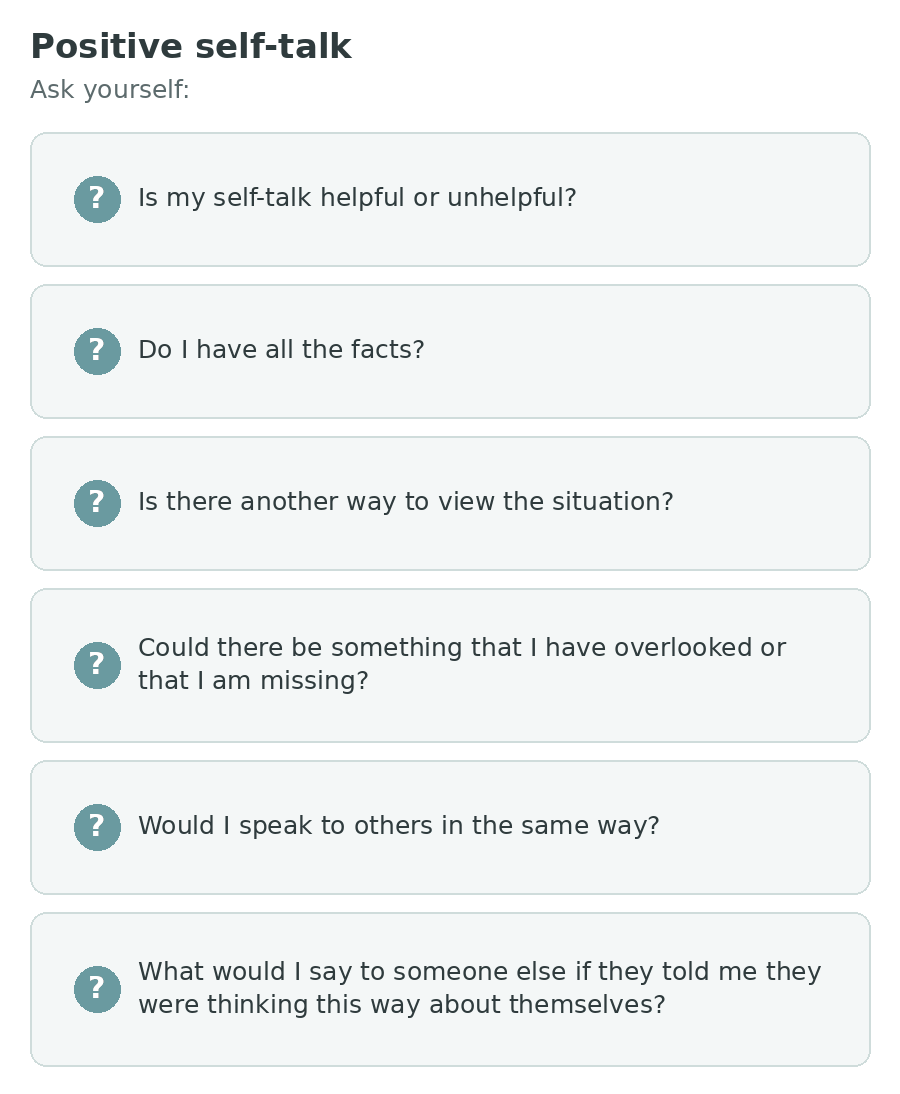
Self-talk is what we say to ourselves, either aloud or in our mind. Often, we may not be aware of our self-talk, but it has an influence on how we perceive ourselves, how we behave and how we feel. Negative self-talk can be extremely harmful to our self-esteem, it includes thoughts like “I can’t do anything right”. To help shift your self-talk to be more positive, try looking at the thought from a different perspective. Ask yourself:

  • Is my self-talk helpful or unhelpful?
  • Do I have all the facts?
  • Is there another way to view the situation?
  • Could there be something that I have overlooked or that I am missing?
  • Would I speak to others in the same way?
  • What would I say to someone else if they told me they were thinking this way about themselves?


Positive affirmations

Affirmations are positive statements that can help to challenge and overcome your negative self-talk. These phrases described how you would like to be. Repeating positive affirmations helps you to start seeing things from a more positive perspective. Think about how doing repetitive physical exercises can improve your fitness and physical health over time. In this similar way, positive affirmations can help to provide you with a more optimistic outlook. Examples of affirmations include: “I am a likeable person”, “I have a lot to be proud of”, and “I am in control of my life”. For a list of positive affirmations visit https://www.getselfhelp.co.uk/docs/PositiveAffirmations.pdf


Strengths and positive qualities

Focus on your strengths and positive qualities. If you struggle, think about what others would say about you. Here is a link with a list of positive qualities: https://www.therapistaid.com/worksheets/positive-traits.pdf

As an exercise, circle your strongest positive qualities and then ask a family member or friend to circle the traits that they identify as your strengths (make sure to give them a new copy of the positive traits list and they don’t see your responses). The results may surprise you and help you see how others may view you in a more positive light.


Gratitude journal

It is all too easy to get caught up in the negative aspects of our day and focus on what didn’t go well. We often don’t think about what we are grateful for or what positive experiences may have occurred. A gratitude journal is a great tool to help you focus on the positive experiences of each day. Think about three things you are grateful for each day. No matter how big or small. If you get stuck, you can use prompts, however these are optional. The following prompts may be useful:

  • The best part about today…
  • Something I am grateful for today…
  • Today I learned…
  • Something beautiful I saw today…

For more information and a different version of a gratitude journal, which doesn’t require daily entries visit https://www.therapistaid.com/worksheets/gratitude-journal.pdf


A final note…

I hope this has been helpful in answering your questions about low self-esteem, as well as provided you with some ideas of how to start to improve self-esteem. If you are experiencing low self-esteem and would like some support, why not give us a call? Our team of highly skilled and well-experienced Psychologists are here to help. Call us now and take that first step towards obtaining the life you deserve.


The following articles were referenced in creation of this blog:

https://www.mind.org.uk/information-support/types-of-mental-health-problems/self-esteem/

https://cmhc.utexas.edu/selfesteem.html


maria

This blog was written by Maria Kampantais, Psychologist at Your Mind Matters.

Maria works with us 4 days per week and has both evening and day session times.  To learn more  about Maria, click here

Building Resilience

Resilience is often described as an individual’s ability to transform adversity into wisdom, insight and compassion. Resilience is ordinary not extraordinary that means everybody has resilience, it’s a question of how well is it used when needed. High resilience does not mean that an individual does not feel pain but simply means that they have found a good way to deal with negative events in life possibly quicker than others.  Like any other human skill, everyone has the capacity to build resilience and to do so the most needed ingredient to the recipe is willingness to do so.

Here’s a list of strategies to build resilience:

Positive Thinking:  Thinking patterns are known to trigger emotional patterns. Because we have built-in survival mechanisms, our brains are naturally wired to pay more attention to negative events than the positive ones. But in essence, we experience positive events with much greater frequency. One key to building resilience is noticing and appreciating those positive experiences whenever and wherever they occur.


Nurture a positive view of yourself: When you discover a positive attribute in yourself, it is important to nurture it by self-talk, sharing it with important loved ones or by maintaining a journal.  Developing confidence in your ability to solve problems and trusting your instincts helps build resilience.


Self- care:  Taking care of yourself helps to keep your mind and body well equipped to deal with situations that require resilience. So is important to pay attention to your own needs and feelings. Engage in activities that you enjoy and find relaxing and exercise regularly.


Learning from past experiences: Focusing on past experiences and how you dealt with them gives personal strength and ability to identify strategies for building resilience. Learning from reactions to challenging life events is likely to enhance your self-belief, confidence and helps with building wisdom.


Goal setting:  Developing realistic goals and focusing on achieving one big or small goal each day enables you to move forward and achieve bigger goals. Focusing on this accomplishment is likely to build strength and enhance ability to have a hopeful outlook.


When we tackle obstacles, we find hidden reserves of courage and resilience we did not know we had. And it is only when we are faced with failure do we realise that these resources were always there within us. We only need to find them and move on to using them” (By A P J Abdul Kalam)  


 If you are going through difficulties and need to find your inner strength, why not give us a call today?  Our team of highly skilled and well-experienced Psychologists are here to help.  

photo__1_ aanchal

This blog was written by Aanchal Sood, Psychologist at Your Mind Matters.

Aanchal completed studies in psychopharmacology and psychology in England, and is fluent in both Hindi and Punjabi.

Aanchal has experience assisting adolescents, adults and couples to address a variety of difficulties including anxiety and mood disorders, grief and loss, trauma and stress related disorders, adjustment issues (e.g. cultural adjustment), sleep difficulties, relationship difficulties, schizophrenia spectrum and other psychotic disorders, obsessive compulsive and related disorders. 

Aanchal works with us 1-2 evenings per week. 


Preparing Your Child For School

Starting school is an exciting time for most children. However, for some children, starting school can be a difficult and scary time. Preparing your child for the start of school will not only help them feel more confident about what to expect at their new school, but also ensure that they can successfully transition into a new environment.

Here are a few tips to help you help your child prepare for their next big milestone – going to school:

  • Engage your child in conversations about what he/she thinks about starting school. Encourage your child to tell you what he/she is excited and worried about.
  • Encourage your child to also talk to his/her friends about school.
  • Encourage your child to read. When children are younger, they learn to understand and express words. When they get older, they learn to read and write these words. Reading and writing will play a big part of your child’s learning at school. Reading books regularly with your child helps them get a good (head) start at school.
  • Visit your local library. Find books to read to your child. There are lots of children’s books about going to school. Reading these books will not only help your child prepare for school but also increase your child’s literacy and language skills.
  • Help your child develop clear speech. Children’s speech should be easily understood by others when they go to school. If you have concerns about your child’s speech before they go to school, seek help from a speech pathologist.
  • Engage your child in imaginative play. Encourage them to problem-solve in play. This will help build your child’s confidence, critical thinking, and social skills when they attend school.
  • If your child is worried about changes, make a book about going to school. You can take pictures of the school and talk about what he/she will see and experience at school. You can also provide your child with strategies on what he/she can do when he/she feels worried (eg. Talking to the teacher etc.)
  • Attend transition-to-school programs at your school to help your child familiarize themselves with the new environment. Show your child around the school so that he/she is familiar with the school environment.
  • Establish routines for dinner, bath time and bedtime. Once this is established, your child will be able to transition smoothly into this routine when he/she starts school.
  • Encourage your child to be independent. Get your child to try dressing, packing school bag, eating, going to the toilet etc. independently.
  • Get to know your child’s teachers. Teachers are here to help your child succeed. Help your teacher understand your child and understand your child’s needs. Teachers also work collaboratively with you and other health professionals to ensure that your child’s learning needs are met.
  • Also, ask the school about how you can engage in your child’s learning and development.
  • Talk to your child about bullying. Educate your child that bullying is unacceptable under any circumstances. Empower your child to speak up. Encourage them to speak to you if someone has hurt them physically and mentally. Let him/her know that it is a good thing that they came to talk to you about this.

Lastly, but importantly, stay positive and try to share your child’s excitement about their next big step. Good luck!

This blog was written by our in-house Speech Pathologist, Fiona Low. Fiona is fluent in English and Mandarin, and enjoys working with children from preschool years through to adolescence.

To learn more about Fiona, click here.

Information adopted from:

http://www.education.vic.gov.au/school/parents/primary/Pages/prepare.aspx

https://sydney.edu.au/news-opinion/news/2017/01/19/7-tips-for-preparing-children-for-school.html

https://www.transitiontoschoolresource.org.au/tts-content/activities-to-help-prepare-your-child-for-school

Practicing self-care this Christmas


Christmas is fast approaching, and the 2017 year is nearing a close. For many the festive season is a time of giving, spending time with loved ones, and let’s not forget the elaborate feasts! It’s all too often that we get caught up in the hype of the festive season, whether it be buying gifts, writing our seasons greetings or preparing for Santa’s arrival. We can easily forget the importance of caring for ourselves and the focus all too often becomes caring for those around us. Here are some tips for self-care this festive season:

Be mindful

What is mindfulness? Mindfulness is noticing and being aware of the present moment. It’s about paying attention to our thoughts, feelings, and sensations in our body.

Mindfulness can be a great tool to help us identify when the pressure of the holidays is getting too much. We quickly find ourselves in the pattern of carrying on from one task to the next, and feeling as though we are running a marathon! And YES we do get things done, but at times we can be left feeling exhausted and drained. Through the process of getting caught up in the hype of the holidays, we may lose touch of the present and miss out on enjoying the moment.

Try and incorporate mindfulness this Christmas. Ask yourself “how am I feeling right now?”. Notice any tension in your body (most of us hold tension in our shoulders, upper back, neck and/or jaw). Are you feeling tired? Worn out? Is everything getting too much and leading to that sense of overwhelming doom? Or are you feeling relaxed and balanced? Unless we are in the habit of checking in with ourselves regularly, we may not notice the signs. Set a reminder on your phone to pause and check in with yourself every few hours, listen to your body. Guided mindfulness meditation can be beneficial. Smiling Mind is a free app that can help you to learn how to engage in mindfulness practices. Pay attention to your senses and notice what you can see, feel, hear, taste or smell. For example, listen to your favourite song and immerse yourself in it by paying attention to the lyrics and the music. 

Remember to breathe

Focus on your breathing. When we are stressed, our breathing tends to become shallow. Practice taking slow and steady breaths by inhaling through your nose for four seconds, holding that breath for two seconds, and exhaling through the mouth for six seconds.

Just five minutes

When you notice yourself feeling overwhelmed by a situation, take five minutes away from the task at hand to engage in a relaxing activity. This can include going outside and sitting in your garden, spending time with your pet whether this means playing fetch with your pup or snuggling up on the couch with your feline fur baby, doing some gentle stretching, making a cup of tea/coffee, dancing to your favourite song, calling a friend, or watching a funny clip on YouTube. The options are endless.

Exercise

Exercise is a great way to reduce stress and produce endorphins (mood enhancing chemicals in the brain). Going for a walk or bike ride can be a great way to escape the busyness of the holiday season and can help to clear your mind of those worries. Engaging in yoga or Pilates can help to reduce stress and manage low mood and anxiety. Or why not try something fun this festive season like ice skating or getting out those roller skates. Whatever form of exercise you engage in will be beneficial and why not have some fun with it.  

Do something creative

Being creative can be enjoyable as well as relaxing. Try making your own Christmas cards or ornaments. Instead of buying gifts, you could consider DIY gifts such as mason jar brownie mix or body scrubs. Whip up a bunch of festive cookies, make a gingerbread house or some fruit mince pies.  

Drink plenty of water

Water helps to keep you hydrated, increases energy levels and relieves fatigue. Challenge yourself, friends, family and co-workers to see who can drink the most water. You will have fun as well as reap the benefits.


Remember to take a pause, reflect, and engage in self-care this Christmas.

From all of us, at Your Mind Matters Psychology, we wish you a Merry Christmas and a safe and prosperous New Year!!!!


maria

This blog was written by Maria Kampantais, Psychologist at Your Mind Matters.

Maria works with us 4 days per week and has both evening and day session times.  To learn more  about Maria, click here


Relationships and Communication – How important is communication in a romantic relationship?

Communication is a skill that you can learn. It’s like riding a bicycle or typing. If you’re willing to work at it, you can rapidly improve the quality of every part of your life.”

– Brian Tracy


Communication plays a vital role in the exchange between two people. An incomplete or unhealthy communication can create a block that can contribute to unfulfilling relationships. Communication provides the power to fulfill human need for connectivity and belonging. A positive interaction not only provides greater relationship satisfaction but also ameliorates our subjective well-being. Learning how to effectively communicate with your partner will strengthen the trust, honesty and respect you have for each other and the relationship.

Unhealthy communication often starts with negative thoughts or emotions and not words. And these negative thoughts can come from preconceived perceptions and anticipation of reactions. The ability to communicate effectively assists with showing your values to your partner makes partners understand each other and be approachable to each other.

Misunderstandings and communication mistakes are always possible in a relationship. Here are the most common yet avoidable communication mistakes that could harm a relationship:

  • Universal statements: generalizing your partner’s character in a negative way by using universal statements can show lack of understanding, invalidates the good aspects in your partner, and discourages change.
  • Not considering things from your partner’s point of view: lacking empathy acts as a catalyst to anger towards each other in a relationship, worsens conflict, and can lead to defensiveness.
  • Unhealthy non-verbals: body gestures, limited eye-contact, loud tone of voice, and divided attention can make your partner read between the lines, jump to unhealthy conclusions, and assume the worse.
  • Invalidation: invalidating your partner’s emotions can contribute to resentment and hurt. Constant invalidation can cause emotional numbness, harming the bond in a relationship.
  • Making past mistakes/difficulties as the centre: bringing up past mistakes as part of each communication, in time will start to lead and rule the relationship and invalidate positive changes.
  • Fixating on your own feelings: this can make your partner run away each time you want to communicate. Feelings of being unheard can further lead to patterns of avoiding any form of communication, in turn making your partner emotionally freeze or close off.

For a healthier communication, try to:

  • Find the right time to communicate: If the issue of not urgent then talking about it at the right time is likely to yield positive results.
  • Watch your body language: Giving your partner full attention will make him/her feel heard and reduce feelings of hurt and anger because you are listening.
  • Be honest: if there is one thing that your partner will appreciate the most – it is honesty. Express your emotions as honestly as you can, keeping in view not to violate your partners emotions.
  • Remember the delay rule: Delaying an argument will not make you lose. In fact delaying often allows thoughtfulness and wisdom to kick in and improves chances of reconciliation and realisation.
  • Not be harsh: By avoiding harsh words you will allow room for openness and prevent another argument.
  • Be open to feedback: Constructive criticism from your partner will only lead to positive dynamics, and who can do it better than your partner? Communicating this belief to your partner will instill a sense of responsibility in your partner and reduce defensiveness from your end.

If you are going through difficulties in your relationship, why not give us a call today?  Our team of highly skilled and well-experienced Psychologists are here to help.  

photo__1_ aanchal

This blog was written by Aanchal Sood, Psychologist at Your Mind Matters.

Aanchal completed studies in psychopharmacology and psychology in England, and is fluent in both Hindi and Punjabi.

Aanchal has experience assisting adolescents, adults and couples to address a variety of difficulties including anxiety and mood disorders, grief and loss, trauma and stress related disorders, adjustment issues (e.g. cultural adjustment), sleep difficulties, relationship difficulties, schizophrenia spectrum and other psychotic disorders, obsessive compulsive and related disorders. 

Aanchal works with us 1-2 evenings per week. 

Medicare Funded Online Counselling (Telehealth)

DID YOU KNOW….?

As of 1st November 2017, Psychologists will be able to provide video counselling to patients in rural and remote areas of Australia. These sessions will be subsidised by Medicare under a Mental Health Care Plan (Better Access).

What is considered rural and remote? This will be based on the Modified Monash Model (MMM), with people residing in regions MMM 4 to MMM 7 being eligible for telepsychology. A map of Australia with the MMM categories is available on the DoctorConnect website.

How many sessions can be used via telehealth? Up to 7 of the 10 regular Better Access items can be delivered via telehealth to eligible patients. At least 1 of the first 4 consultations must be delivered face-to-face.

How is telehealth being delivered? The telepsychology consultation must have a video and audio link between the provider and the patient. The Government will not mandate the exact type of video conferencing technology that can be used to deliver telepsychology. However, providers will have to use technology that ensures quality, privacy, and security; that is, it must:
-Provide sufficient video quality to facilitate effective service delivery
-Meet the privacy requirements for health information, and
-Adhere to the applicable laws for security and privacy.

Do referring Practitioners need to use different MBS item numbers? Medical Practitioners will continue to use the same Mental Health Care Plan item numbers.

If you have any questions about our services, please call us on (03) 9809 5947.

如何让孩子学习两种语言

Our Speech Pathologist, Fiona Low, has re-written her blog on helping children learn two languages in Mandarin:

如何孩子学两种

澳大利亚是个多元文化的国家。许多家庭中,会说多种语言的孩子非常多。如今,英语虽仍是澳洲的官方语言,越来越多的家庭都选择让孩子在家里或在学校里学习各种外语;那,孩子从小接触多种语言,会不会影响孩子的语言发展呢?

关于儿童学错误观念

误区1: 学习两种语言会混淆我的孩子的语言发展。

现实:当孩子在同一个句子或谈话中使用两种语言时,一些父母担心这是语言混乱的迹象。 事实上,语言对换 (在一个句子或对话中使用两种语言)是常见的。 其实,一些语言专家认为语言转换是掌握双语能力的现象。

误区2:学习两种语言会延迟语言发展。

现实:虽然一些学习双语的孩子可能在开始说第一句话时,会比同龄学习单语的小孩来得稍慢,但他们仍然会像单语小孩一样达到语言发展的各个目标。 例如,他们仍然会在8-15个月之前说出他们的第一句话。 如果您的小孩无法达到这些指标,这些语言延误可能是由语言学习障碍导致的而不是由学习双语而引起的。 一个专业的言语治疗师可帮有沟通障碍的儿童学习语言交流。

误区3:父母在教孩子说两种语言时应该使用“一亲一语”的方法。

现实:一些家长认为,通过一亲一语治,(例如说,孩子跟妈妈说英语,跟爸爸说中文),孩子将会很均匀地接触两种语言。虽然这是教孩子两种语言的许多方式之一,目前为止,没有科学证据表明这是教孩子两种语言的最佳方式。事实上,我们可以用很多方法去教两种语言。 与孩子交流的最好方式是使用最自然和最舒适的方式去和孩子交流。

误区4: 如果想让孩子说英语,避免与孩子以母语交流。

现实:目前为止,并没有证据表明在家庭环境中使用第二种语言是必要的,以便孩子在其他社会环境(例如在学校)成功地使用这种语言。 父母应继续以母语和孩子交流, 因为根据数据显示,让孩子有坚实的母语基础能够增强孩子的第二语言学习能力。 防止孩子学习家庭语言可反而导致孩子在家庭环境中感到孤立,影响孩子的社交能力。

误区5: 说双语的人在沟通时需要从第一语言翻译到第二语言来沟通。

现实:会说双语的儿童是有能力用两种语言思考的。一些人认为,会说双语的孩子只能用一种语言思考,然后在必要时将其翻译成另一种语言。但是,这是没有科学根据的。

误区6: 年龄越大,掌握第二种语言的能力就越差。

现实:虽然孩子们在越小的时候开始学习第二语言越可能有本土化的发音,年龄较大的孩子和成年人都能与幼儿一样能掌握第二语言的能力。

误区7: 有特殊需要或语言迟缓的儿童不能学习两种语言。

现实:其实,没有证据表明有语言障碍的儿童无法学习两种语言。 事实上,有越来越多证据表明,学习两种语言对于有特殊需求的儿童可能是有益的。 如果一个孩子能够学习一种语言,他就能学习两种语言。

如何帮助孩子们的双语发展:

  1. 用最自然,最舒适的语言与孩子说话。
  2. 用最熟悉流畅的语言和孩子玩游戏,唱歌。
  3. 和孩子一起阅读,说故事。
  4. 跟随孩子的领导 – 如果孩子对一本特定的书感兴趣,继续谈论它,并鼓励孩子一起谈论此书。
  5. 不要批评孩子的语言。相反的,通过以正确的方式重复孩子的发言给他/她听,让他/她正确模仿语言。

如果您担心您孩子的言语和语言发展,请致电(03)9809-5947,或发送电子邮件至:admin@yourmindmatters.net.au。

This blog was written by our in-house Speech Pathologist, Fiona Low. Fiona is fluent in English and Mandarin, and enjoys working with children from preschool years through to adolescence.

To learn more about Fiona, click here.

Employee Assistance Programs (EAP)

What is an Employee Assistance Program?

An Employee Assistance Program (EAP) is an arrangement between an organisation and its employees to provide a variety of support programs for the employees. This can include assessment, short-term counselling, referrals, and on-site support for critical incidents.

EAP is a voluntary counselling service designed to assist employees to address various personal issues, either work-related or personal, in a confidential manner. EAP services are also often available to immediate family members.

In a nutshell, it is designed to enhance the psychological wellbeing of employees and provide intervention to address work and/or personal difficulties that may impact on work performance, productivity and attendance.


Is there a fee involved?

EAP services come at no cost to the employee or family member. Sessions are short-term and most employers will fund three to six sessions per employee.


What are some common work-related issues addressed through EAP?

EAP can assist with various work-related issues including organisational change, workplace stress, redundancy, career concerns, fear of job loss, job isolation, specific incident at work, job satisfaction, conflict with colleagues or management. Workplace bullying is one of the most common presenting problems.


What is workplace bullying?

Workplace bullying is defined as verbal, physical, social or psychological abuse by your employer, manager/supervisor, colleague, or group of people at your workplace. Workplace bullying can occur in any work setting and can happen to anyone whether you are a paid employee, volunteer, or placement student. In order for behaviour to be classed as ‘bullying’, it has to be repeated, i.e. it has occurred on more than one occasion.

Bullying in the workplace can involve:

  • Repeated hurtful or derogatory comments which can include making fun of you and/or your work. This can happen privately, where there is no one else to witness the behaviour or in front of other staff.
  • Excluding you from work-related activities.
  • Playing mind games.
  • Intimidation, which includes speaking to you in a way that makes you feel inferior.
  • Placing unrealistic expectations on you such as giving you tasks which would be impossible to complete given the timeframe or resources.
  • Withholding information from you which is necessary for you to complete your work.
  • Sexual harassment including sexual comments or inappropriate touching.
  • Physical abuse such as pushing, shoving or tripping.
  • Inappropriate jokes or pranks which lead to you feeling ridiculed or embarrassed.
  • Attacking or threatening you with weapons.

Workplace bullying can impact on an individual’s work. It can lead to reduced productivity, absenteeism, fear of losing your job, loss of confidence, feeling stressed and physical impacts such as insomnia. In addition, bullying can impact on an individual’s personal life including relationships, social interaction, and lead to mental health difficulties such as depression and anxiety.

It must be mentioned, that some situations within a workplace may seem unfair but are not bullying. It is acceptable for your employer to transfer, demote, performance manage, or let you go, provided they are acting reasonably and there is a legitimate reason for their decision.

What you can do.

  • Find out if your organisation has a bullying policy and complaints procedure. Most companies will have information on the intranet or you can speak to Human Resources (HR) if you are not sure.
  • Keep a log or diary of all incidents of bullying including details of what you did to address the issue.
  • Get support from someone you trust or contact the union.
  • Approach the bully (if you feel safe and confident to do so) and let them know that their behaviour is not acceptable.
  • Raise the issue with a manager or HR.


How EAP can assist with addressing workplace bullying?

An EAP counselling service can assist by helping you to keep informed with regards to what behaviour constitutes bullying, provide you with strategies on how to handle the situations and procedures you can follow.

One of the most challenging things for individuals is to approach the bully and let them know that their behaviour is unwanted. Counselling can assist by empowering you to identify that there are steps you can take to stop this behaviour. You will be provided with assertiveness training (a communication style which focuses on standing up for yourself in a way that is respectful towards you and the other person involved) and tools to build your confidence.


Why use EAP?

EAP services are not only free for staff and immediate family members, but have been statistically proven to enhance employee’s productivity levels and reduce absenteeism from work. Research on the efficacy of EAP’s show that working with a Psychologist can improve emotional well-being (↑86.4%), physical health (↑24.8%), work-like balance (↑44.8%), workplace moral and motivation (↑49.5%) and productivity (↑24.0%), improve workplace relationships (↑27.3%), and reduce absenteeism (36% improvement).


How do I access EAP services?

EAP services can be accessed by speaking to your manager, HR department or finding the name of the EAP provider that your organisation is linked to. Once you have these details, you are able to contact the EAP provider and organise an appointment. EAP providers have psychology practices that they will refer you to in order to find a service that is easily accessible. All information is handled in a confidential manner, and your employer does not know that you have accessed these services, unless you choose to tell them.

If your organisation does not already have an EAP provider, visit our EAP page or give us a call on (03) 9809 5947.

maria

This blog was written by Maria Kampantais, Psychologist at Your Mind Matters.

Maria has a long history of working in Employment Services and has a strong understanding of the stressors staff can endure when working towards KPIs, deadlines, when they are overworked, or there is a workplace issue.

We spend a lot of time at work, so its important that the time there is as enjoyable as possible. 

Maria works with us 4 days per week and has both evening and day session times.  To learn more  about Maria, click here

Other helpful links:

https://www.humanrights.gov.au/workplace-bullying-violence-harassment-and-bullying-fact-sheet

If you’d like to more about EAP statistics, head to http://www.davcorp.com.au/wpdata/files/23.pdf


Men’s Health Week

June 12th 2017 marks the start of Men’s Health Week.

Although it’s very normal for my peers and I to see a psychologist for support, us psychologists are very much aware of the stigma around seeking this type of assistance, which is even more amplified for men.

Why? One reason is because you must be “crazy” to see us. This is completely untrue.  We are all a work in progress and we can always tweak things to make our lives better. Actually, we have many professionals (e.g. Doctors, Accountants, Lawyers) come to see us to ensure they continue working well in their very stressful jobs and don’t become distressed – they have decided that prevention is better than cure.

Another reason there is stigma around men seeing psychologists is because boys and men are typically socialised to not talk about their feelings, because it’s “girly” or more of a “woman’s thing”. Even from a very young age, how many boys are told “don’t cry like a girl” or if playing sport they may hear “you play/kick like a girl!”. The message in a nutshell: Don’t do anything girly! 

These are some reasons why women are more likely to get help than men. In fact, ABS data showed that only 27 per cent of men seek professional help, compared to 40 per cent of women. This is quite alarming to us, as statistics suggest that men are three times more likely to kill themselves than women and suicide is the leading cause of death in men aged between 15 and 44. Furthermore, among young Australians (12 to 24 years) there are three male deaths to every one female death, with accidents and suicide accounting for most of this difference (Moon, Meyer, Grau, 2000).  We also know that boys show greater susceptibility to family stress, especially in the development of conduct disorders, and they continue to be more susceptible to both physical and psychological problems throughout the lifespan (Wilson et al., 1992).

Unfortunately, many men who do not access support turn to drugs or alcohol, which tends to compound mental health problems and can cause many men’s lives to spiral out of control. Often by the time young men are asking for help, health professionals only see a drug or alcohol problem, not the underlying illness. Early intervention is key!

We also have many clients referred for anger management, but underneath that anger is usually hurt, regret, sadness or guilt. Recently, I’ve had some male clients who have come to therapy as part of a court order for anger management. They have expressed some uncertainty about the therapeutic process, and some have worried that they may offend or upset me because I am a female. My response to that is that:

  1. It is completely normal to feel uncertain, this is all new and we are working with you in a manner that often goes against societal norms;
  2. If you are angry, I know it is not personal, but it’s a reflection of your circumstances. If you are open and honest with me (and yes, intense feeling will come up), then I can work with those feelings. If you hold back, it’s much harder for me to help.
  3. I’ve heard cursing that would make a sailor blush! Trust me, it doesn’t offend me!

So, to all the boys and men out there, please do not let societal norms or stigma stop you from accessing the support you need. We went to university for many years so we’d have the privilege of helping you.

If you’re experiencing any intense feelings, or perhaps your family or partner keeps telling you to talk to someone, please call us on (03)9809 5947. 

For a list of FREE Men’s Health Events in Victoria, head to  http://www.menshealthweek.org.au/En/Categories/7.aspx

For more information on the statistics related to men’s health: http://www.menshealthweek.org.au/En/Pages/ee4d91/Why-Mens-Health.aspx

Need support now? 24-Hour Telephone Counselling is available:

  • Emergency on 000 (or 112 from a mobile phone)
  • Lifeline on 13 11 14
  • Kids Helpline on 1800 551 800
  • MensLine Australia on 1300 789 978
  • Suicide Call Back Service on 1300 659 467
     laura    

 About the author:

This blog was written by Laura Forlani, Director and Clinical Psychologist at Your Mind Matters.      

Laura has completed undergraduate and post graduate studies in psychology, most recently completing a Masters in Clinical Psychology at Swinburne University.She has experience helping children and adults overcome a wide variety of difficulties such as mood and anxiety disorders, and problems arising due to changes in personal circumstances (e.g. family breakdown or a change in career). Her approach to therapy involves education, collaboration, and evidence-based interventions such as cognitive-behaviour therapy, skills training, and relaxation strategies. 

References:

Moon, L, Meyer, P., & Grau, J. (2000). Australia’s young people 1999: Their health and wellbeing. Cat. no. PHE 19. Canberra: AIHW

Wilson, G. T., O’Leary, K. D., & Nathan, P. (1992). Abnormal psychology. Englewood Cliffs, NJ: Prentice Hall.