
Building a Resilient Workplace: Strategies for Supporting Employee Mental Health


Building a Resilient Workplace: Strategies for Supporting Employee Mental Health
Most workplaces still treat mental health like it’s a side issue. Yet, when stress piles up, productivity and morale can take a serious hit. You don’t have to accept this as normal—there are proven ways to build mental health resilience that benefit everyone. In this post, you’ll learn key strategies and how Employee Assistance Programs can support your team’s well-being with help from experienced Melbourne psychologists.
Creating a Supportive Work Environment
Addressing mental health in the workplace isn’t just about reacting to problems. It’s about creating a foundation where everyone feels valued and supported.
Recognising the Importance of Mental Health
Mental health shapes how people work long before it shows up as absence. Concentration, decision-making and the willingness to raise a problem early all depend on it. Organisations that treat this as a core operational concern rather than a welfare add-on tend to notice difficulties sooner, when they are still manageable.

Promoting Open Communication
Open communication is less about formal channels than about what people see happening. When a manager mentions their own workload honestly, or when someone who took leave returns without their absence being remarked on, others learn that speaking up is safe. That learning does more than any policy statement.
Encouraging Work-Life Balance
Balance is set by practice, not by policy. If emails arrive at ten at night, staff will answer them regardless of what the handbook says. Protecting genuine time off, keeping workloads within what a person can carry, and modelling this from the top is what makes the difference.
Implementing Employee Assistance Programs
An EAP is the most direct way to make professional support available to your staff.
Benefits of EAPs for Organisations
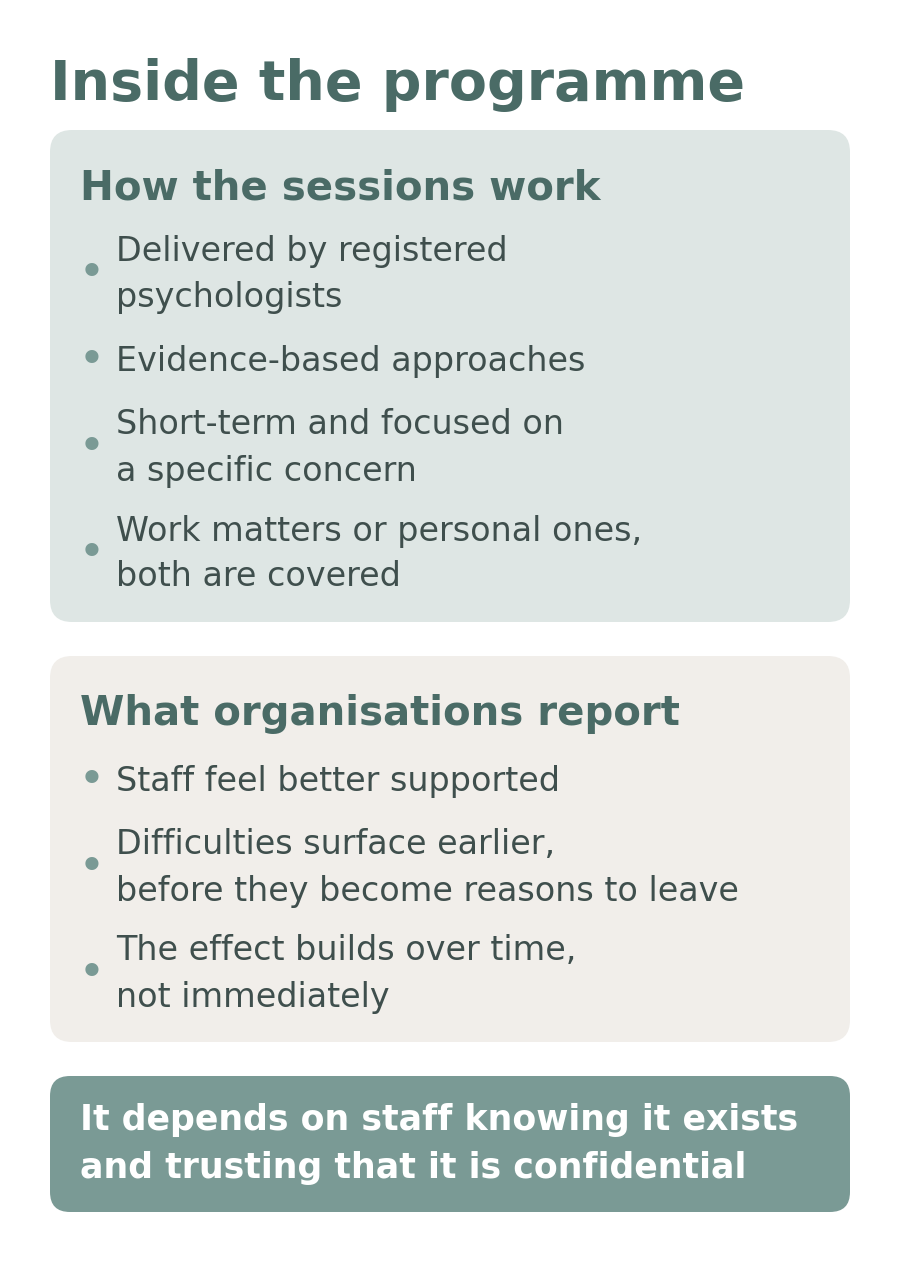
An EAP gives employees confidential access to counselling, paid for by the employer, with no detail ever reported back. That confidentiality is what makes it work. For the organisation, the return usually shows in retention: replacing someone who leaves because they weren’t supported costs considerably more than the programme itself.
Services Provided by Melbourne Psychologists
Sessions are delivered by registered psychologists using evidence-based approaches, typically short-term and focused on a specific concern. Where longer-term work is needed, the clinician makes that clear and helps arrange it. Staff can raise work matters or personal ones; both are covered.
What Organisations Report
Employers who introduce an EAP commonly report that staff feel better supported and that difficulties surface earlier, before they become reasons to leave. The effect builds over time rather than appearing immediately, and it depends heavily on staff knowing the programme exists and trusting that it is confidential.
Enhancing Mental Health Resilience
With a supportive environment and an EAP in place, you can focus on building resilience across the team.
Stress Management Techniques
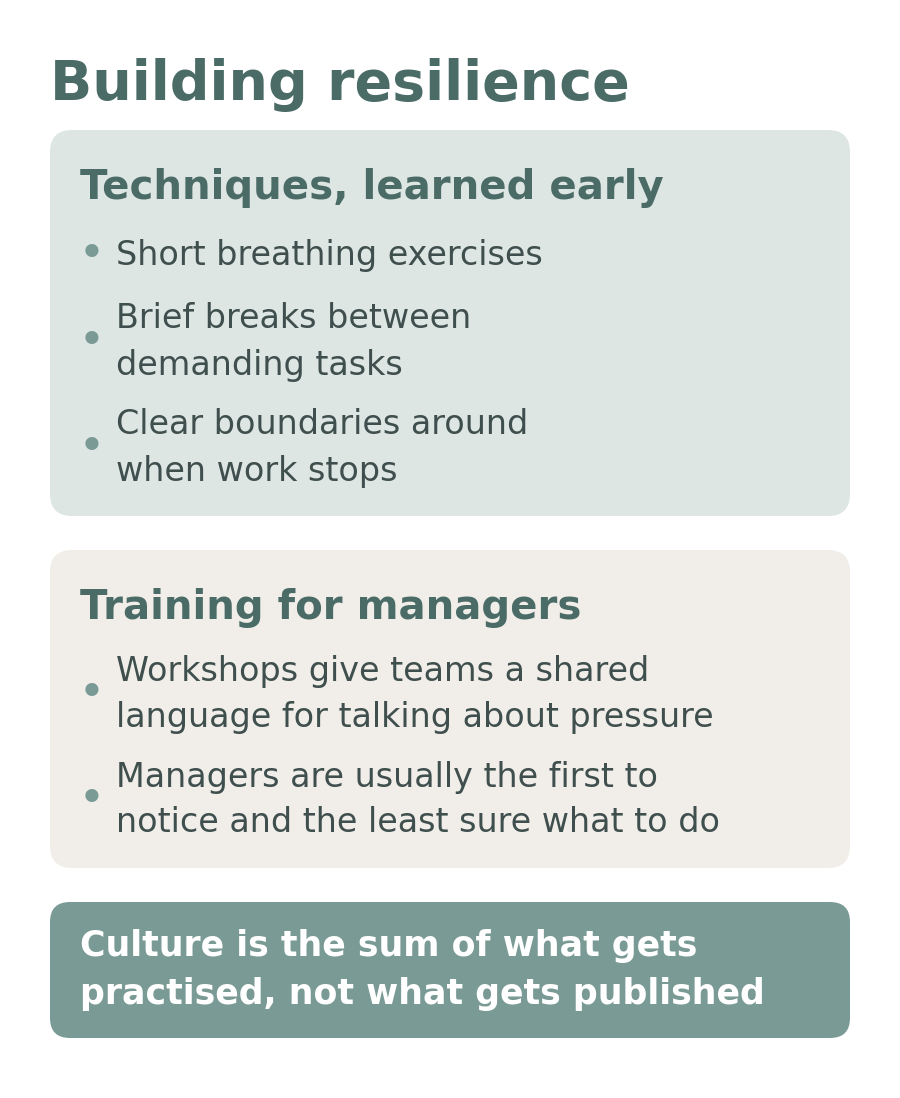
Practical techniques help most when they’re learned before they’re needed. Short breathing exercises, brief breaks between demanding tasks, and clear boundaries around when work stops are all simple to adopt. What makes them stick is seeing them practised openly rather than presented as something to do in private.
Training Workshops for Staff
Workshops give teams a shared language for talking about pressure. Sessions for managers on recognising when someone is struggling are particularly valuable, since managers are usually the first to notice and the least sure what to do. Training gives them a clear next step.
Building a Culture of Well-being
Culture is the sum of what gets practised, not what gets published. A workplace where well-being is genuinely part of how decisions are made looks different from one where it is a stated value. If you are considering how to build that in your organisation, you can read more about our corporate services and EAP options, or contact our team to talk it through.
Our Blog Author
This post was written by the team at Your Mind Matters. Workplace mental health and resilient teams continue to be part of our services. Meet our team.