
Why Mental Health Support at Work Matters: A Guide for Employers


Why Mental Health Support at Work Matters: A Guide for Employers
Mental health at work is no longer a side issue. Employees who are struggling are less able to concentrate, less likely to stay, and less likely to raise problems early. For employers, the question isn’t whether to act but how. This guide covers what the evidence shows and what practical steps are available to you. Read the World Health Organization’s fact sheet on mental health at work.
Importance of Mental Health Support
Understanding what’s at stake helps clarify why this deserves attention at leadership level.
Impact on Productivity and Absenteeism
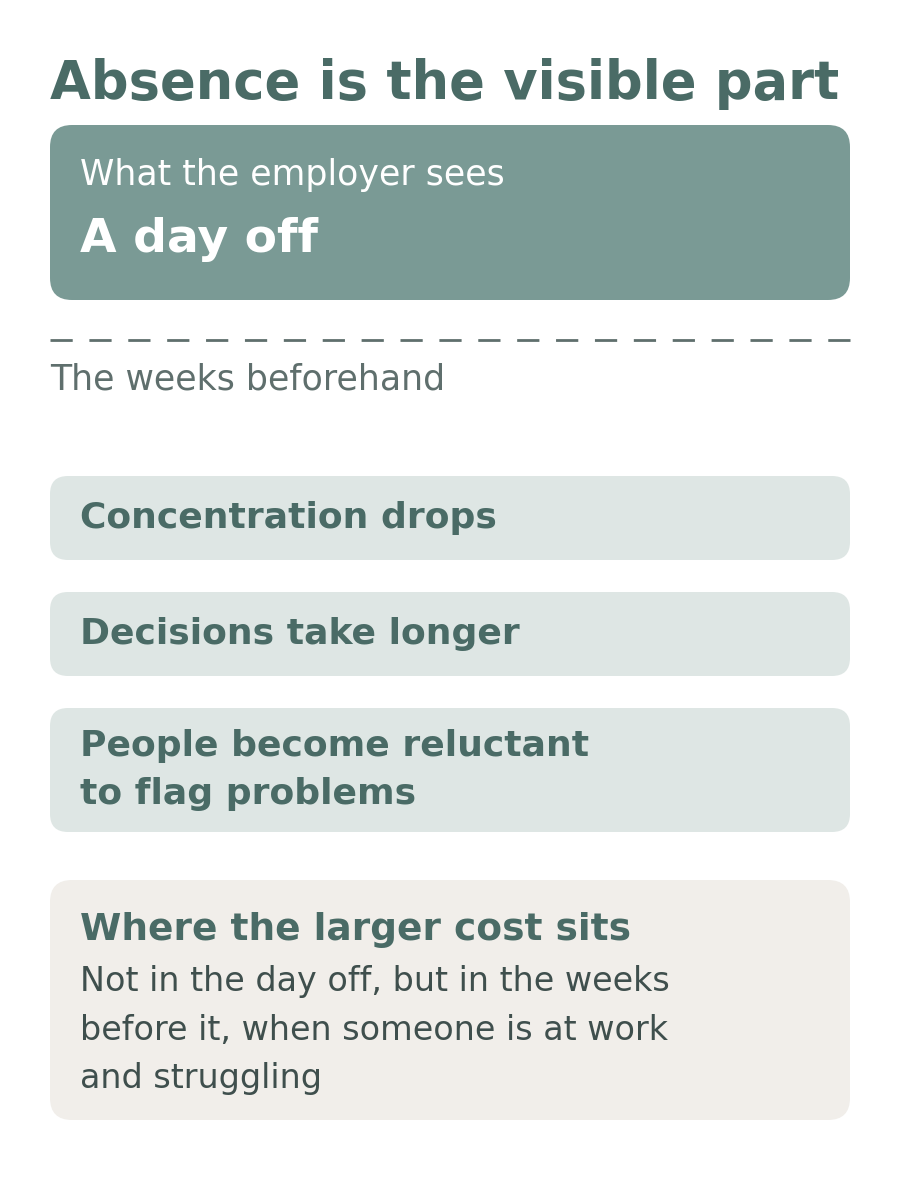
Mental health difficulties affect work long before someone takes a day off. Concentration drops, decisions take longer, and people become reluctant to flag problems. Absenteeism is the visible part; the larger cost is usually in the weeks beforehand, when someone is present but struggling. Addressing this early is far more effective than managing the consequences later.
Cost to Australian Workplaces
Poor mental health carries a substantial cost for Australian businesses through lost productivity, absenteeism and staff turnover. When an employee leaves because their workplace didn’t support them, the cost of recruiting and training a replacement is significant. Investment in support tends to pay for itself through retention alone.
Employee Health and Well-being
Beyond the business case, there’s a simpler point: people spend a large share of their waking hours at work, and what happens there shapes how they feel. Teams where mental health is taken seriously report better collaboration and higher job satisfaction. Employees notice when an organisation invests in their well-being, and it shapes their commitment in return.
Role of Employee Assistance Programs
An EAP is the most common way organisations make professional support available to staff.
Key Features of EAP Services
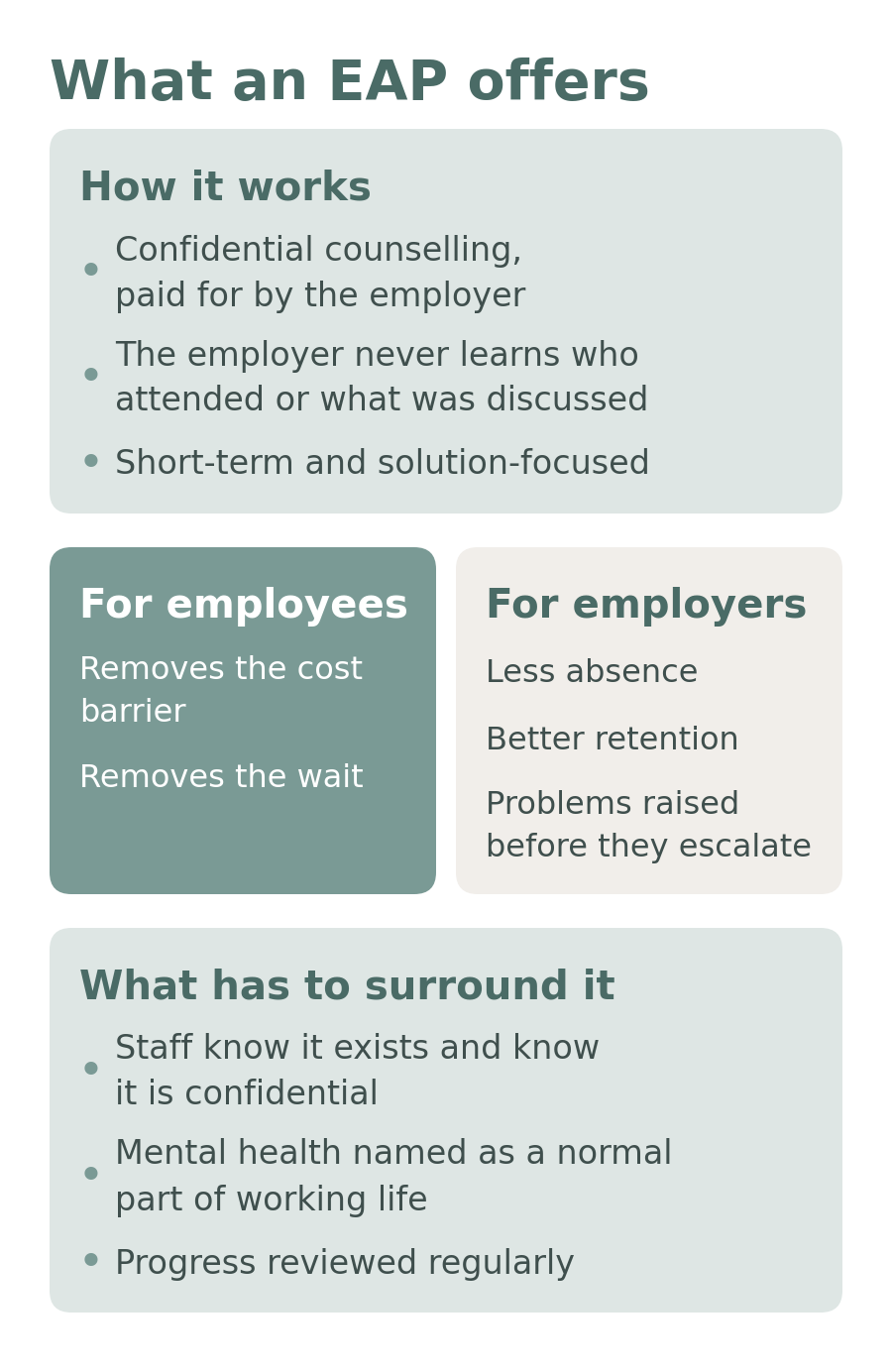
An EAP gives employees confidential access to counselling, paid for by the employer. Confidentiality is the essential feature: the employer never learns who attended or what was discussed. Sessions are usually short-term and solution-focused, covering work concerns and personal ones alike, with referral onward where longer-term support is needed. Read more on breaking the stigma around workplace mental health.
Benefits for Employees and Employers
For employees, an EAP removes the two barriers that stop most people getting help: cost and waiting time. For employers, the benefit shows in reduced absence, better retention, and a workforce more willing to raise difficulties before they escalate. Both sides gain from the same arrangement.
Implementing EAP in Your Organisation
Setting up an EAP is simpler than most employers expect. It starts with understanding what your staff actually face, then shaping the programme around that. Communication matters as much as the programme itself: staff need to know it exists, know it’s confidential, and know how to use it without asking permission.
Creating a Supportive Work Environment
A programme on its own doesn’t change a culture. What surrounds it does.
Normalising Mental Health Conversations
Stigma keeps people quiet until things get bad. Naming mental health as a normal part of working life, in team meetings and in policy, makes it easier for someone to speak up early. Leaders who talk about it openly set the tone faster than any policy document can.
Encouraging Help-Seeking Behaviour
People are more likely to seek help when the path is clear and using it carries no cost. That means staff knowing what’s available, knowing it’s confidential, and seeing that colleagues who use it face no consequence. Managers have a role here: noticing changes and asking, without pressing for detail.
Measuring Success and Improvement
Progress is worth tracking, carefully. Usage rates, absence figures and anonymous staff surveys all give useful signals, though none tells the whole story on its own. Low EAP usage might mean staff are well, or it might mean they don’t trust it. Reviewing regularly, and acting on what you find, is what turns a programme into a practice. See NIOSH’s guide to workplace mental health resources.
Our Blog Author
This post was written by the team at Your Mind Matters. Workplace mental health support and Employee Assistance Programs continue to be part of our services. Meet our team.