
Moving on from Parentification


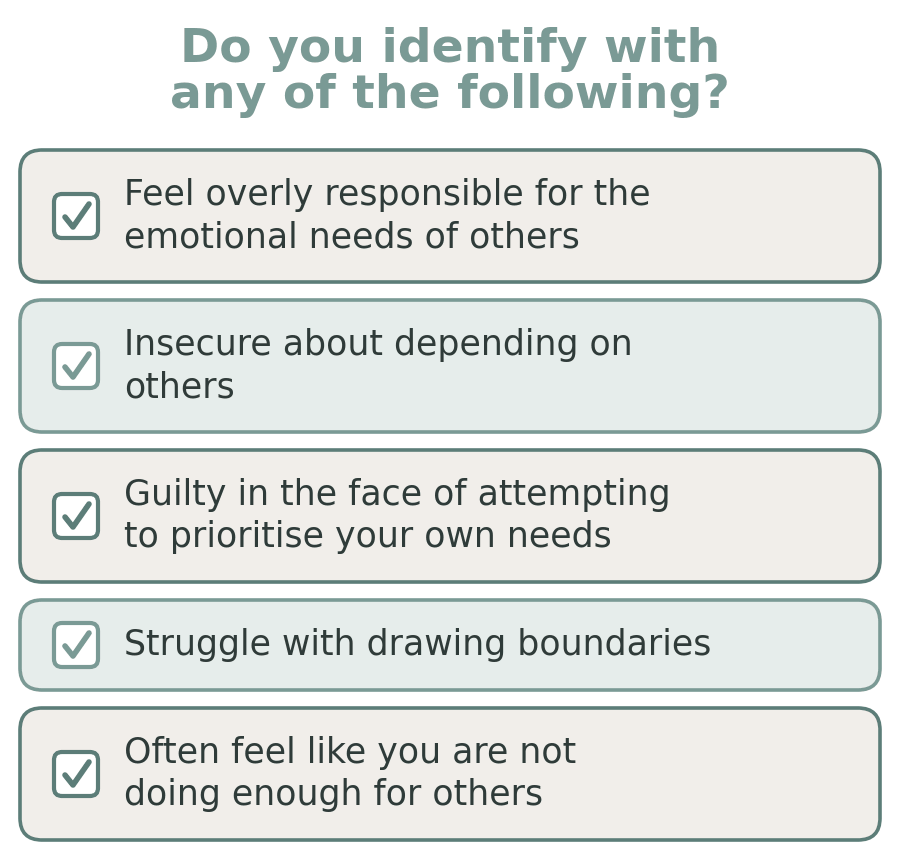
Do you identify with any of the following?
- Feel overly responsible for the emotional needs of others
- Insecure about depending on others
- Guilty in the face of attempting to prioritise your own needs
- Struggle with drawing boundaries
- Often feel like you are not doing enough for others
If you endorsed any of the above, could you have been a parentified child?
“Parentification” is the outcome of a role reversal, wherein a child finds themselves obliged to act as a parent to their own parent or siblings. Rather than the parent responding to the child’s emotional needs, the child feels compelled to take on the role of meeting the parent’s emotional needs. Consequently, the child becomes highly attuned to any changes in the parent’s mood. This can occur due to a variety of different situations, for example, in the face of divorce, where a parent turns to the child for ‘emotional unloading’, the child quickly becomes an ear for the parent’s distress, perhaps acting as an advisor or mediator. Basically, the parent inappropriately turns to their child to meet his or her own needs for affection, approval, reassurance, stability or control….
What a hefty burden for a child to bear, at any age! Often this results in the child maturing quickly and taking on the role of an adult way too early! Most of the time, in parentification there is no malicious intent, the parents love their child but with limited capacity and are driven by personal vulnerabilities.
As adults, these children would likely endorse the above questions. Whether aware of this process or not, they may refer to their parent as their “best friend”, “lifeline”, or “confidant”, however, often report feeling empty, smothered, and struggle with their sense of self-identity. While the personal impacts of parentification can be distressing, the role of caretaker can also provide a sense of control, certainty, and safety. It is often not until these adults reach a point of utter burn-out that the impacts of this role are considered.
So perhaps you have identified some of these themes in yourself and your relationship with a parent. If you have, a sense of anger and loss is completely understandable. If you are interested in starting your journey toward healing from parentification the below tips may be a good starting point:
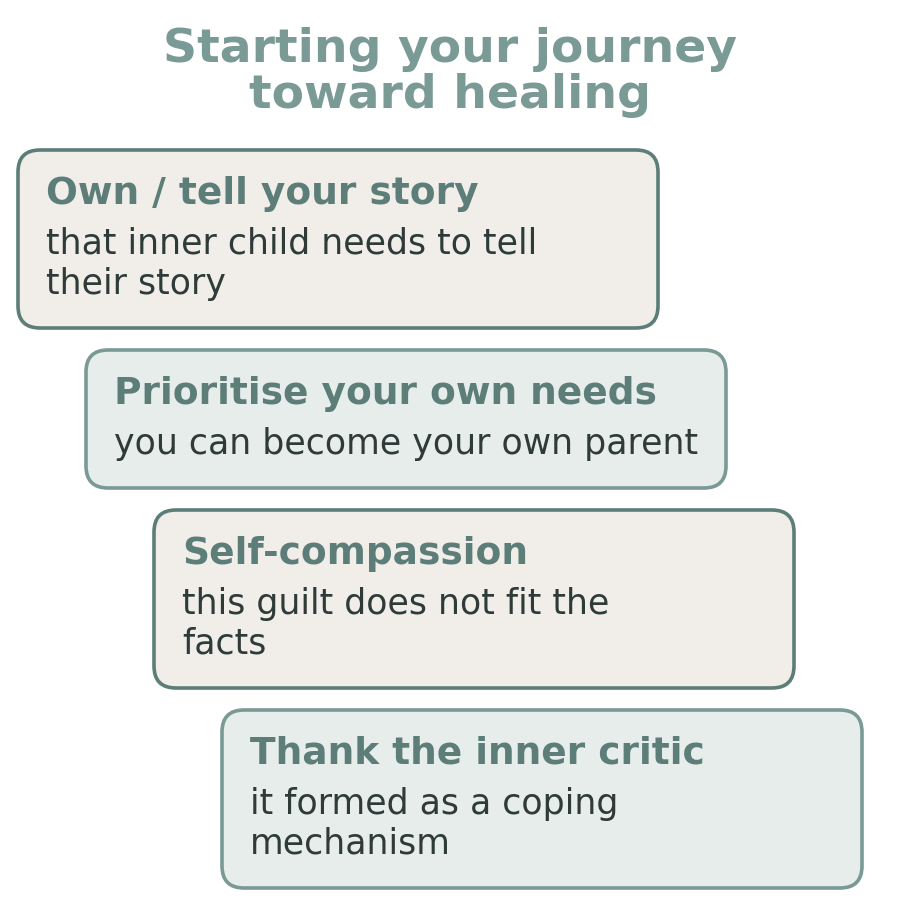
- Own/tell your story: As part of reclaiming elements of your lost childhood, that inner child needs to tell their story. Acknowledging your truth is the first step that will likely allow room for justified feelings of grief and anger. Therapy provides a non-judgemental safe space for your truth to be heard.
- Prioritise your own needs: Often a deprivation of joy and play can accompany a parentified history. The good news is that you can become your own parent to your inner child and allow them to play, make a mess, and soak up the things that make their heart glad. It may take some time for you to connect with your needs so take it slow, it might be that you start off with prioritising some time for a hobby or activity that you don’t often get around to.
- Self-compassion: Guilt is an emotion that is frequently felt by the parentified child and often this guilt does not fit the facts. Typically, the automatic default is to assume that things are their fault with the inner critic pushing them to do more for others. It’s time to extend yourself a kind hand and cultivate self-compassion.
- Thank the inner critic: The inner critic that berates you with the “do more” and the “fix it” story formed as a coping mechanism in times of distress. Instead of leaning into the critic with contempt, it may be helpful to recognise the critic for their help but remind them that you have got it from here!
As with healing from any form of trauma, this will take time. Tread softly with yourself, nurture your needs, you deserve to! Psychotherapy can also provide a space for you to practise these skills and help you process your feelings along the way. Our team of psychologists are here to help.
References
Interpersonal Process in Therapy: An Integrative Model, by Edward Teyber
Breaking Negative Thinking Patterns

Our Blog Author
This post was written by Blair Raatjes, Psychologist at Your Mind Matters. Blair works with clients using Cognitive Behaviour Therapy, Motivational Interviewing, and mindfulness-based approaches such as Acceptance and Commitment Therapy. Meet our team.