
Top Strategies for Managing Anxiety in Daily Life


Top Strategies for Managing Anxiety in Daily Life
Anxiety can feel like an unshakable weight that affects every part of your day. When stress builds up, it’s hard to know where to start with anxiety management. In this post, you’ll find clear, practical strategies to ease your mind and regain control. Plus, we’ll show how Your Mind Matters offers tailored mental health support to guide you through these challenges. For more tips, you can check Beyond Blue’s anxiety management strategies.
Understanding Anxiety and Its Impact
Understanding anxiety is the first step toward managing it. Let’s explore how to identify the signs and see how it affects your daily life.
Recognising Anxiety’s Signs
Anxiety can appear in many forms. You might feel restless or find it difficult to focus. These feelings can build up, making normal activities seem overwhelming. Physical symptoms like sweating or a racing heart can also signal anxiety. It’s important to know these signs so you can address them early. Most people think these feelings are just part of life, but recognising them is crucial. You can read more in the ADAA’s tips for managing anxiety.
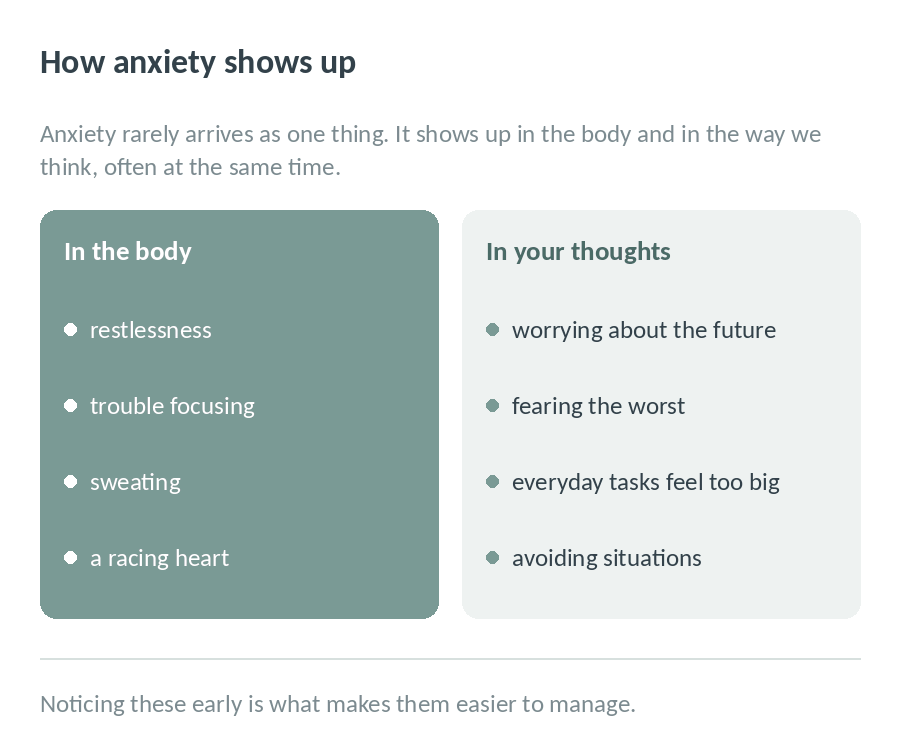
Another aspect to consider is how anxiety can affect your thoughts. You may worry excessively about the future or fear the worst in every situation. These thoughts are a common part of anxiety and recognising them can help you take the next steps in managing them effectively.
How Anxiety Affects Daily Life
Anxiety isn’t just about feeling nervous. It can change how you live your life. Simple tasks might become challenging, and you may find yourself avoiding certain situations. This avoidance can limit your experiences and affect your relationships. Understanding this impact is key to seeking the right support and making meaningful changes.
Practical Anxiety Management Techniques
Now that you understand anxiety better, let’s look at practical ways to manage it day to day.
Daily Stress Reduction Tips
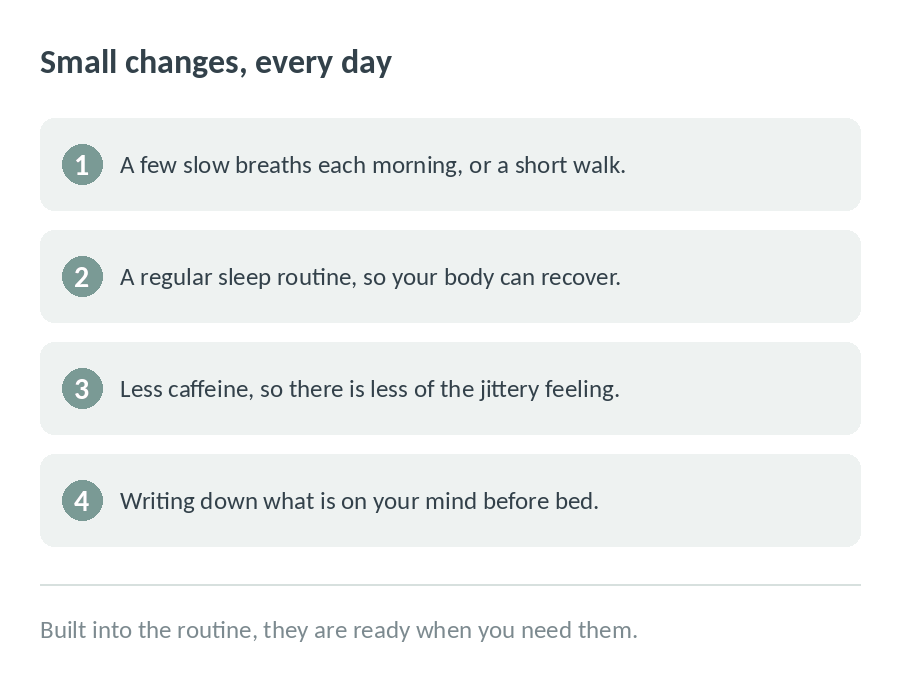
Small changes can make a big difference. Try setting aside a few minutes each morning for slow breathing or a short walk. Keeping a regular sleep routine helps your body recover, and cutting back on caffeine can reduce that jittery feeling. Writing down what’s on your mind before bed can stop worries from circling all night. For more ideas, see HelpGuide’s tips for dealing with anxiety.
Effective Anxiety Coping Strategies
When anxiety rises in the moment, grounding techniques can help. Naming five things you can see, four you can touch, three you can hear brings your attention back to the present. Progressive muscle relaxation, where you tense and release each muscle group, eases the physical tension that anxiety creates. Building these into your routine means they’re ready when you need them. The Mayo Clinic’s tips for coping with an anxiety disorder cover several more.
Seeking Professional Mental Health Support
Self-help strategies work well for many people, but sometimes professional support makes the difference.
Benefits of Psychological Counselling
Working with a psychologist gives you a space to understand what drives your anxiety and to build strategies that fit your life. Evidence-based approaches such as cognitive behavioural therapy help you challenge anxious thinking patterns, while your psychologist adjusts the pace to suit you. Many people find that a handful of sessions is enough to feel more in control.
Support Through Employee Assistance Programs
If your workplace offers an Employee Assistance Program, you may already have access to confidential counselling at no cost to you. These programs are designed to help with work and personal concerns alike, and using them doesn’t affect your employment. It’s worth asking your HR team what’s available. This article on coping with anxiety and depression outlines what support can look like.

Our Blog Author
This post was written by the team at Your Mind Matters. If anxiety is getting in the way of your day, our psychologists work with practical, evidence-based strategies. Meet our team.