
Effective Ways to Stay Connected and Seek Support During Stressful Times


Stress is mounting for many Australians. Global tensions, rising bills, and nonstop news can leave you feeling drained and unsettled. If you’re struggling with anxiety or just trying to manage daily pressures, practical stress management tips can help you regain control. This guide offers clear steps to ease your mind and find support when times feel tough.
Understanding Stress and Its Impact
Stress can affect anyone, but understanding its causes can help you manage it better. Let’s explore why stress feels so overwhelming and how it manifests in daily life.
Why Stress Feels Overwhelming
When life bombards you with challenges, stress can multiply quickly. Your mind is wired to spot danger, and constant exposure to stressors like financial worries or global news can keep your alert system on high alert. This heightened state may affect your sleep, mood, and concentration. It’s a natural response, but one that becomes exhausting when it never switches off.
Recognising Common Stress Responses
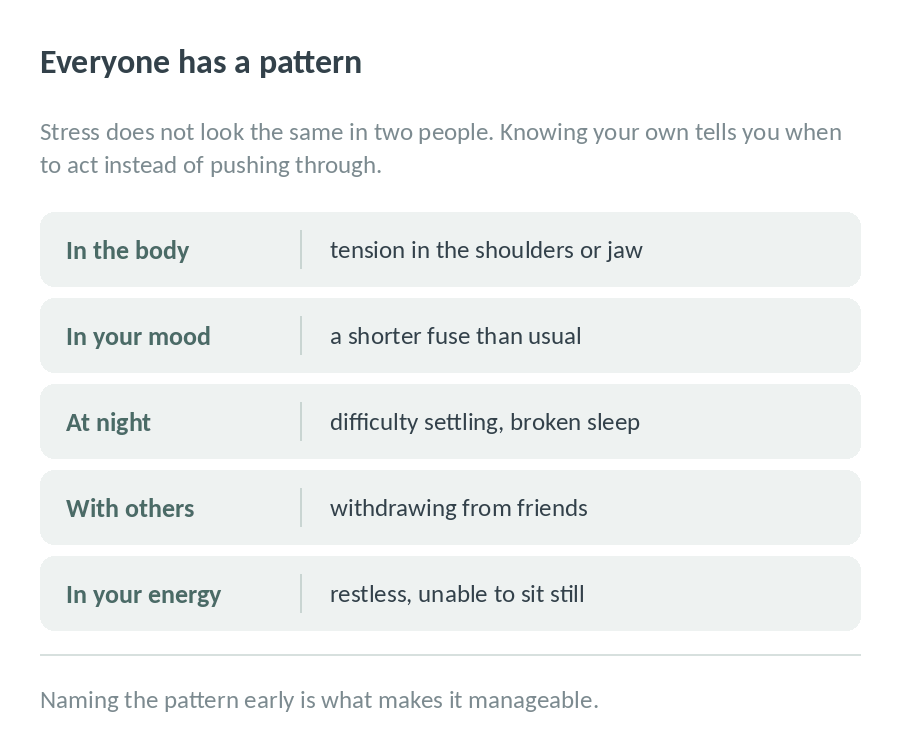
Stress shows up differently in different people. You might notice tension in your shoulders or jaw, a shorter fuse than usual, or difficulty settling at night. Some people find themselves withdrawing from friends; others become restless and unable to sit still. Recognising your own pattern is the first step towards managing it, because it tells you when to act rather than push through.
Practical Stress Management Strategies
Small, consistent changes tend to work better than big resolutions. Here are three worth trying.
Setting Boundaries with Media
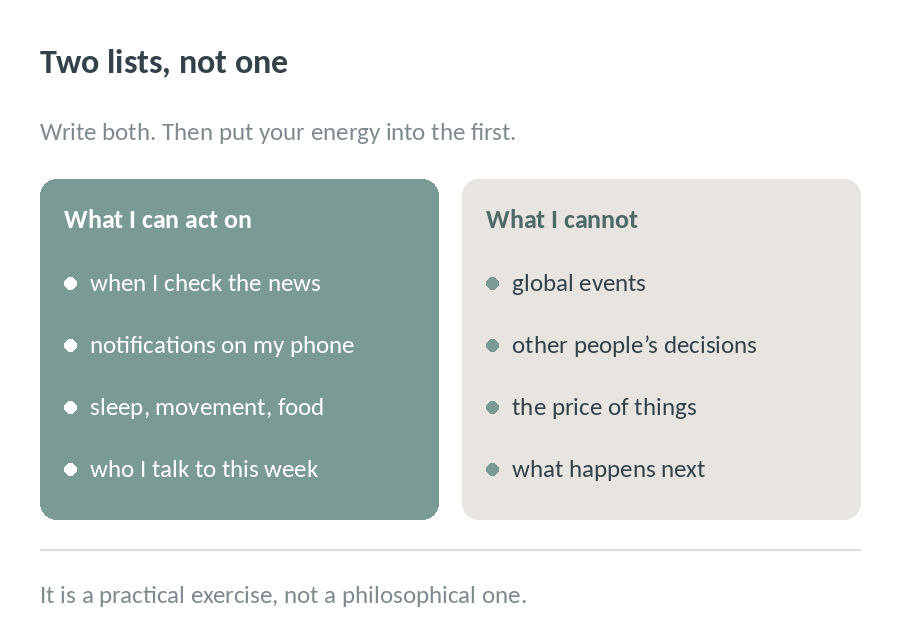
Constant news updates keep your alert system engaged with events you cannot influence. Choosing when you check the news, rather than letting it reach you throughout the day, gives your nervous system room to settle. Turning off notifications is often the single most effective change people make.
Focusing on Controllable Factors
Much of what causes stress sits outside your control. Separating what you can act on from what you cannot is a practical exercise, not a philosophical one: write both lists, then put your energy into the first. It reduces the sense of being pulled in every direction at once.
Supporting Your Nervous System
Sleep, movement and food affect how well you tolerate pressure. None of these is a cure, but each raises the threshold at which stress becomes overwhelming. Slow breathing, even for a few minutes, works because it signals to your body that the immediate danger has passed. See the Australian Psychological Society’s tips on managing everyday stress.
Seeking Support and Professional Help
Managing stress alone is harder than it needs to be.
Staying Connected with Others
Stress narrows your world, and withdrawing is often the first thing that happens. Keeping ordinary contact going, even briefly, does more than it appears to. You don’t have to explain what’s wrong to benefit from someone’s company.
Managing Financial Stress Effectively
Money worries are among the hardest to set aside, because the problem is real and often outside your control. Free financial counselling is available across Australia through the National Debt Helpline, and speaking to someone who deals with this daily usually reveals more options than expected.
Benefits of Consulting a Psychologist
If stress has been affecting your sleep, work or relationships for several weeks, that’s the point at which professional support tends to help most. A psychologist can help you understand what’s driving it and build strategies that fit your life. You can find more support options on our resources page.
Supporting Your Mental Health in a Changing World
Stress is a normal response to demanding circumstances, and there is no version of life without it. What you can change is how much of it you carry alone and how early you act when it builds. If you’d like to talk to someone, contact our team at Your Mind Matters to arrange an appointment, in person in Melbourne or by telehealth across Australia.

Our Blog Author
This post was written by the team at Your Mind Matters. If stress has been building for a while, our psychologists can help you work out what to change and what to let go. Meet our team.